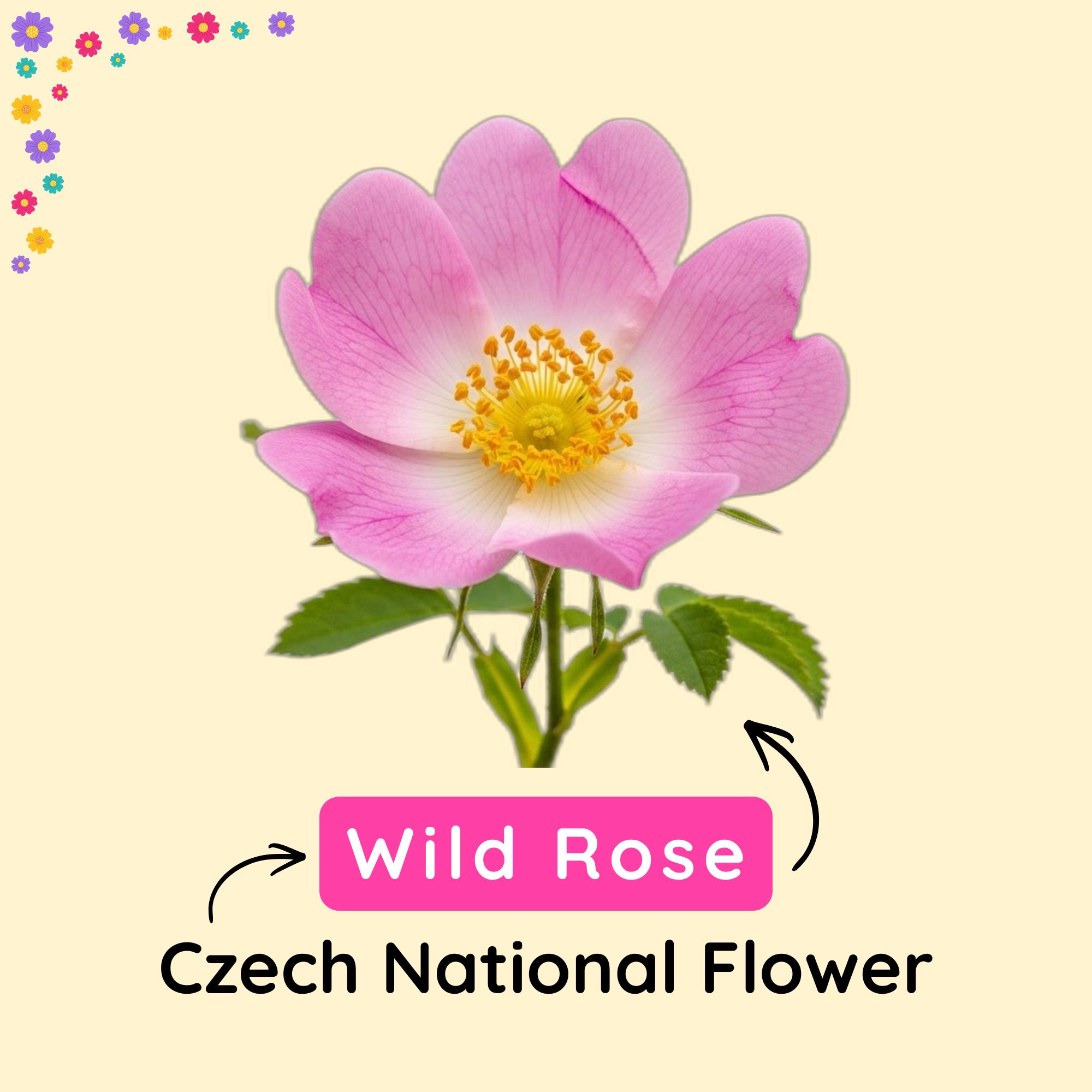
The Czech national flower is commonly identified as the rose, a flower associated with love, beauty, admiration, and cultural traditions. Known as růže in Czech, the rose is widely grown in gardens across the Czech Republic and admired for its many colors and varieties.
National symbols represent a country’s identity, history, and cultural heritage through recognizable emblems and traditions. This article explores the rose’s association with Czechia, its symbolic meanings, botanical characteristics, history, popular varieties, and famous rose gardens while examining whether it holds official national flower status.
What Is the National Flower of Czechia?

The rose (Rosa) is commonly identified as the national flower of Czechia, also known as the Czech Republic. It is associated with the country’s gardens, floral traditions, and cultural appreciation of ornamental plants. However, the rose does not have the same established legal status as Czechia’s officially recognized state symbols.
The Czech word for rose is růže. Roses are admired for their colorful petals, attractive shapes, and pleasant fragrances. They are also popular in gardens, parks, public spaces, and floral arrangements.
Some important characteristics of the Czech national flower association include:
- Common name: Rose
- Czech name: Růže
- Scientific genus: Rosa
- Plant family: Rosaceae
- Symbolic associations: Love, beauty, affection, and admiration
- National status: Commonly described as the national flower, but not listed among the country’s legally established state symbols.
Roses are particularly noticeable in Czech ornamental gardens, including historic gardens connected with castles and public parks. Their presence contributes to the country’s gardening heritage and makes them a recognizable part of its floral landscape.
Why Is the Rose Associated with the Czech Republic?
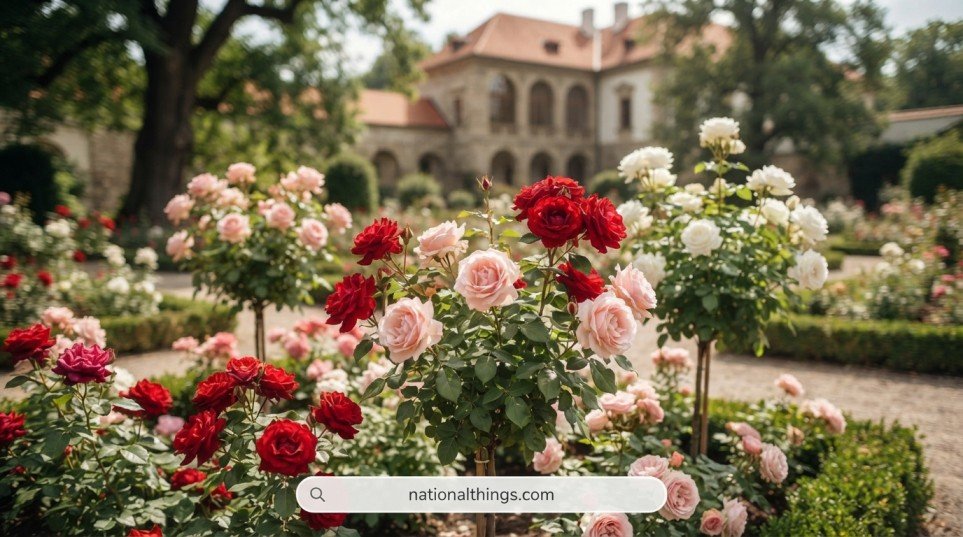
The rose is associated with the Czech Republic because of its traditional symbolic meanings, widespread popularity as an ornamental flower, and presence in notable gardens across the country. Its attractive appearance and connection with affection and beauty make it a natural choice for representing positive cultural values.
However, there is no established historical explanation confirming exactly why the rose became associated with Czechia as its national flower.
Several meanings help explain its popularity as a national floral symbol.
Beauty and elegance: Roses are admired for their distinctive petals, balanced shapes, and variety of colors. Their appearance makes them popular in ornamental gardens and floral displays.
Love and affection: Red roses are widely associated with romantic love and deep affection. They are frequently given as gifts during anniversaries and other special occasions.
Cultural appreciation: Roses have an important place in European gardening traditions, including the cultivation of decorative gardens around historic buildings, castles, and public parks.
Remembrance and respect: Roses also appear in memorial gardens and commemorative spaces. Their presence can express respect, remembrance, and appreciation for those who have passed away.
These associations help explain why the rose is often connected with Czechia. Nevertheless, they should be understood as general floral symbolism and cultural associations, rather than proof of an official national designation.
Is the Rose an Official National Symbol of Czechia?
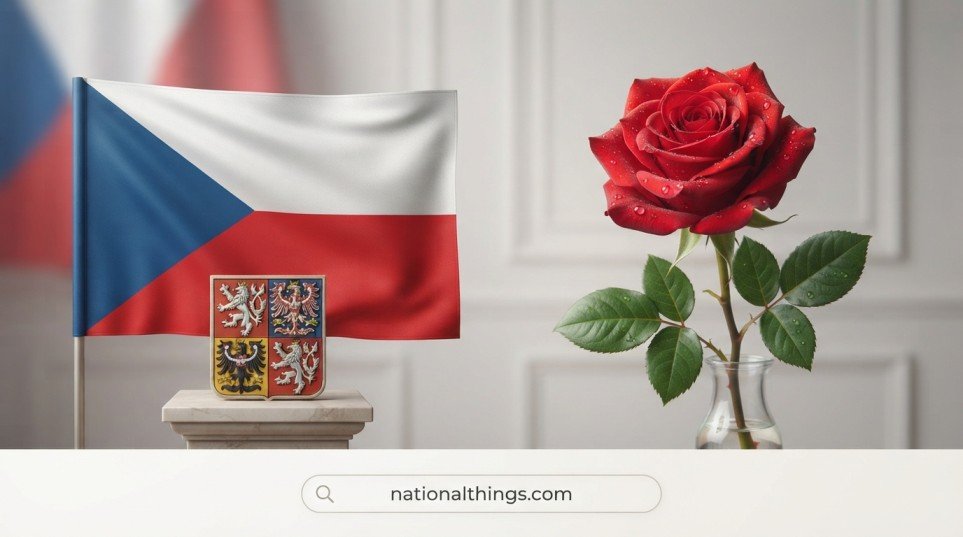
The rose is commonly described as the national flower of Czechia, but it is important to distinguish this popular identification from the country’s legally recognized state symbols.
Czechia has a defined collection of official state symbols established through its constitutional and legislative framework. Article 14 of the Constitution of the Czech Republic identifies the country’s state symbols.
These include:
- The large and small state coats of arms.
- The national colors.
- The national flag.
- The flag of the President of the Republic.
- The state seal.
- The national anthem.
The rose is not included in this list.
This means the rose should not automatically be described as an officially adopted state symbol in the same legal sense as the Czech flag or national anthem.
| Symbol | Recognition status |
|---|---|
| Czech national flag | Official |
| Czech coat of arms | Official |
| Czech national colors | Official |
| Czech national anthem | Official |
| Rose as national flower | Commonly associated; formal designation not established here |
The distinction matters because countries can have flowers, animals, and plants that represent their cultural identity without having formally adopted them through legislation.
For national-symbol research, it is more accurate to describe the rose as the commonly recognized national flower associated with Czechia, rather than claiming that the government has officially designated it.
Botanical Characteristics of the Rose
Roses belong to the genus Rosa in the Rosaceae family, which also includes plants such as apples, pears, cherries, and strawberries. They are flowering plants known for their colorful blooms, fragrant petals, and thorn-bearing stems.

Roses grow in different forms, including shrubs, climbing plants, and compact garden varieties. Their appearance varies depending on the species and cultivated variety.
Main Parts of a Rose
- Petals: The colorful parts of the flower that attract attention and may produce fragrance.
- Sepals: Small, leaf-like structures that protect the developing flower bud.
- Stem: Supports the plant and carries water and nutrients to its leaves and flowers.
- Thorns or prickles: Sharp structures along the stems that help protect the plant. Botanically, rose prickles are not true thorns.
- Leaves: Usually compound leaves with several smaller leaflets and serrated edges.
- Flower bud: The developing flower before its petals open.
- Reproductive parts: The stamens and pistils contain the structures involved in plant reproduction.
Growing Conditions
Most garden roses grow well under suitable sunlight, fertile soil, and regular watering.
Common growing requirements include:
- Sunlight: Many varieties perform best with around six hours of direct sunlight daily.
- Soil: Well-drained soil rich in organic matter.
- Water: Regular watering, particularly during dry weather and active growth.
- Pruning: Removing dead or damaged growth helps maintain plant health and shape.
- Air circulation: Adequate spacing helps reduce fungal diseases.
Different rose varieties have different temperature tolerances and seasonal requirements. In Czechia, gardeners select varieties suited to the country’s temperate climate and local growing conditions.
Rose Colors and Their Symbolic Meanings
Roses come in numerous colors, and each color has developed familiar symbolic associations in floral traditions. These meanings are widely recognized in international flower-giving customs, although they should not all be treated as specifically Czech traditions.
Red Roses

Red roses commonly represent love, romance, and deep affection. They are popular gifts for romantic partners and are frequently associated with Valentine’s Day, anniversaries, and expressions of commitment.
White Roses

White roses are associated with purity, innocence, respect, and remembrance. They are often used in weddings, formal floral arrangements, and memorial ceremonies.
Pink Roses

Pink roses symbolize admiration, appreciation, gratitude, and gentleness. They are suitable for expressing thanks, celebrating achievements, or showing affection toward friends and family.
Yellow Roses

Yellow roses are widely associated with friendship, happiness, warmth, and cheerful feelings. Their bright color makes them popular in decorative arrangements and friendly gifts.
Other Rose Colors

Other rose colors also have recognizable meanings:
- Orange roses: Enthusiasm, energy, and fascination.
- Peach roses: Appreciation, sincerity, and gratitude.
- Lavender roses: Enchantment, admiration, and fascination.
- Green roses: Renewal, growth, and freshness.
These meanings are general floral associations. Their interpretation can vary between individuals, occasions, and cultural traditions.
Explore more: Different Colors of the Roses with Images
History of Roses and Rose Gardening in Czechia
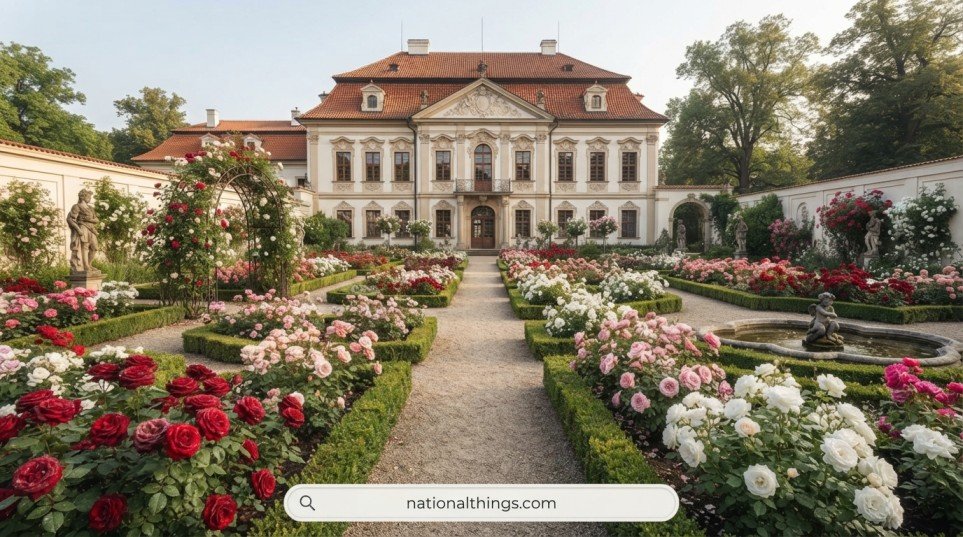
Rose cultivation has a long connection with European ornamental gardening, including the development of decorative gardens around castles, chateaus, monasteries, and public parks. In Czechia, historic gardens provide examples of how roses became part of the country’s landscaped heritage.
During earlier centuries, gardens associated with wealthy estates and aristocratic residences often featured carefully arranged flower beds, ornamental plants, fountains, and decorative pathways. Roses were valued for their appearance and fragrance, making them suitable for these formal landscapes.
Baroque garden design was particularly influential in Central European landscaping. During the Baroque period, gardens often featured symmetrical layouts, geometric flower beds, terraces, and carefully maintained decorative spaces.
The historical rose garden at Děčín Chateau provides an example of this connection between roses and historic Czech architecture.
Over time, rose gardening also became popular in public parks and recreational areas. Gardens such as the one on Petrin Hill in Prague demonstrate the continued importance of roses in public landscaping.
Today, roses can be found in:
- Historic castle and chateau gardens.
- Municipal parks and public green spaces.
- Private residential gardens.
- Botanical and horticultural collections.
- Memorial gardens and commemorative landscapes.
Although these traditions help establish the rose’s cultural presence in Czechia, they do not establish a specific date when it became the country’s national flower.
Famous Rose Gardens in the Czech Republic
Czechia has several notable gardens where visitors can enjoy roses alongside historic buildings, landscaped parks, and cultural attractions. Some of these locations are particularly interesting because they connect horticulture with the country’s architectural and historical heritage.
Petrin Hill Rose Garden in Prague

The Petrin Hill Rose Garden is one of Prague’s well-known locations for enjoying ornamental roses. Situated on Petrin Hill, the garden provides a peaceful green space above the busy streets of the Czech capital.
The garden is located near Petrin Tower, an observation tower built for Prague’s Jubilee Exhibition in 1891. The tower was designed as a smaller version inspired by the Eiffel Tower in Paris.
According to the supplied garden description, the rose garden covers approximately 15 acres and contains more than 12,000 roses. These figures should be checked against current municipal information before publication, as garden areas and plant collections can change.
During the flowering season, the garden displays roses in different colors and varieties.
Visitors can enjoy:
- Colorful rose beds and landscaped pathways.
- Views of Prague from the surrounding hill.
- Nearby Petrin Tower.
- The historic Mirror Maze.
- Walking areas and green spaces.
The garden is particularly attractive during the warmer months when many roses are in bloom.
Děčín Chateau Rose Garden

The Děčín Chateau Rose Garden is another notable example of the country’s historic gardening traditions. It is located beside Děčín Chateau in the northern Czech town of Děčín.
The garden developed during the Baroque reconstruction of the chateau in the 17th century. Its elevated position provides attractive views of the surrounding town and landscape.
Historically, the garden was associated with a diverse collection of roses. Descriptions of its earlier collection mention more than 87 different rose varieties, although the historical figure should not be confused with the garden’s present collection.
The garden’s main attractions include:
- Historic Baroque landscaping.
- Decorative rose beds.
- Views of Děčín and the surrounding area.
- Its connection with Děčín Chateau.
- A setting that combines horticulture and architectural heritage.
The Děčín Chateau Rose Garden demonstrates how ornamental flowers became part of the designed landscapes surrounding important historic residences in Czechia.
Lidice Park of Peace and Friendship

The Park of Peace and Friendship in Lidice is a rose garden with a particularly meaningful historical background.
Lidice is a Czech village associated with one of the most tragic events of the Second World War. In June 1942, Nazi forces destroyed the village following the assassination of Reinhard Heydrich. Many residents were murdered, while others were deported or separated from their families.
The rose garden was established as a living memorial to honor the victims and preserve the memory of the destroyed community.
Unlike ordinary ornamental gardens, this location has a strong commemorative purpose. Its roses contribute to a landscape associated with peace, remembrance, and international friendship.
The garden represents several important ideas:
- Remembrance: Honoring the men, women, and children who suffered during the destruction of Lidice.
- Peace: Providing a symbolic contrast to the violence of the Second World War.
- Friendship: Reflecting international solidarity and support.
- Hope: Using a living garden as a symbol of renewal and continued life.
The Lidice rose garden demonstrates how flowers can carry meanings beyond beauty and decoration. In this setting, roses are connected with historical memory and the importance of peace.
Common Types and Varieties of Roses
Roses are available in hundreds of cultivated varieties, with different colors, flower shapes, fragrances, and growth habits. Gardeners generally classify them into several horticultural groups according to their appearance and growing characteristics.
The following are common types of roses found in gardens around the world, including ornamental collections in Central Europe.
Hybrid Tea Roses

Hybrid tea roses produce large, attractive flowers, usually with a single bloom on each stem. They are popular in flower arrangements and ornamental gardens because of their elegant shape and long stems.
Floribunda Roses
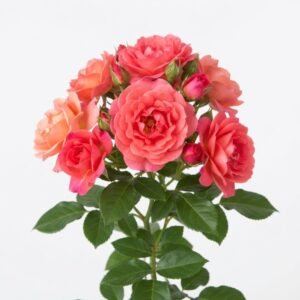
Floribunda roses produce clusters of flowers rather than just one bloom per stem. They are valued for their abundant flowering and are commonly planted in garden beds and public landscapes.
Climbing Roses

Climbing roses have long, flexible canes that can be trained along walls, fences, arches, and trellises. They are especially useful for decorating vertical garden spaces.
Shrub Roses

Shrub roses generally grow as larger, bushier plants. Many varieties are valued for their hardiness, attractive flowers, and suitability for landscape gardening.
Miniature Roses

Miniature roses produce smaller flowers and compact growth. They are suitable for containers, small gardens, balconies, and decorative indoor-outdoor arrangements.
These are general horticultural categories. None of them should automatically be identified as the specific national rose of Czechia.
How Roses Are Used in Czech Culture and Everyday Life
Roses are familiar ornamental flowers in Czechia and are used in gardens, public landscapes, floral arrangements, and personal celebrations. Their popularity reflects both their decorative value and their wider cultural associations.
The Czech word růže appears in everyday conversations about flowers, gardens, and floral gifts.
Some common uses of roses include:
- Garden decoration: Roses are planted in residential gardens, historic landscapes, public parks, and landscaped outdoor spaces. Their different colors and flowering habits make them suitable for a range of garden designs.
- Gifts and celebrations: Roses are popular floral gifts for birthdays, anniversaries, romantic occasions, and other celebrations. Red and pink varieties are particularly associated with affection and appreciation.
- Weddings and ceremonies: Roses are frequently included in wedding bouquets, decorative arrangements, and formal floral displays.
- Memorial gardens: Roses can be used in commemorative landscapes to express respect, remembrance, and hope. The Lidice rose garden provides a meaningful Czech example.
- Public landscaping: Municipal gardens and historic estates use roses to add color and ornamental value to outdoor spaces.
Roses are therefore connected with several aspects of everyday life in Czechia. However, these uses are part of broader European and international floral traditions rather than customs exclusive to the Czech Republic.
Interesting Facts About Roses in Czechia
Roses have interesting connections with Czech gardening, historical architecture, and memorial landscapes. Their presence in different parts of the country shows how one flower can serve decorative, cultural, and commemorative purposes.
Here are some notable facts:
1. Czech name: The word for rose in Czech is růže.
2. Botanical family: Roses belong to the Rosaceae family, which also includes several familiar fruit-bearing plants.
3. Petrin Hill: Prague’s Petrin Hill is home to a well-known rose garden near the historic Petrin Tower.
4. Historic architecture: The rose garden at Děčín Chateau is associated with the Baroque reconstruction of the chateau during the 17th century.
5. Memorial significance: The rose garden at Lidice honors the victims of the village’s destruction during the Second World War.
6. Different growth forms: Roses can grow as shrubs, climbing plants, and compact ornamental varieties.
7. Wide color range: Garden roses are available in red, white, pink, yellow, orange, peach, and many other shades.
8. Not a listed state symbol: The rose is commonly identified as Czechia’s national flower, but it does not appear among the country’s legally listed state symbols.
9. Seasonal flowering: Many outdoor roses produce their main displays during the warmer months, although flowering periods vary by variety and local weather.
10. International symbolism: Roses are associated with love, beauty, respect, and remembrance in many countries, not only Czechia.
These facts highlight the flower’s botanical diversity and its connections with Czech landscapes and cultural heritage.
FAQs About the Czech National Flower
The rose is commonly identified as the national flower of the Czech Republic. Known as růže in Czech, it is associated with beauty, love, affection, and the country’s ornamental gardening traditions.
The rose is commonly described as Czechia’s national flower, but it is not included among the country’s legally established state symbols listed in Article 14 of its Constitution.
The Czech word for rose is růže. It refers to the flowering plant belonging to the genus Rosa, which includes numerous wild and cultivated rose species.
The rose is associated with beauty, love, affection, and admiration. In commemorative settings, roses can also represent remembrance, peace, and respect.
The Petrin Hill Rose Garden is a well-known rose garden in Prague. It is situated near Petrin Tower and attracts visitors with its seasonal flowers and landscaped surroundings.
Late spring and summer are generally the best periods to see garden roses in bloom. June and July are particularly suitable, although flowering times depend on the variety and weather.
There is no verified specific rose species or cultivated variety established here as the national rose of Czechia. The national flower association generally refers to roses as a group rather than one particular variety.
Related Articles: