National Symbols of Asian Countries: Explained with Meanings
National Symbols of Asian Countries reveal far more than a flag’s colors or the name of a national animal. A…
National Symbols of Ukraine include the blue and yellow flag, the golden trident coat of arms, and the national anthem. These three official state symbols represent Ukraine’s independence, history, and national identity. The country also has many traditional symbols, including the sunflower, white stork, viburnum, embroidered clothing, and decorated Easter eggs. Each has a special place in Ukrainian culture, folklore, or everyday life. Some are recognized by law, while others have become important through centuries of tradition. This article explains the names, appearances, meanings, and cultural significance of Ukraine’s national symbols, including the differences between official emblems and widely recognized cultural symbols.
Ukraine’s national symbols include official state emblems, traditional objects, plants, birds, and cultural practices. The following table identifies important symbols and distinguishes their legal status from their cultural significance.
| Symbol | Name | Meaning | Official Status |
|---|---|---|---|
| 🇺🇦 Flag | Blue and Yellow Flag | Independence and national identity | Official |
| Coat of Arms | Tryzub (Trident) | Statehood and historical continuity | Official |
| Anthem | State Anthem of Ukraine | Freedom and national unity | Official |
| Animal | European Bison | Strength and natural heritage | Cultural association |
| Bird | White Stork | Family, home, and good fortune | Traditional |
| Bird | Nightingale | Song, language, and poetry | Traditional |
| Flower | Sunflower | Agriculture, hope, and solidarity | Widely recognized |
| Plant | Viburnum (Kalyna) | Beauty, homeland, and cultural identity | Traditional |
| Crop | Wheat | Harvest and prosperity | Cultural association |
| Tree | Willow | Homeland and rural traditions | Traditional |
| Clothing | Vyshyvanka | Heritage and identity | Cultural |
| Folk Art | Pysanka | Life, renewal, and tradition | Cultural |
| Dance | Hopak | Ukrainian cultural heritage | Cultural |
| Food | Borscht | Food heritage and family traditions | Cultural |
The flag, coat of arms, and anthem are the three constitutional state symbols. The other entries are important cultural associations, not additional constitutional state symbols.
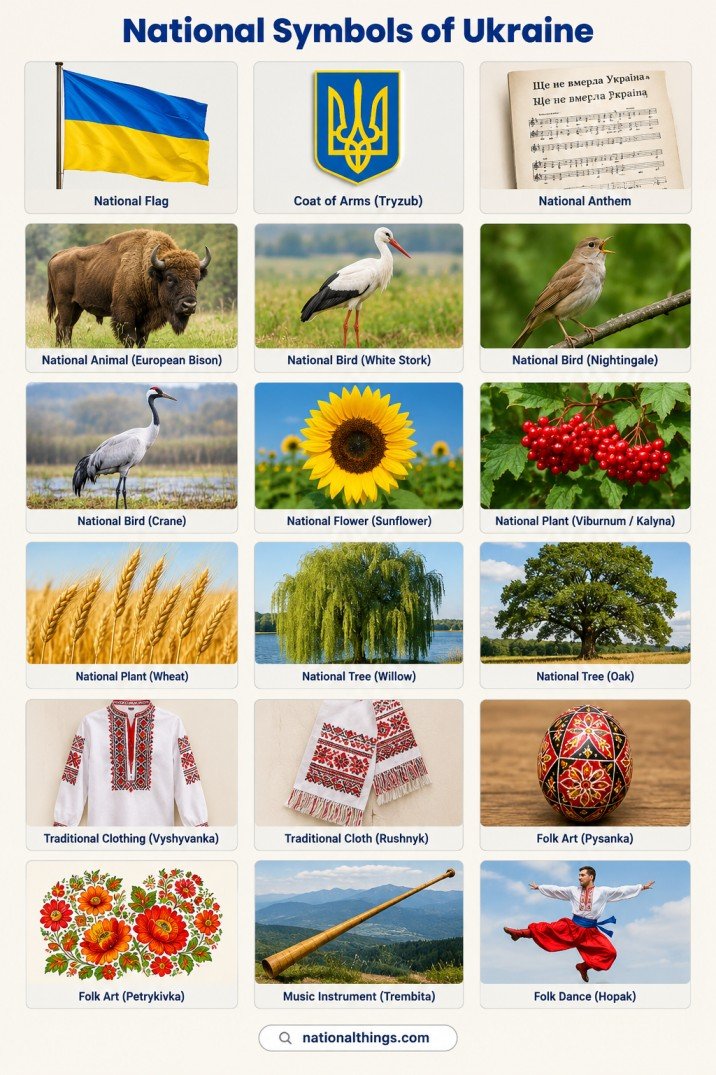
Ukraine has three official state symbols: the national flag, national coat of arms, and national anthem. Article 20 of the Constitution of Ukraine establishes these symbols and describes their place in the country’s state identity.
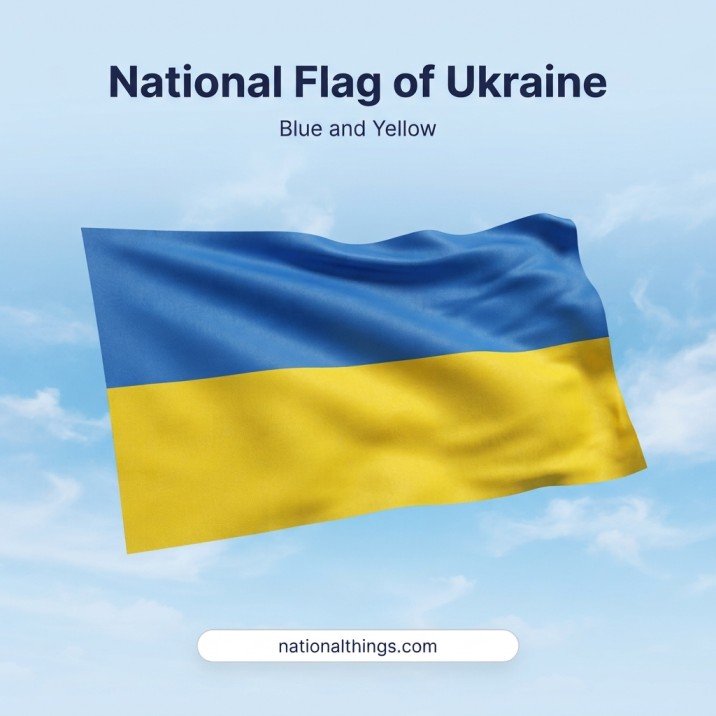
The national flag of Ukraine consists of two equal horizontal bands. The upper band is blue, and the lower band is yellow.
The colors are commonly associated with a blue sky above golden wheat fields. This interpretation reflects Ukraine’s agricultural landscape, although the Constitution specifies the colors without assigning them that particular meaning.
Blue and yellow have appeared in Ukrainian heraldry and national movements for centuries. They became particularly important during the Ukrainian independence movement of 1917–1921.
After Ukraine regained independence in 1991, the blue-and-yellow flag was formally adopted as the state flag on January 28, 1992.
Its official proportions are 2:3, meaning the flag is three units wide for every two units of height.
Today, the flag represents Ukrainian sovereignty, unity, and national identity.
Ukraine’s national coat of arms features a golden trident called the Tryzub on a blue shield. It is one of the country’s most recognizable historical emblems.
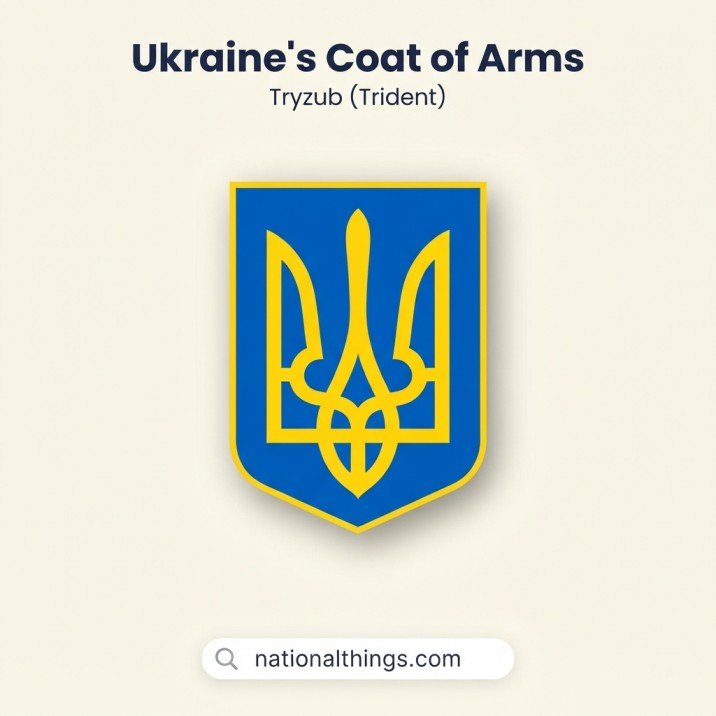
The trident has roots in the medieval state of Kyivan Rus. A related symbol appeared on coins associated with Prince Volodymyr the Great, who ruled around the late tenth and early eleventh centuries.
The Tryzub represents the historical continuity of Ukrainian statehood. It is also closely associated with independence and national identity.
On February 19, 1992, Ukraine’s parliament approved the Tryzub as the small state coat of arms.
Ukraine’s Constitution also provides for a great state coat of arms incorporating the small coat of arms and the emblem of the Zaporizhian Host. However, the constitutionally envisaged great coat of arms has not been adopted.
Ukraine’s national anthem is commonly known by its opening words, “Shche ne vmerla Ukrainy i slava, i volia“, meaning “Ukraine’s glory and freedom have not yet perished.“
The lyrics originated in a patriotic poem written by Pavlo Chubynsky in 1862. Composer Mykhailo Verbytsky created the music in the nineteenth century.
The anthem expresses determination, freedom, and the continued existence of the Ukrainian nation.
The music was officially approved in 1992, and the law establishing the official anthem lyrics was adopted on March 6, 2003.
The anthem is performed at state ceremonies, international sporting events, and national commemorations. It remains an important expression of Ukrainian unity.
Ukraine does not have a clearly established, constitutionally designated national animal. However, several animals are important to its wildlife heritage and cultural traditions.
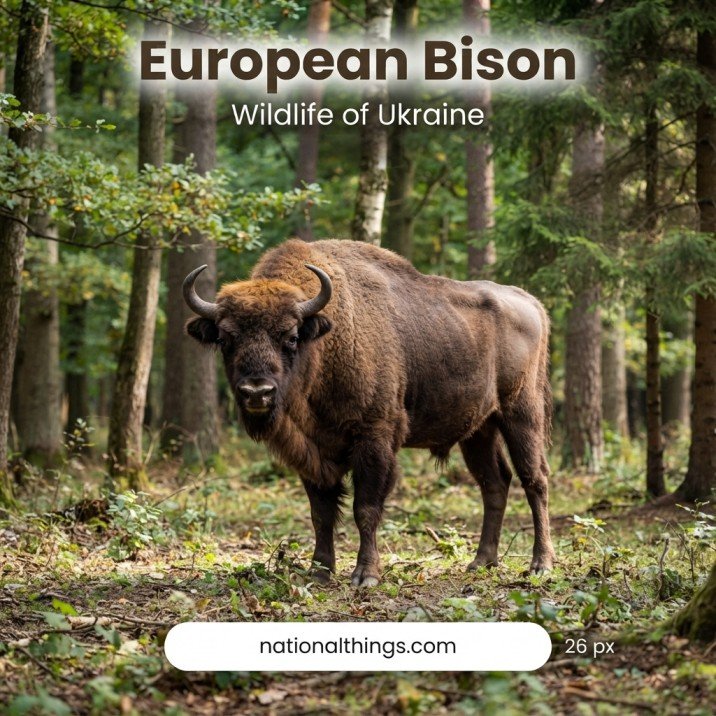
The European bison, also called the wisent, is one of Europe’s largest surviving land mammals. It occurs in protected and managed populations in Ukraine.
This powerful animal represents the conservation of Europe’s natural heritage. Its large body, muscular shoulders, and thick brown coat make it an impressive forest mammal.
The European bison is sometimes included in lists of animals associated with Ukraine, but this does not establish it as the country’s official national animal.
Horses also hold an important place in Ukrainian history, particularly in traditions associated with the Cossacks.
Official status: No general national-animal designation is established by the constitutional provisions governing Ukraine’s state symbols.
Birds appear frequently in Ukrainian folk songs, stories, poetry, and traditional beliefs. The white stork, nightingale, and crane are particularly meaningful cultural symbols, although they are not among Ukraine’s three official state symbols.
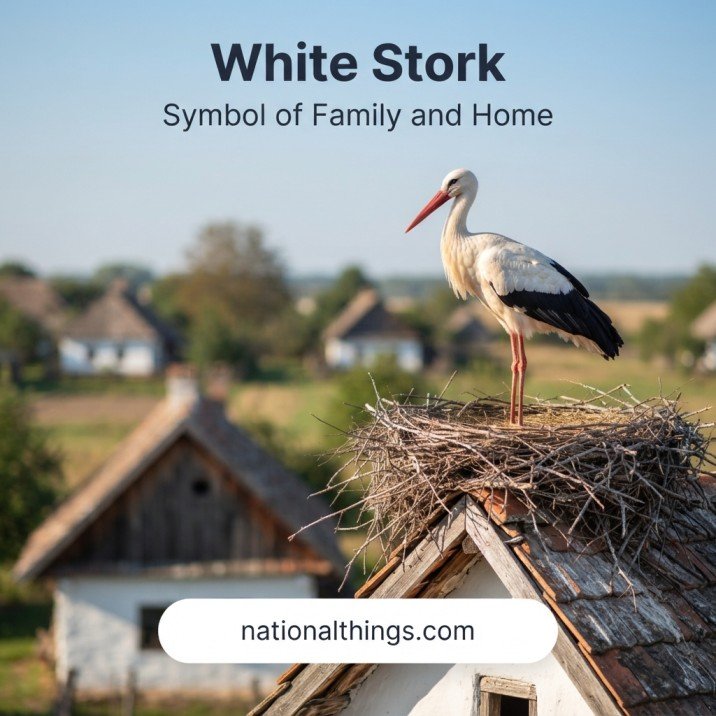
The white stork is widely associated with family life, home, and good fortune in Ukrainian tradition.
Its white body, black wing feathers, long red legs, and red bill make it easy to recognize.
Storks often build large nests on rooftops, poles, and other raised structures. Their return in spring is traditionally welcomed as a sign of seasonal renewal.
In Ukrainian folklore, a stork nesting near a house is often regarded as a favorable sign for the family living there.
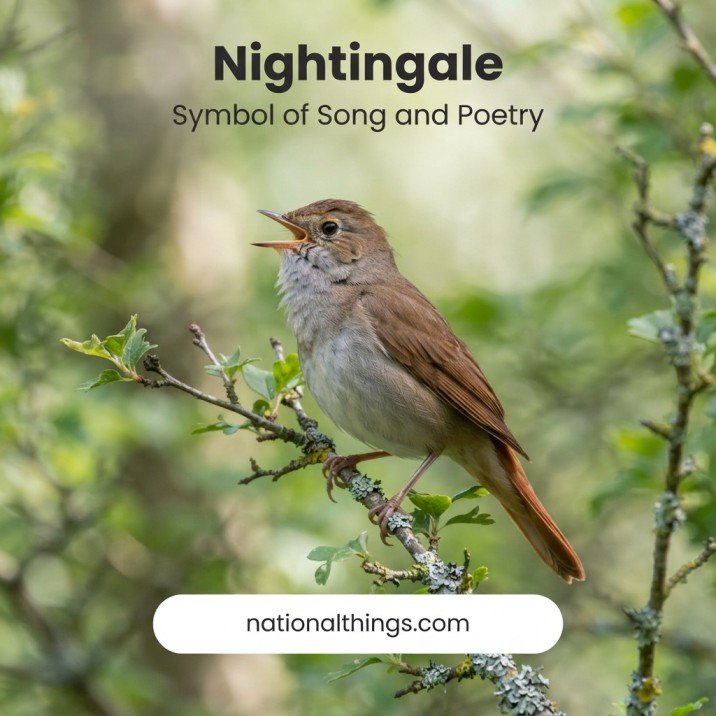
The nightingale is admired for its rich and varied singing. It has a special place in Ukrainian poetry, traditional songs, and descriptions of the natural world.
Although its brown feathers are relatively plain, its voice makes it one of the most celebrated songbirds.
The nightingale is often associated with the beauty of the Ukrainian language and the country’s musical traditions.
It is a traditional cultural symbol, not a formally designated state bird.
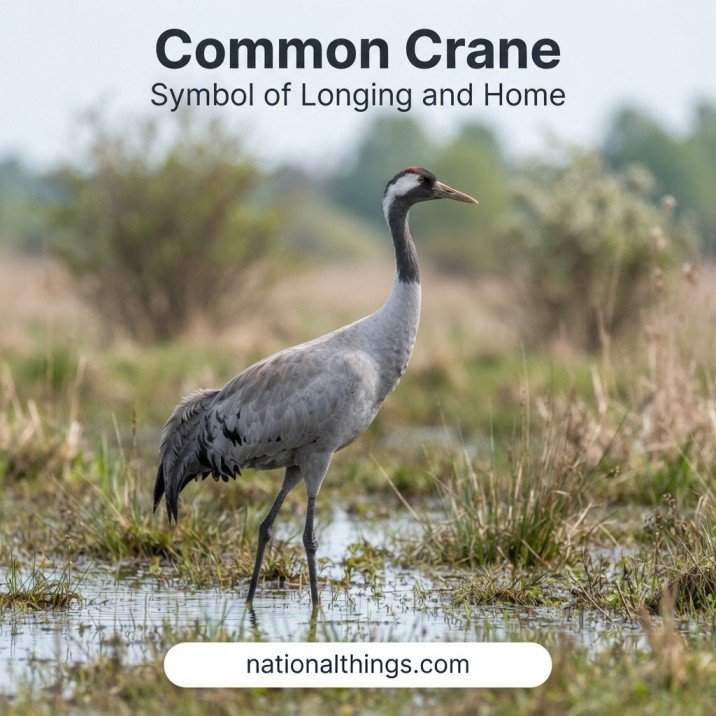
The crane appears in Ukrainian songs and folklore, particularly in themes involving migration, separation, and longing for home.
Cranes are migratory birds known for their long legs, graceful movements, and distinctive calls.
Their seasonal journeys provide a natural connection to ideas of departure and return.
In Ukrainian cultural imagery, cranes can evoke memories of homeland and loved ones who are far away.
Flowers and plants are important parts of Ukrainian national imagery. The sunflower, viburnum, and wheat are especially recognizable because of their connections with agriculture, folklore, and traditional decorative art.
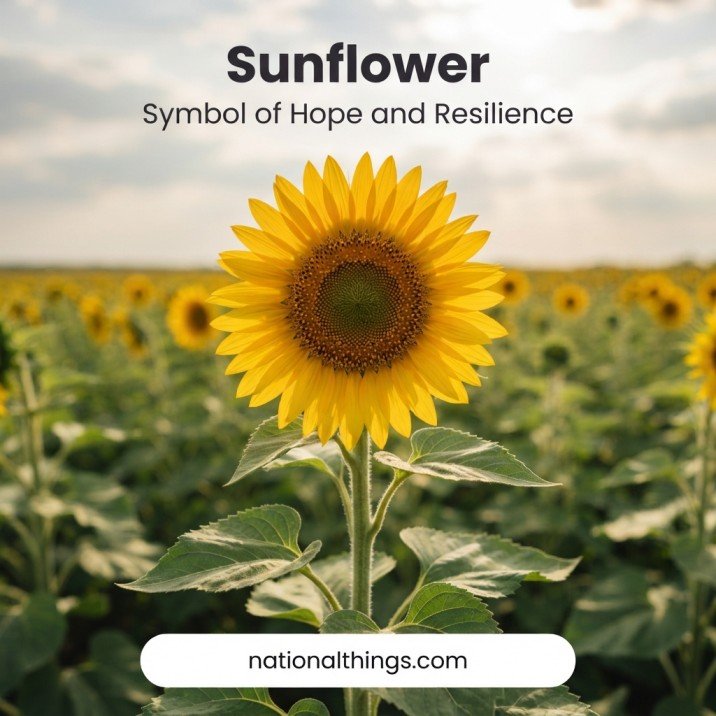
The sunflower is one of the most widely recognized flowers associated with Ukraine. Its large yellow flower head and dark center are familiar features of the country’s agricultural landscapes.
Ukraine has long been an important producer of sunflower seeds and sunflower oil.
The sunflower is commonly associated with warmth, hope, resilience, and the land itself.
Since Russia’s full-scale invasion in 2022, sunflowers have also become internationally recognizable expressions of solidarity with Ukraine.
Despite its strong cultural association, the sunflower should not be described as Ukraine’s legally designated national flower without evidence of a formal designation.
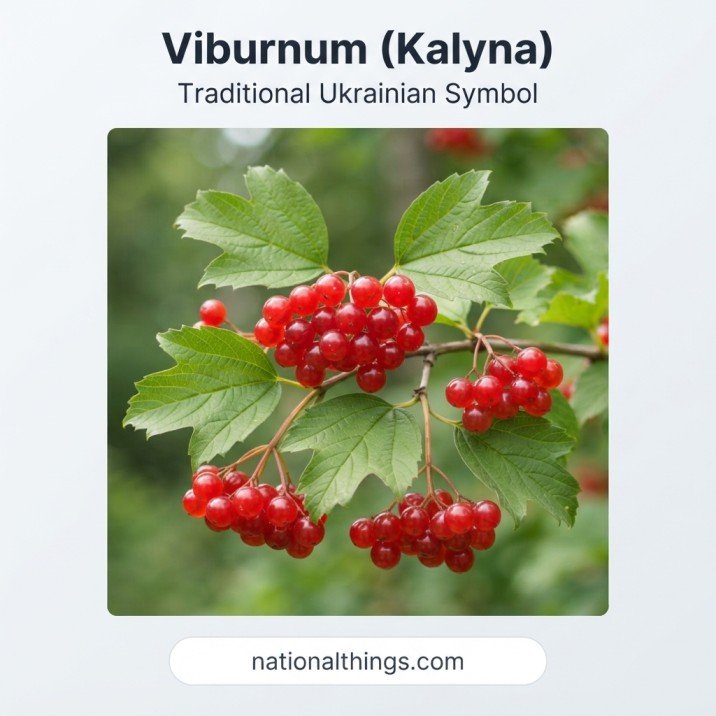
Kalyna, commonly referring to guelder rose (Viburnum opulus), is deeply connected with Ukrainian folk culture.
The plant produces clusters of red berries and is frequently represented in embroidery, songs, and decorative designs.
Kalyna is associated with beauty, family ties, the homeland, and continuity between generations.
Its red berries are particularly recognizable in traditional Ukrainian imagery.
The plant’s cultural importance comes from longstanding traditions rather than its status as a constitutional state symbol.
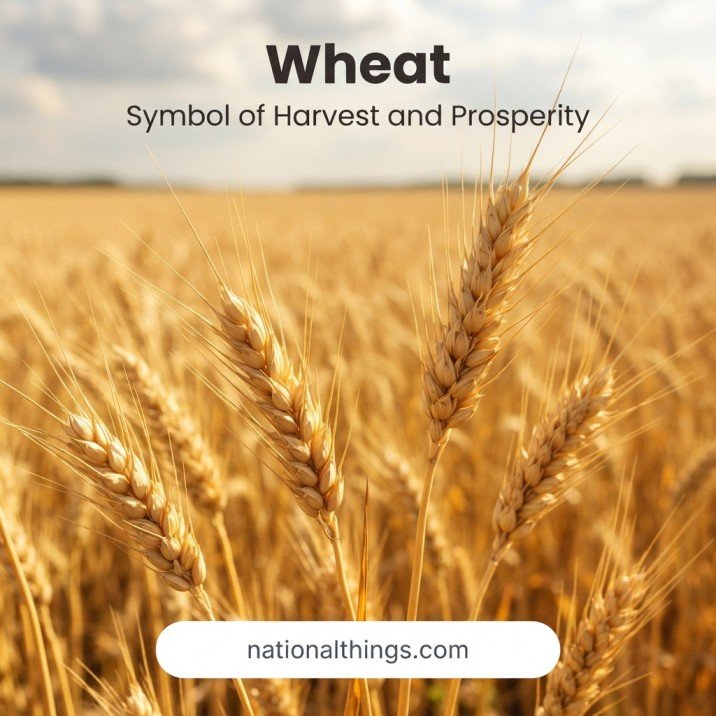
Wheat represents Ukraine’s agricultural heritage and the importance of farming to its economy and history.
Large areas of fertile soil have supported grain cultivation across the country for generations.
Golden wheat fields are often associated with prosperity, harvest, nourishment, and the connection between people and the land.
Wheat also appears in traditional decorations and harvest celebrations.
Its golden color contributes to the popular interpretation of the yellow band on Ukraine’s flag, although this interpretation is not an official constitutional definition.
Trees are important in Ukrainian rural traditions, folk songs, and cultural imagery. The willow and oak are among the trees associated with Ukrainian landscapes and traditional beliefs.
Neither should automatically be described as an officially designated national tree.
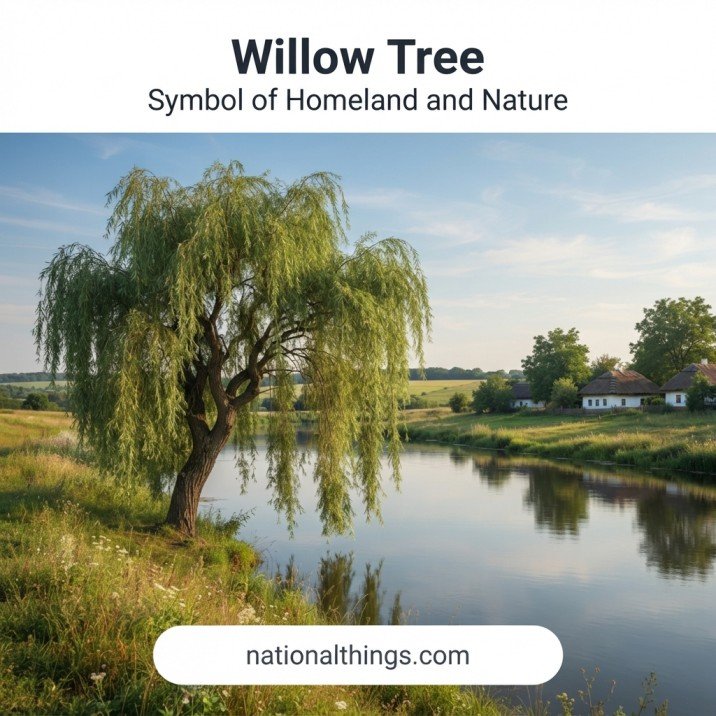
The willow tree is closely associated with rivers, village landscapes, and traditional Ukrainian life.
Willows commonly grow near water and are recognizable by their flexible branches and narrow leaves.
In Ukrainian folklore, the willow can represent the homeland, nature, and the emotional connection between people and familiar landscapes.
Willow branches also appear in religious customs associated with Palm Sunday, often called Willow Sunday in Ukrainian tradition.
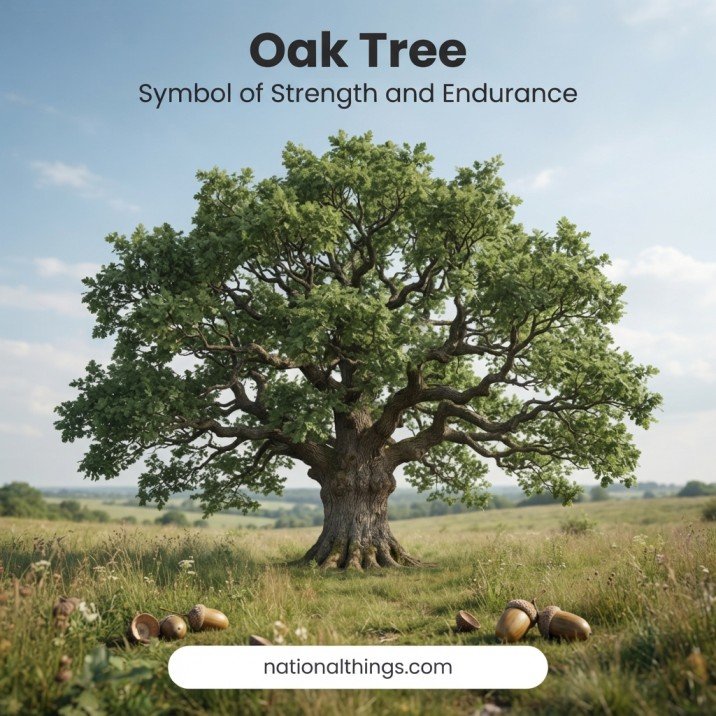
The oak tree is traditionally associated with strength, endurance, and long life.
Its sturdy trunk, broad branches, and ability to survive for many generations have contributed to its symbolic importance.
Oak imagery appears in Slavic cultural traditions, including those connected with Ukraine.
The tree represents strength and continuity, but it is not established here as an officially designated national tree.
Traditional Ukrainian embroidery is an important expression of regional heritage and cultural identity. Patterns, colors, and techniques vary across different parts of the country.
Embroidered clothing and textiles are used during holidays, family ceremonies, and cultural celebrations.
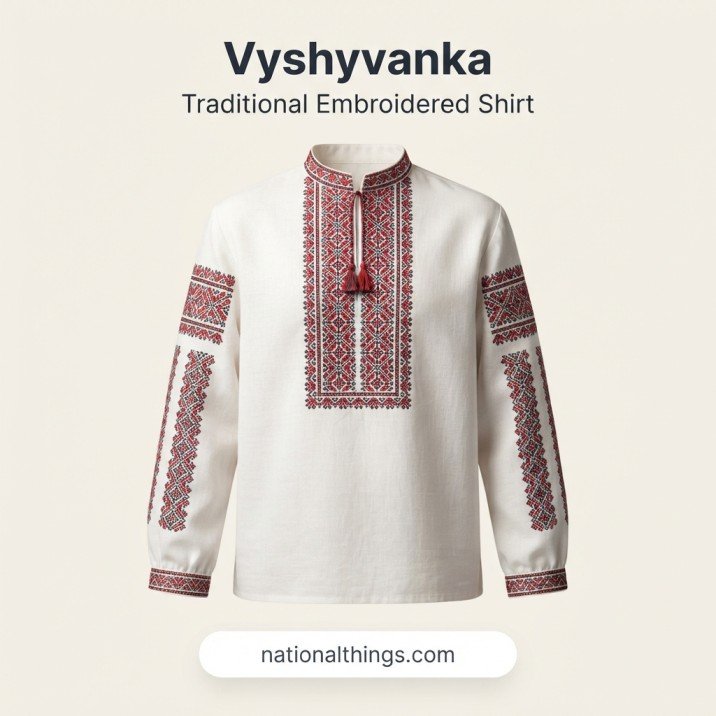
A vyshyvanka is a traditional Ukrainian embroidered shirt or blouse. It often features decorative patterns around the collar, chest, and sleeves.
Common designs include geometric shapes, flowers, and plant motifs.
Red, black, blue, and other colors appear in different regional embroidery traditions. Their meanings can vary depending on the design and locality.
Today, Ukrainians wear vyshyvankas during celebrations, national events, and everyday occasions.
Vyshyvanka Day, observed on the third Thursday of May, celebrates Ukrainian embroidery and cultural identity.
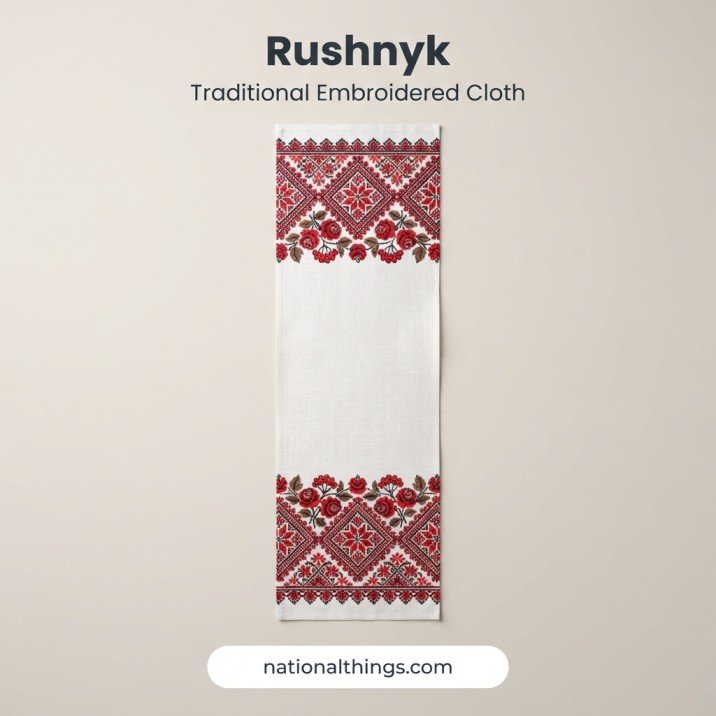
A rushnyk is a traditional embroidered cloth used in Ukrainian family and ceremonial life.
It often features colorful embroidery arranged along its ends or borders.
Rushnyky have important roles in wedding ceremonies, religious practices, and household traditions.
At weddings, an embroidered rushnyk may be used during symbolic rituals involving the couple.
Its designs can express family connections, blessings, and continuity between generations.
Ukraine has a rich tradition of decorative art, music, and folk dance. These practices reflect regional customs and preserve skills passed down through families and communities.
Several Ukrainian cultural traditions also have international heritage recognition, which is different from being designated a constitutional state symbol.
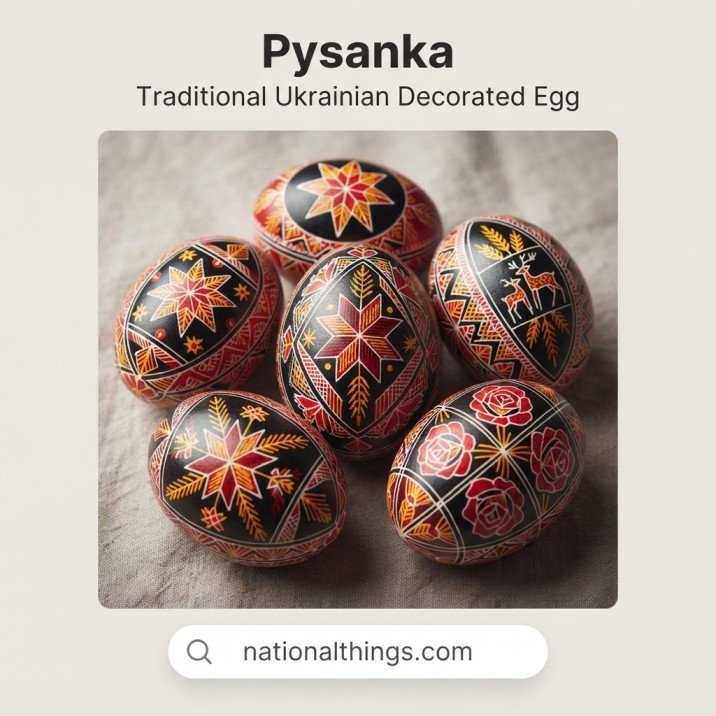
A pysanka is a traditional Ukrainian decorated egg made using a wax-resist technique.
Artists apply wax to create patterns, dye the egg, and repeat the process to build intricate designs.
Common motifs include stars, flowers, geometric shapes, and other traditional patterns.
Pysanky are associated with Easter, renewal, life, and cultural continuity.
In 2024, the tradition of Ukrainian pysanka was inscribed on UNESCO’s Representative List of the Intangible Cultural Heritage of Humanity through a multinational nomination involving Ukraine and Estonia.
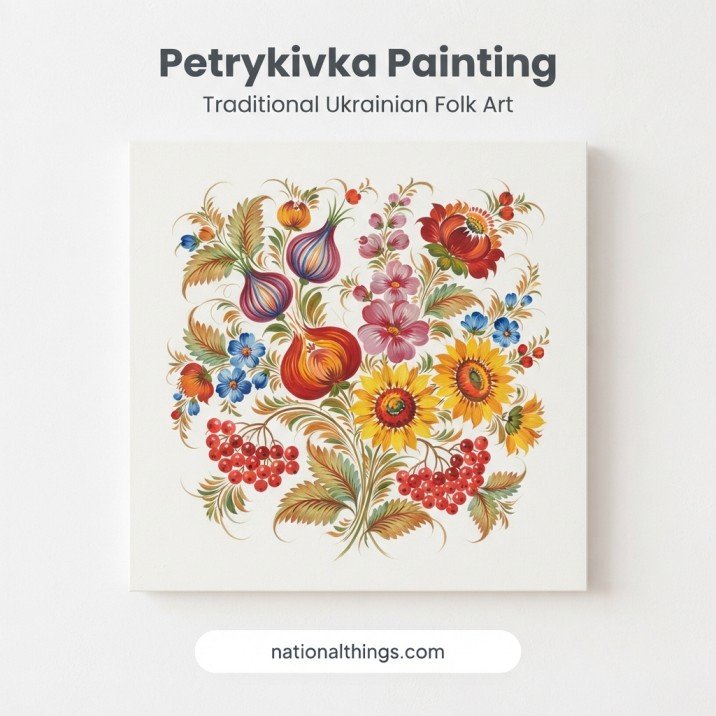
Petrykivka painting is a Ukrainian decorative art tradition known for colorful floral patterns, leaves, berries, and sometimes birds.
The tradition takes its name from the village of Petrykivka in central Ukraine.
Artists use distinctive brushwork to create flowing botanical designs on household objects and decorative surfaces.
Petrykivka decorative painting was inscribed on UNESCO’s Representative List of the Intangible Cultural Heritage of Humanity in 2013.
It remains an important example of Ukrainian folk craftsmanship.
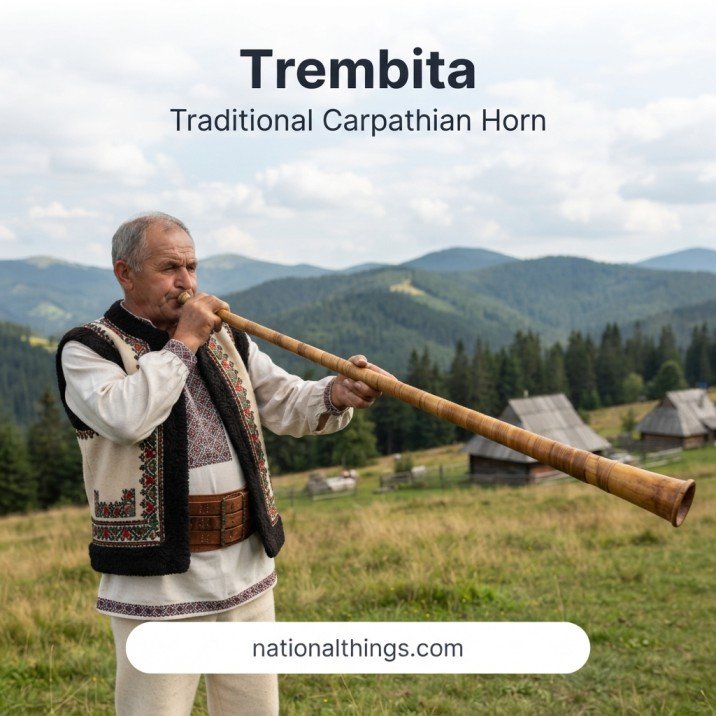
The trembita is a long wooden wind instrument associated with the Hutsul people of Ukraine’s Carpathian Mountains.
It resembles a long, narrow horn and produces a powerful sound that can carry across mountainous landscapes.
Traditionally, trembitas were used for communication, announcements, and ceremonial occasions.
The instrument is especially connected with the musical heritage of western Ukraine.
Its distinctive appearance makes it an important symbol of Carpathian regional culture.
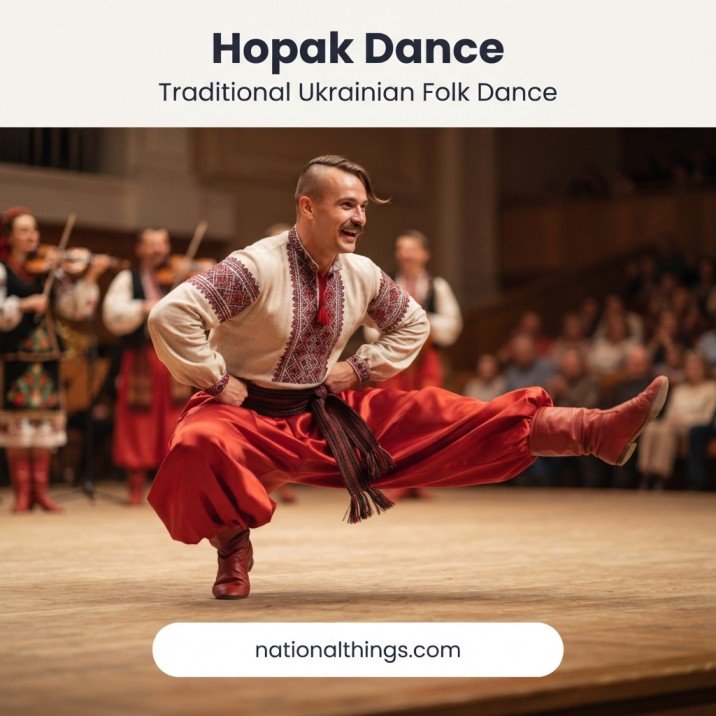
Hopak is a traditional Ukrainian folk dance known for energetic movements, jumps, turns, and low squatting kicks.
It developed from dance traditions associated with the Zaporizhian Cossacks and later became an important part of Ukrainian staged folk performance.
Modern performances often feature colorful costumes, coordinated group movements, and lively music.
Hopak is widely recognized as a distinctive expression of Ukrainian cultural heritage.
Food plays an important role in Ukrainian family gatherings, religious celebrations, and hospitality traditions. Certain dishes and ceremonial foods carry meanings beyond everyday meals.
Borscht, korovai, and bread with salt are particularly important examples.
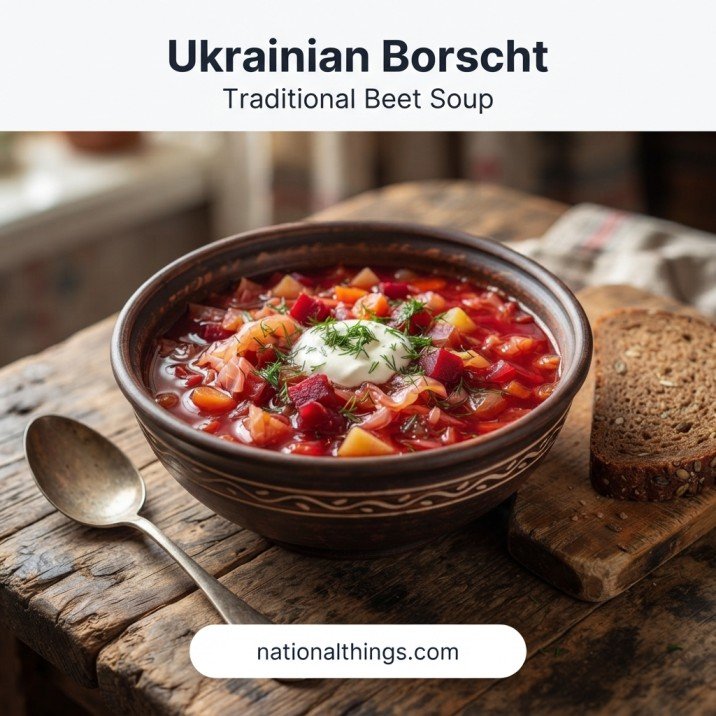
The borscht is a traditional soup commonly prepared with beetroot, cabbage, potatoes, and other vegetables.
Recipes vary across Ukrainian regions and families. Some versions contain meat, while others are vegetarian.
Borscht is associated with home cooking, hospitality, and family traditions.
In 2022, UNESCO inscribed the culture of Ukrainian borscht cooking on its List of Intangible Cultural Heritage in Need of Urgent Safeguarding.
The recognition concerns the cultural practices of Ukrainian borscht cooking, not a claim that similar soups belong exclusively to one country.
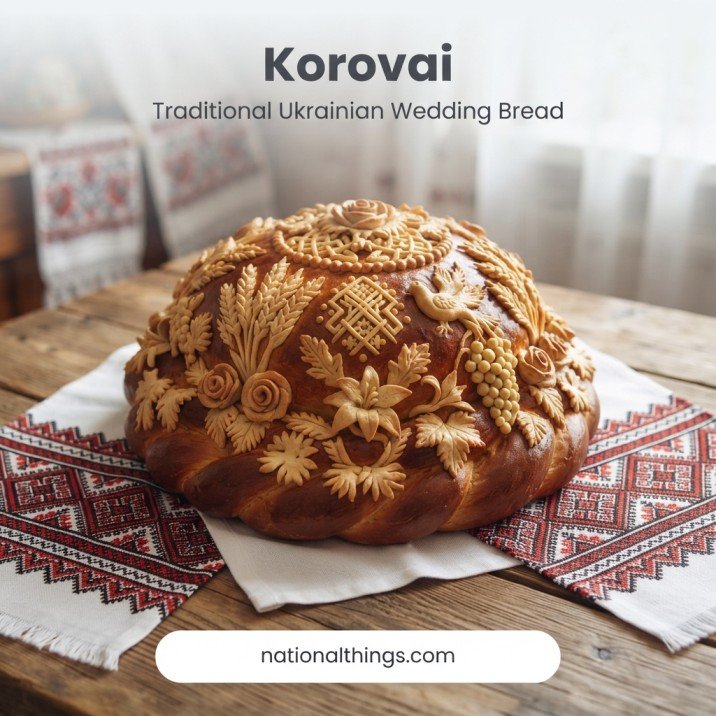
Korovai is a traditional ceremonial bread associated especially with Ukrainian weddings.
It is often round and decorated with dough ornaments shaped like flowers, leaves, birds, or wheat.
The bread symbolizes blessings, family unity, prosperity, and hopes for a successful marriage.
Preparing and sharing korovai can involve family members and traditional wedding customs.
Its elaborate decorations make it both a ceremonial food and an example of traditional craftsmanship.
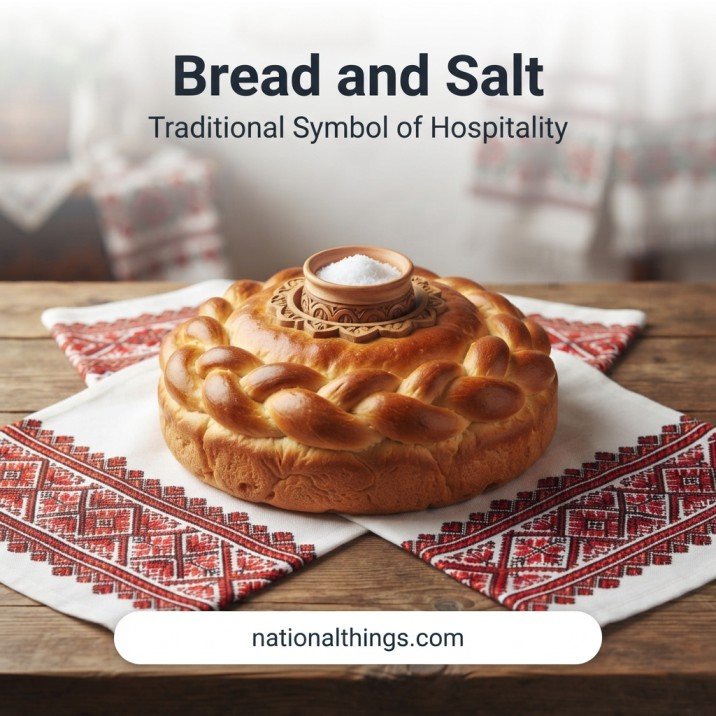
Bread and salt are traditional symbols of hospitality and respect in Ukraine.
Guests may be welcomed with bread presented on an embroidered cloth, often accompanied by salt.
Bread represents nourishment and prosperity, while salt has long been valued as an important household ingredient.
The custom is shared with several neighboring cultures, but it also holds an established place in Ukrainian ceremonial traditions.
Ukraine’s national symbols reflect different periods of its history, from medieval statehood to modern independence. Some developed through political movements, while others became important through everyday traditions.
The Tryzub connects modern Ukraine with historical symbols associated with Kyivan Rus. Its reappearance in modern state symbolism emphasizes continuity across centuries.
The blue-and-yellow flag became prominent in Ukrainian national movements and was formally established as the state flag after independence.
Traditional embroidery, decorated eggs, folk songs, and ceremonial foods preserve cultural practices that developed across different regions.
Ukraine’s history also includes diverse regional influences. Carpathian musical traditions, central Ukrainian decorative painting, and local embroidery styles show that Ukrainian cultural heritage is not uniform.
Since 2022, familiar symbols such as the sunflower, flag, and vyshyvanka have gained additional visibility as expressions of solidarity, resilience, and cultural identity.
Their modern significance builds on older traditions rather than replacing them.
Not every symbol commonly associated with Ukraine has the same legal recognition. The country’s Constitution identifies three state symbols, while other cultural traditions may receive separate forms of heritage recognition.
| Recognition Type | Examples | Meaning |
|---|---|---|
| Constitutional state symbols | Flag, Tryzub, anthem | Formally established symbols of the Ukrainian state |
| UNESCO-recognized heritage | Petrykivka painting, Ukrainian borscht cooking, pysanka tradition | Recognized cultural practices, not constitutional state symbols |
| Traditional cultural symbols | Vyshyvanka, rushnyk, stork, kalyna | Important through customs, folklore, and cultural history |
| Popular natural associations | Sunflower, wheat, European bison | Associated with landscapes, agriculture, or wildlife |
Several distinctions are especially important.
UNESCO recognition also has a specific meaning. It acknowledges cultural heritage and safeguarding efforts; it does not automatically make a tradition an official national emblem.
Ukraine’s symbols have several distinctive historical and cultural features that help explain their importance.
1. The Tryzub predates modern Ukraine. Related trident symbols appeared on coins associated with the medieval ruler Volodymyr the Great.
2. The flag has a defined proportion. Ukraine’s national flag uses two equal horizontal bands with an official width-to-height ratio of 3:2.
3. The anthem combines nineteenth-century poetry and music. Pavlo Chubynsky wrote the original poem, while Mykhailo Verbytsky composed its music.
4. Petrykivka painting has international heritage recognition. UNESCO added the decorative painting tradition to its intangible cultural heritage list in 2013.
5. Pysanky use a special decorating technique. Traditional designs are created through repeated applications of wax and dye rather than simply painting colors onto an egg.
6. The trembita is connected with mountain communication. Its powerful sound made it useful for signaling across Carpathian landscapes.
7. Ukrainian embroidery varies by region. Traditional patterns, stitches, and color combinations differ across communities, making embroidered clothing an expression of local as well as national heritage.
Ukraine’s three official state symbols are the national flag, the Tryzub coat of arms, and the national anthem. They are established under Article 20 of the Ukrainian Constitution.
Blue is commonly associated with the sky, while yellow represents golden wheat fields. This is a popular cultural interpretation; the Constitution specifies the colors without formally assigning those meanings.
Ukraine does not have a clearly established official national animal. The European bison is associated with the country’s wildlife heritage, but it should not be presented as a legally designated national animal.
The sunflower is widely associated with Ukraine because of its agricultural importance and cultural symbolism. However, its popularity does not establish it as an officially designated national flower.
The white stork and nightingale are prominent traditional bird symbols. The stork represents home and family, while the nightingale is associated with singing and poetry. Neither is a constitutional state symbol.
The Tryzub represents Ukrainian statehood and historical continuity. Its origins are connected with medieval Kyivan Rus, and it appears as a golden trident on Ukraine’s official blue shield.
The vyshyvanka is a traditional embroidered shirt that represents Ukrainian heritage and cultural identity. Its patterns preserve regional craftsmanship and remain important during celebrations, holidays, and national events.