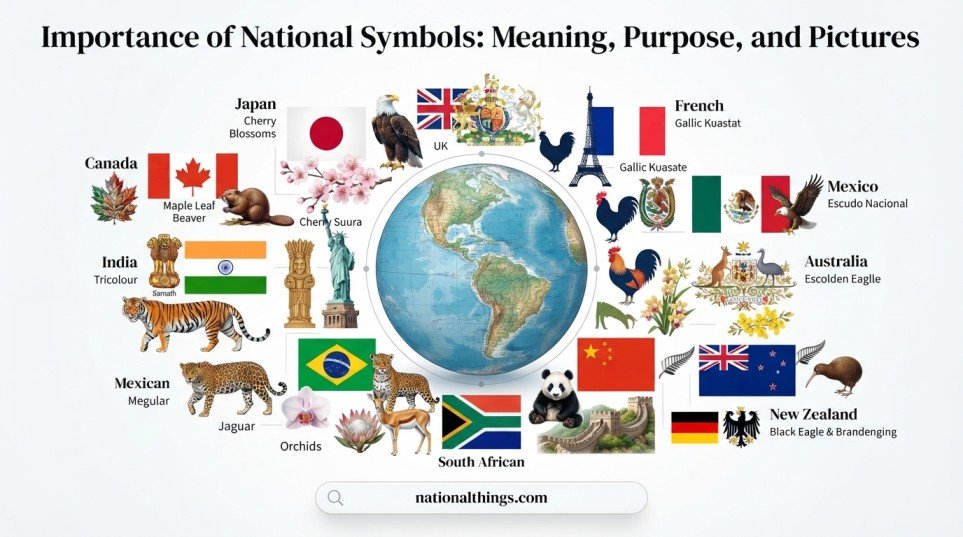
National symbols are important because they represent a country’s identity, history, culture, values, and national unity. They give people a shared sense of belonging and help distinguish one nation from another. Symbols such as the national flag, national anthem, national emblem, national animal, national bird, and national flower reflect a country’s natural heritage, historical events, traditions, and achievements. They also represent the pride, independence, and sovereignty of a nation. This article explains the importance of national symbols, their meaning, purpose, and role in society. It explores how these symbols preserve…
Read MoreCategory: National Symbols
Welcome to the National Symbols section of nationalthings.com. This section provides clear and detailed information about the official symbols that represent countries around the world. It is designed for learners who want to understand the meaning, history, and importance of each nation’s symbols in simple and easy English.
In this section, you will learn:
- What Are National Symbols – flags, emblems, anthems, animals, flowers, and other official symbols
- History and Origin – how and why the symbol was adopted
- Meaning and Symbolism – what the symbol represents for the country and its people
- Cultural and Historical Importance – its role in traditions, celebrations, and national identity
- Interesting Facts – unique details and educational information
National symbols are more than images or objects. They represent a country’s history, culture, values, and pride. Learning about national symbols helps students, teachers, and curious learners improve general knowledge, vocabulary, and understanding of global nations. Each symbol tells a story about the identity and heritage of its country.
National Symbols of Poland: Names, Meanings, and Significance
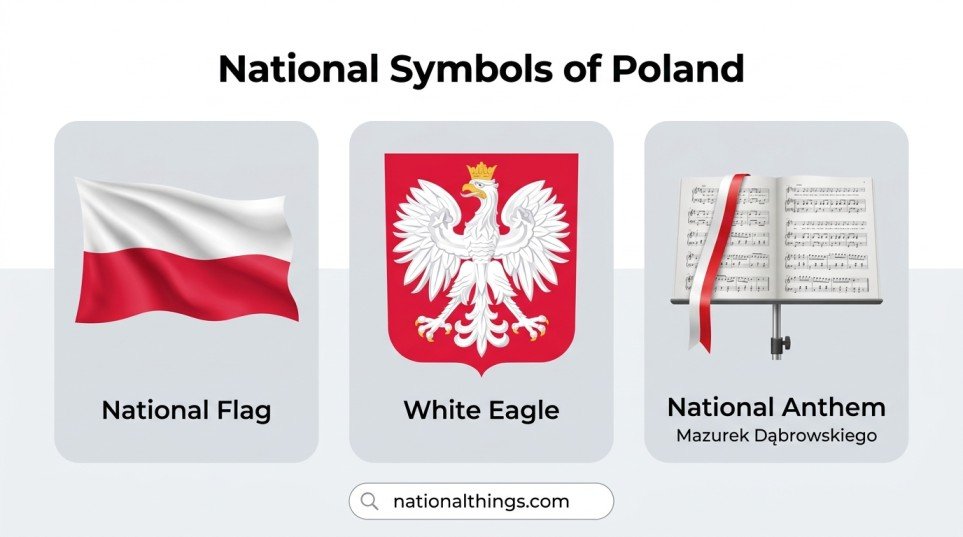
Poland’s national symbols include its white-and-red flag, the White Eagle coat of arms, and the national anthem, Mazurek Dąbrowskiego. These symbols represent the country’s sovereignty, historical identity, and determination to preserve its national heritage. Located in Central Europe, Poland has a long history in which national emblems, patriotic songs, and traditional colours have played important roles, particularly during periods when the country lost its independence. Other familiar associations, including the European bison and the artistic figure of Polonia, also contribute to Poland’s cultural identity. However, not every popular national symbol…
Read MoreNational Symbols of Ukraine: Names, Meanings, and Pictures
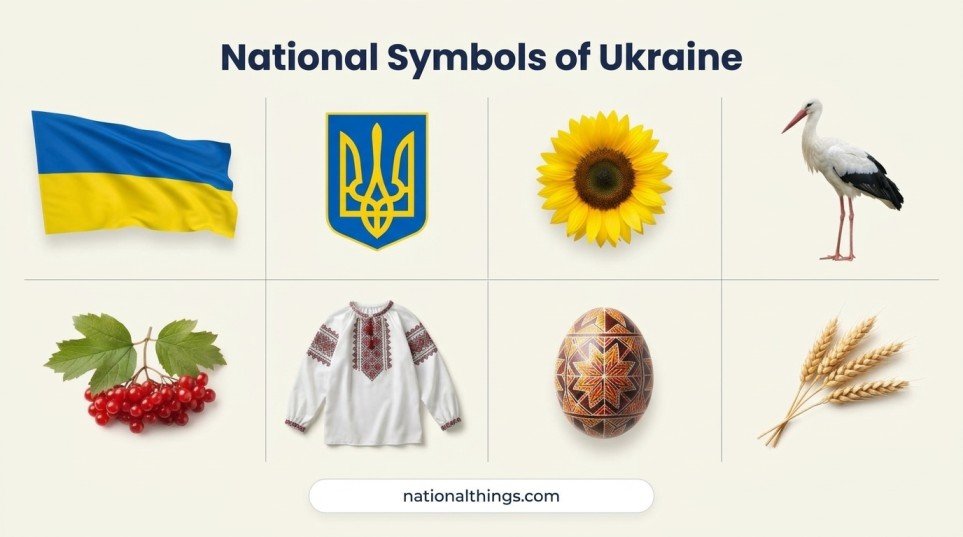
National Symbols of Ukraine include the blue and yellow flag, the golden trident coat of arms, and the national anthem. These three official state symbols represent Ukraine’s independence, history, and national identity. The country also has many traditional symbols, including the sunflower, white stork, viburnum, embroidered clothing, and decorated Easter eggs. Each has a special place in Ukrainian culture, folklore, or everyday life. Some are recognized by law, while others have become important through centuries of tradition. This article explains the names, appearances, meanings, and cultural significance of Ukraine’s national…
Read MoreNational Symbols of Estonia: Names, Meanings, and Significance
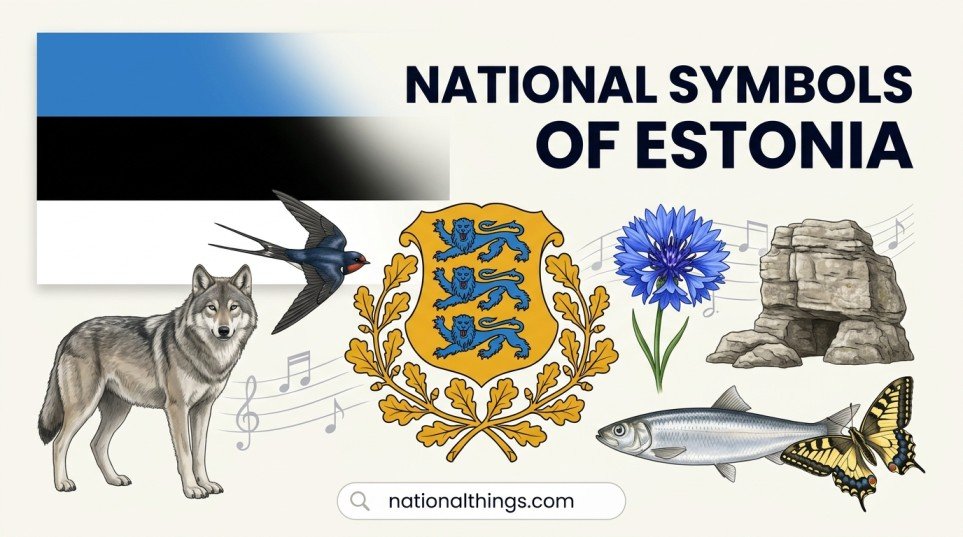
National symbols of Estonia represent the country’s independence, history, cultural identity, and natural heritage. Its principal state symbols include the blue, black, and white national flag, the coat of arms featuring three blue lions, and the national anthem, Mu isamaa, mu õnn ja rõõm. Estonia is also associated with several natural symbols, including the wolf, barn swallow, cornflower, limestone, Baltic herring, and swallowtail butterfly. These symbols connect Estonian identity with the country’s landscape, traditions, and history. However, not every widely recognised national symbol has the same legal status. Understanding the…
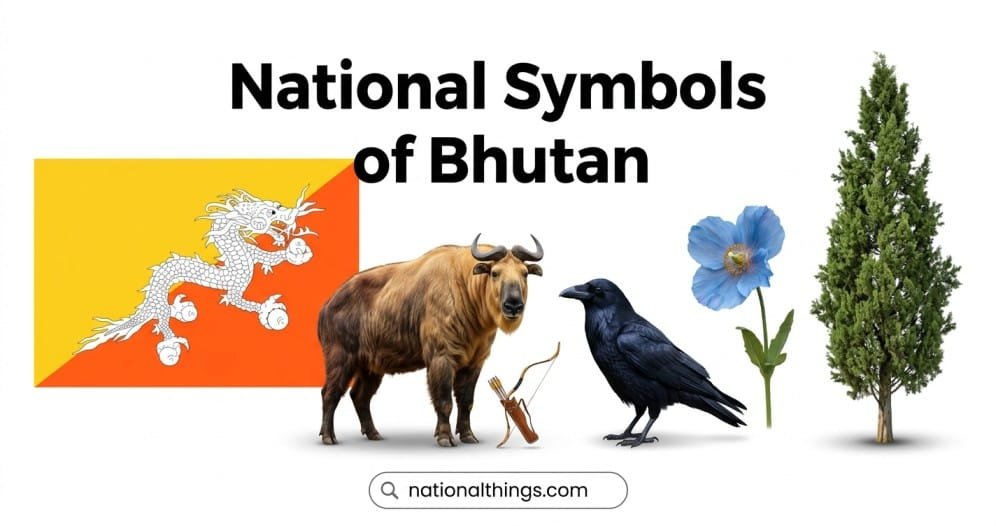
Read MoreNational Symbols of Bhutan: Names, Pictures, and Facts
National Symbols of Bhutan represent the country’s history, culture, religion, wildlife, and national identity. Bhutan is a small Himalayan kingdom between India and China. It is known for its mountain landscapes, Buddhist traditions, and strong cultural identity. Its national symbols include the takin, common raven, blue poppy, Himalayan cypress, and thunder dragon. Each has a special connection to Bhutanese life. Some are officially recognised national symbols. Others are important cultural and religious signs. Learning about these symbols helps explain how Bhutan protects its traditions while developing as a modern country.…
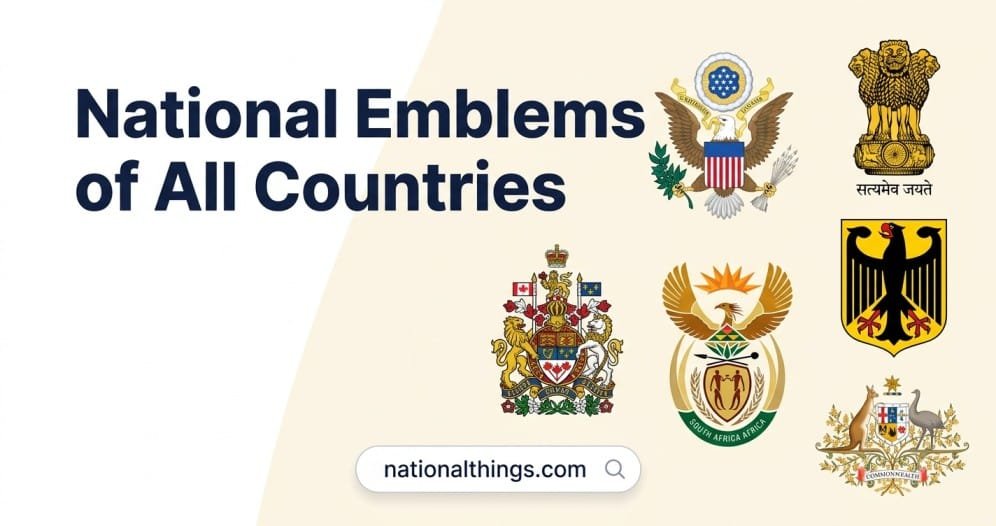
Read MoreNational Emblems of All Countries: List of World Coat of Arms
National Emblems of All Countries include official designs used to identify and represent nations around the world. These emblems appear on government documents, passports, official buildings, public records, and state publications. Their designs vary from country to country, featuring elements such as heraldic shields, eagles, lions, stars, and traditional patterns. Some nations use a coat of arms as their national emblem, while others have a distinct official design. This worldwide list covers national emblems across Asia, Europe, Africa, North America, South America, and Oceania, with country names and details about…
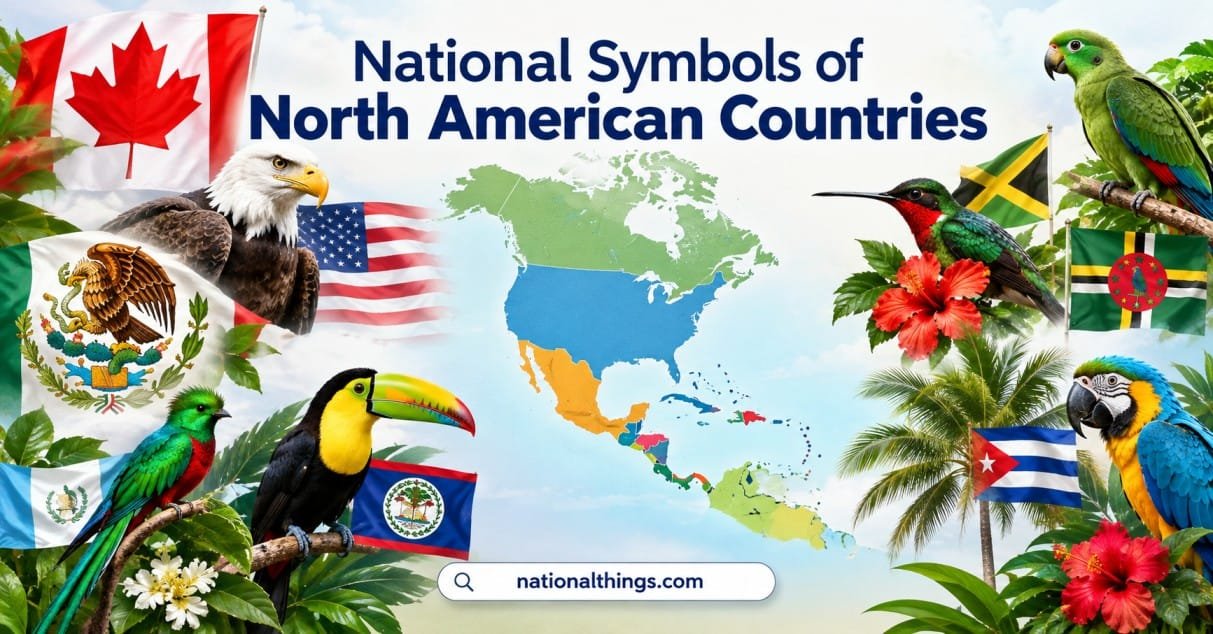
Read MoreNational Symbols of North American Countries
National symbols of North America tell stories about identity, history, land, independence, and culture. A maple leaf can represent Canada, an eagle and cactus can identify Mexico, and a Sisserou parrot can represent Dominica. These symbols are not simply decorative images. Many have links to national history, natural life, Indigenous heritage, or independence. North America has 23 sovereign countries under the geographic classification used in this article. They include Canada, the United States, Mexico, the seven countries of Central America, and 13 sovereign Caribbean countries. The International Organization for Migration…
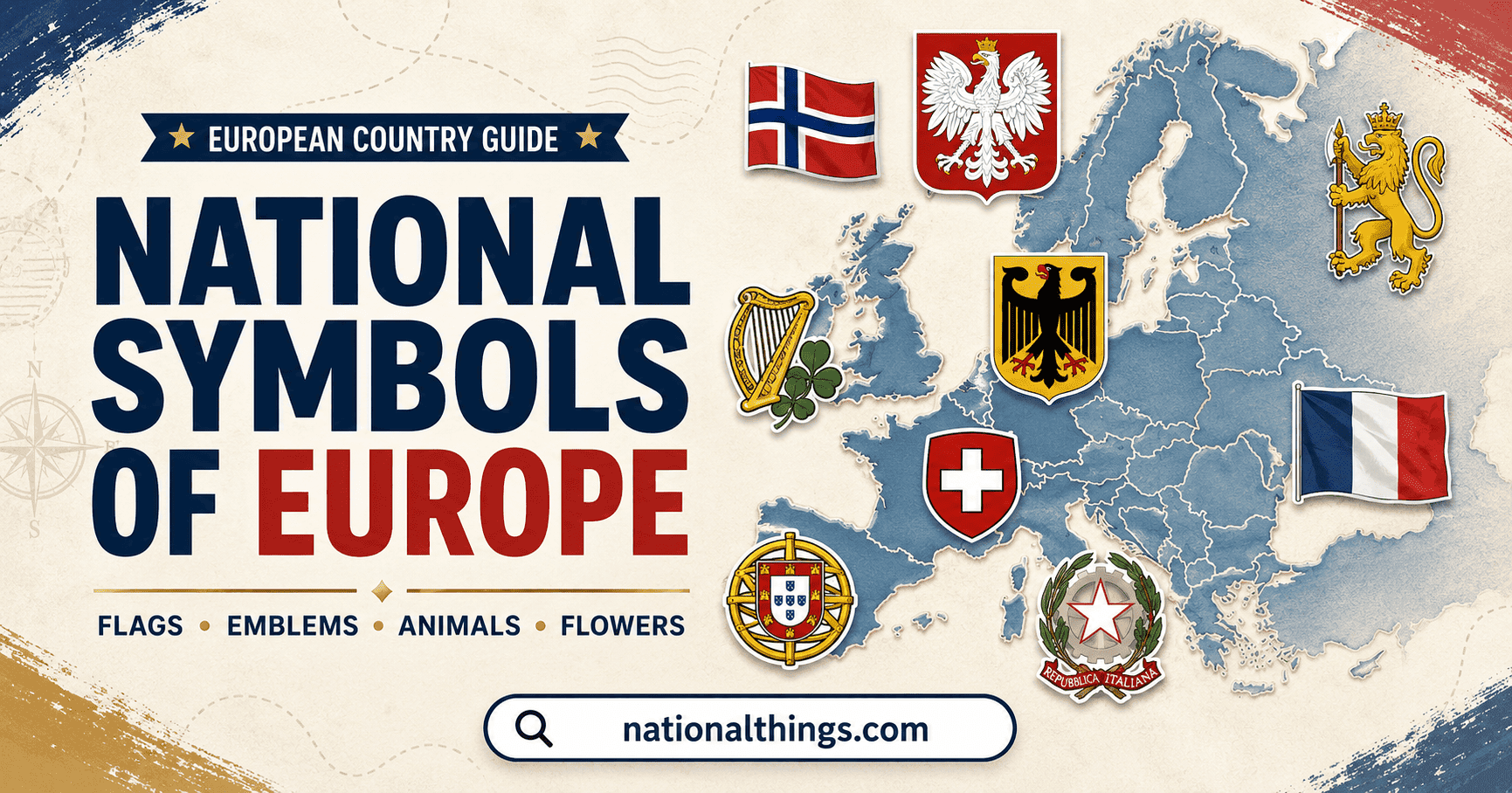
Read MoreNational Symbols of European Countries: Explained with History
National Symbols of European Countries show how nations express their history, political identity, land, beliefs, and shared memory. A flag may recall a revolution. A coat of arms may preserve a royal or medieval design. An animal may appear in state heraldry without being an official national animal. These differences make European country symbols interesting, but they also create many errors in online lists. This guide covers flags, emblems, anthems, animals, birds, plants, mottos, and cultural icons. It also explains which symbols have legal status and which ones are only…
Read MoreNational Symbols of Asian Countries: Explained with Meanings
National Symbols of Asian Countries reveal far more than a flag’s colors or the name of a national animal. A sun may mark independence. A mountain may show geography. A bird may represent freedom, courage, or survival. Yet many online lists mix official state symbols with popular animals, tourist icons, and old emblems. This guide explains the flags of Asia, national animals of Asia, national flowers, emblems, anthems, and other country symbols in clear language while separating verified facts from common associations. Introduction to the National Symbols of Asian Countries…
Read MoreNational Symbols of African Countries: Explained with Meanings
National symbols of African countries tell the continent’s story through colors, animals, plants, songs, and emblems. Ghana’s black star represents African freedom and independence. Uganda places the grey crowned crane on its flag as a sign of grace and national identity. Across the continent, elephants, lions, shields, farming tools, and rising suns appear on coats of arms to represent strength, work, unity, and hope. Together, these images connect each modern nation with its history, natural environment, and shared values. The United Nations includes 54 African countries in its African Group.…
Read More