National Symbols of Asian Countries: Explained with Meanings
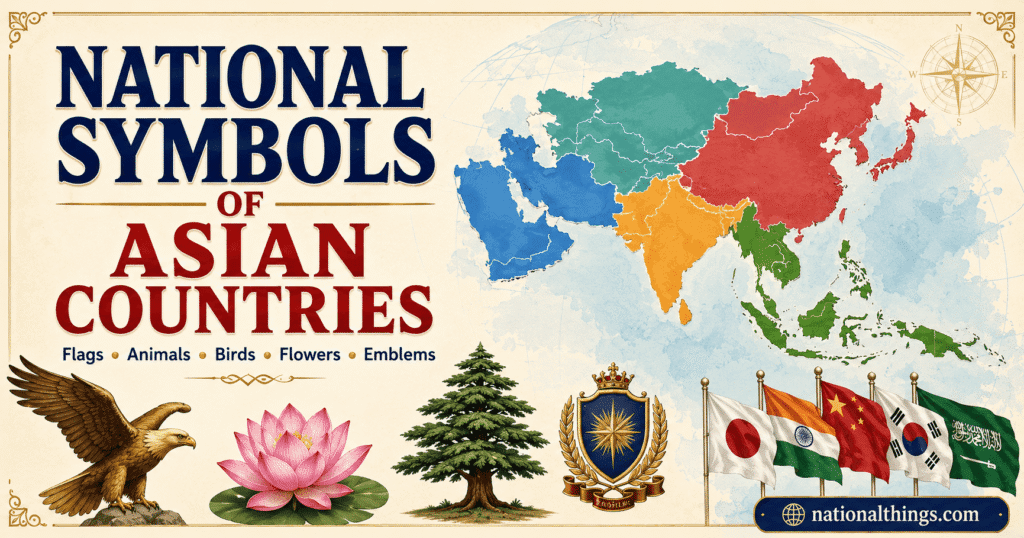
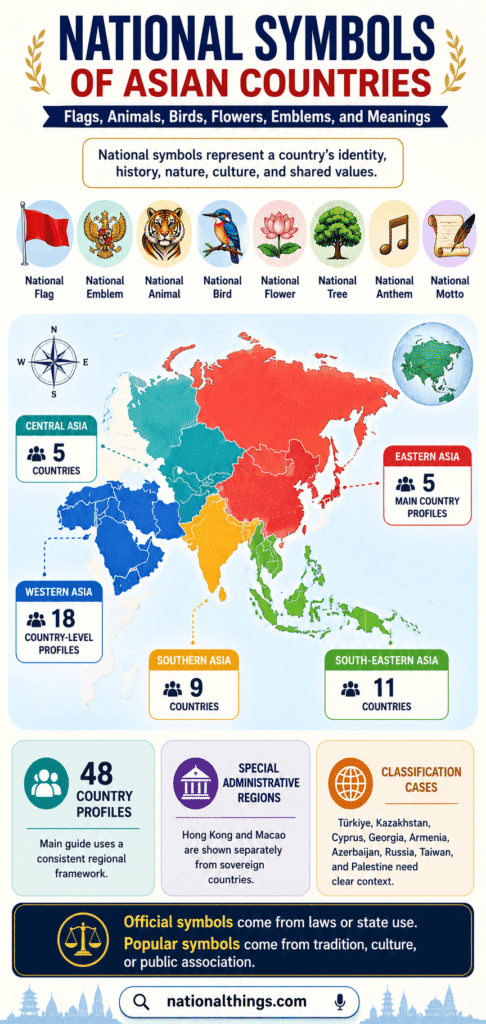
National Symbols of Asian Countries reveal far more than a flag’s colors or the name of a national animal. A sun may mark independence. A mountain may show geography. A bird may represent freedom, courage, or survival. Yet many online lists mix official state symbols with popular animals, tourist icons, and old emblems. This guide explains the flags of Asia, national animals of Asia, national flowers, emblems, anthems, and other country symbols in clear language while separating verified facts from common associations.
Contents
39mn read
Introduction to the National Symbols of Asian Countries
Asia has monarchies, republics, island states, mountain nations, desert countries, and some of the world’s oldest cultures. This diversity appears in its flags, emblems, plants, animals, songs, and mottos. Japan uses a simple sun disc, while Cambodia places Angkor Wat on its flag. Nepal uses the world’s only non-rectangular national flag, while Saudi Arabia places Arabic text and a sword on its flag.
National symbols can explain:
Political history: Revolutions, independence movements, royal dynasties, and constitutional change often shape flags and emblems.
Natural heritage: Tigers, eagles, orchids, cedars, and other species connect national identity with local wildlife.
Religious traditions: Crescents, crosses, sacred wheels, temples, and religious text appear in some national designs.
Shared values: Anthems and mottos often refer to unity, liberty, faith, progress, courage, or loyalty.
Geography: Mountains, rivers, islands, deserts, forests, and agricultural crops appear in many state emblems.
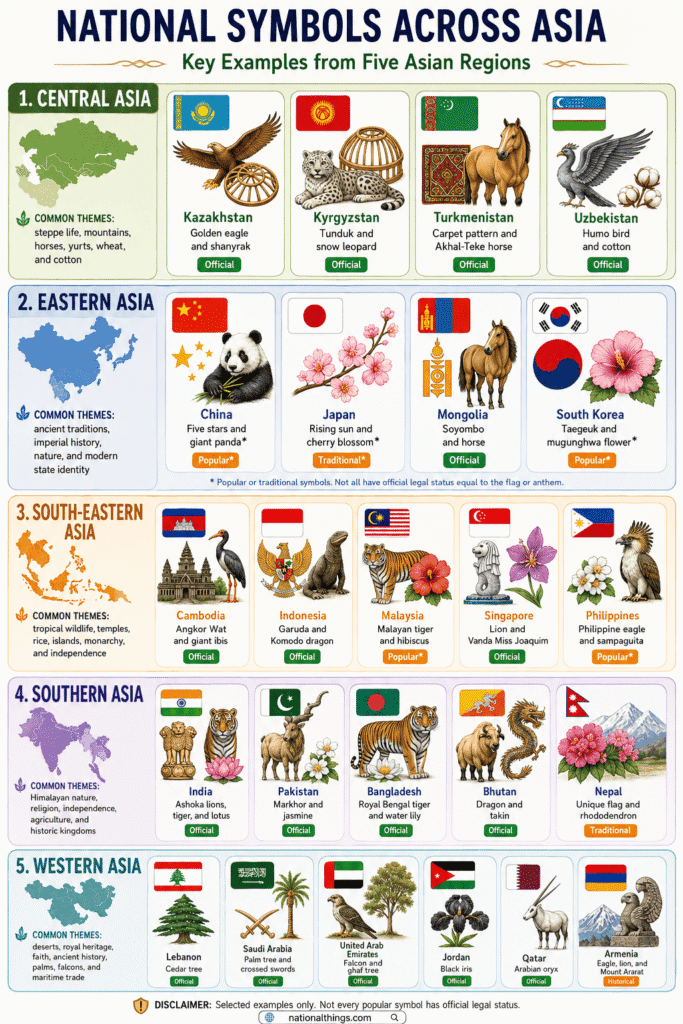
This article follows five Asian subregions: Central Asia, Eastern Asia, South-eastern Asia, Southern Asia, and Western Asia. This structure makes a large and diverse continent easier to study.
Definition of National Symbol
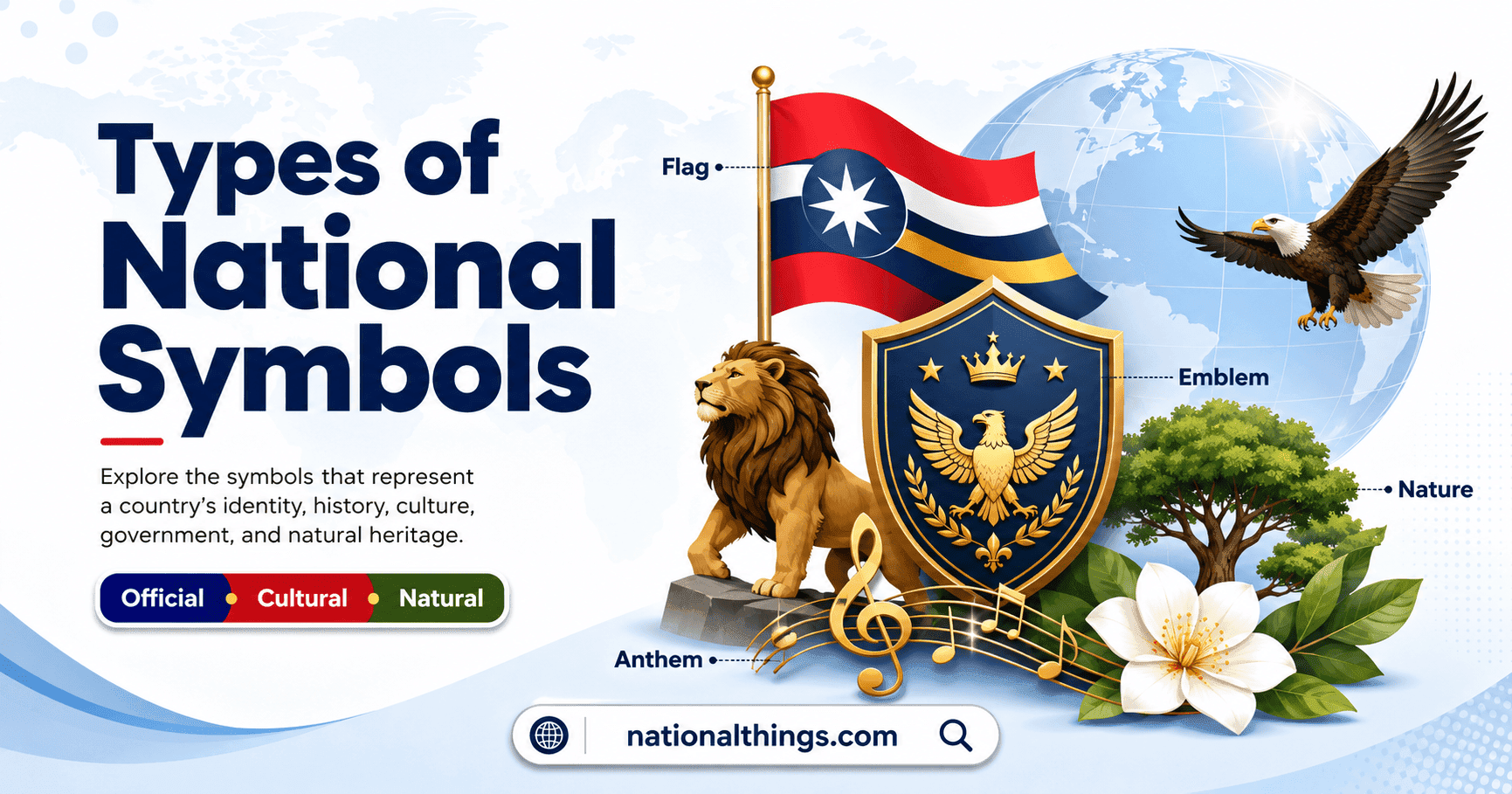
A national symbol is an image, object, living species, song, phrase, design, or institution used to represent a country. Some symbols receive formal recognition through a constitution, law, decree, proclamation, or government decision. Others become national symbols through long public use.
A flag and an anthem normally have clear legal status. A national flower or animal may be less certain. A government may promote a species without legally declaring it the national animal. This difference matters because popularity does not prove official recognition.
Official State Symbols
Official state symbols normally include the national flag, state emblem, coat of arms, national anthem, and public seal. Governments control how people, businesses, and institutions may use some of these symbols.
The World Intellectual Property Organization also protects flags, armorial bearings, and other state emblems communicated by countries under Article 6ter of the Paris Convention. This protection helps stop people from registering protected state designs as ordinary commercial trademarks.
Official Natural Symbols
A country may formally select a national animal, bird, flower, tree, fruit, fish, or gemstone. These choices often support wildlife protection, cultural education, or national identity.
However, countries do not follow one standard list. India recognizes several well-known natural symbols. Japan has strong traditional plant and bird associations, but some do not have the same legal status as its flag or anthem. A careful article should never add a national animal or flower only to make every country profile look equal.
Cultural and Popular National Symbols
A cultural symbol can represent a country without being a legal state symbol. Examples include:
The cherry blossom in Japan
The giant panda in China
The olive tree in Palestine
The Komodo dragon in Indonesia
The cedar tree in Lebanon
The snow leopard across several Central Asian cultures
Such symbols may have deep national meaning. The writer must still label them as traditional, cultural, iconic, or popular when no legal declaration exists.
National Emblem vs. Coat of Arms vs. Seal
A coat of arms follows heraldic traditions. It may include a shield, supporters, a crown, a helmet, or a motto. Malaysia and Singapore use recognizable coats of arms.
A national emblem may use a different design system. China’s emblem includes Tiananmen Gate, stars, grain, and a cogwheel. Indonesia uses the Garuda Pancasila. These are state emblems, but they do not follow every rule of European heraldry.
A seal authenticates official documents or represents a specific office. The presidential seal of a country should not automatically be called its national coat of arms.
Which Countries Are Included in Asia?
Country totals for Asia differ because geography and politics do not always use the same boundaries. This guide uses the United Nations M49 statistical framework for regional organization. It provides a clear method instead of mixing geographic, cultural, and political lists.
National Symbols of Asian Countries
Geographic Framework Used in This Article
The UN M49 system divides Asia into five statistical subregions:
Central Asia
Eastern Asia
South-eastern Asia
Southern Asia
Western Asia
Using this method, the article presents 48 country-level profiles. Hong Kong and Macao are not counted as separate sovereign countries, while the State of Palestine appears in Western Asia with a status explanation. The UN system exists for statistical use and does not settle every political or cultural debate.
Transcontinental and Commonly Confused Classifications
Several countries create classification questions:
Kazakhstan lies mainly in Central Asia, although a small part extends west of the conventional Europe-Asia boundary.
Türkiye has territory in both Europe and Asia. The UN M49 system places it in Western Asia.
Russia extends across northern Asia but appears in Eastern Europe in the UN M49 framework.
Armenia, Azerbaijan, and Georgia lie in the South Caucasus and appear in Western Asia under M49.
Cyprus lies geographically in the eastern Mediterranean near Western Asia, although it has strong political and institutional links with Europe.
These classifications are tools for organization. They do not remove a country’s European, Asian, Mediterranean, Caucasian, or Eurasian identity.
Taiwan, Hong Kong, and Macao
The UN M49 system treats Hong Kong and Macao as Special Administrative Regions of China, not independent countries. Both have regional flags and emblems, but these are not sovereign national symbols.
Taiwan has its own government, flag, emblem, anthem, laws, and public institutions. Its international status remains disputed. For this reason, some country lists present Taiwan separately, while UN statistical tables place it within China. A neutral article should explain the framework instead of presenting one classification as universally accepted.
State of Palestine
The State of Palestine belongs in the Western Asia section of this guide. The United Nations granted it non-member observer State status on 29 November 2012. This status differs from full UN membership. It also differs from the separate question of which governments formally recognize Palestinian statehood.
Standard Format for Each Country Profile
Each profile focuses on:
Flag and emblem
National anthem
Motto, when officially established
Verified animals, birds, flowers, trees, or other natural symbols
Important cultural symbols with a clear unofficial label
Changes caused by independence, constitutional reform, or political transition
National Symbols of Central Asian Countries
Central Asia contains five countries. Their symbols often feature sunlight, mountains, birds, horses, wheat, cotton, and nomadic design traditions. Soviet history also influenced the structure of several modern emblems.
Kazakhstan
Flag: A sky-blue field with a golden sun, a soaring steppe eagle, and a traditional ornamental pattern near the hoist.
State emblem: A circular design centered on a shanyrak, the crown of a yurt, with winged horses and a star.
Anthem: “Meniñ Qazaqstanym,” meaning “My Kazakhstan.”
Cultural meaning: The eagle, yurt, steppe, and horse represent mobility, open land, heritage, and state independence. Claims about an official national animal should be checked separately.
Kyrgyzstan
Flag: A red field with a yellow sun. The center contains a tunduk, the circular roof structure of a yurt.
Emblem: A white falcon, mountain peaks, a rising sun, water, wheat, and cotton.
Anthem: The State Anthem of the Kyrgyz Republic.
Natural symbol: Kyrgyzstan declared the snow leopard a national symbol in 2023, linking national identity with mountain conservation.
Tajikistan
Flag: Horizontal red, white, and green bands with a gold crown and seven stars.
Emblem: A crown, seven stars, mountains, a rising sun, wheat, cotton, and an open book.
Anthem: “Surudi Milli,” meaning “National Anthem.”
Symbolic focus: The crown links closely with the country’s name and state identity. Cotton and wheat represent agriculture.
Turkmenistan
Flag: A green field with five carpet patterns, a white crescent, and five stars.
Emblem: A detailed circular design featuring an Akhal-Teke horse, carpet motifs, cotton, wheat, a crescent, and stars.
Anthem: The State Anthem of Independent, Neutral Turkmenistan.
Cultural symbols: The Akhal-Teke horse, traditional carpets, and Alabay dog have major cultural importance, although each category needs separate legal verification.
Uzbekistan
Flag: Blue, white, and green bands separated by thin red lines, with a crescent and twelve stars.
Emblem: The Humo bird, a rising sun, mountains, rivers, wheat, cotton, a crescent, and a star.
Anthem: “Oʻzbekiston Respublikasining Davlat Madhiyasi.”
Meaning: The Humo bird represents happiness and freedom, while cotton and wheat show the country’s agricultural heritage.
National Symbols of Eastern Asian Countries
Eastern Asian symbols reflect imperial history, revolutionary government, ancient philosophy, pastoral life, and modern statehood. Simple flag designs can carry complex meanings.
China
Flag: A red field with one large and four smaller gold stars.
National emblem: Tiananmen Gate beneath five stars, surrounded by grain and a cogwheel.
Anthem: “March of the Volunteers.”
Popular symbols: The giant panda, dragon, peony, and Great Wall strongly represent China, but they should not all be described as legally designated national symbols.
Flag: A wide red band bordered by white and blue, with a red star inside a white circle.
State emblem: Mount Paektu, a hydroelectric power station, power lines, rice ears, and a red star.
Anthem: “Aegukka,” or “Patriotic Song.”
Natural symbol: Magnolia sieboldii is widely presented by state sources as the national flower. The Chollima horse is an important political and cultural image.
Japan
Flag: A red sun disc on a white field.
Anthem: “Kimigayo.”
Emblem clarification: Japan does not use a general national coat of arms in the same way as many European states. The chrysanthemum seal belongs mainly to the Emperor and Imperial Family.
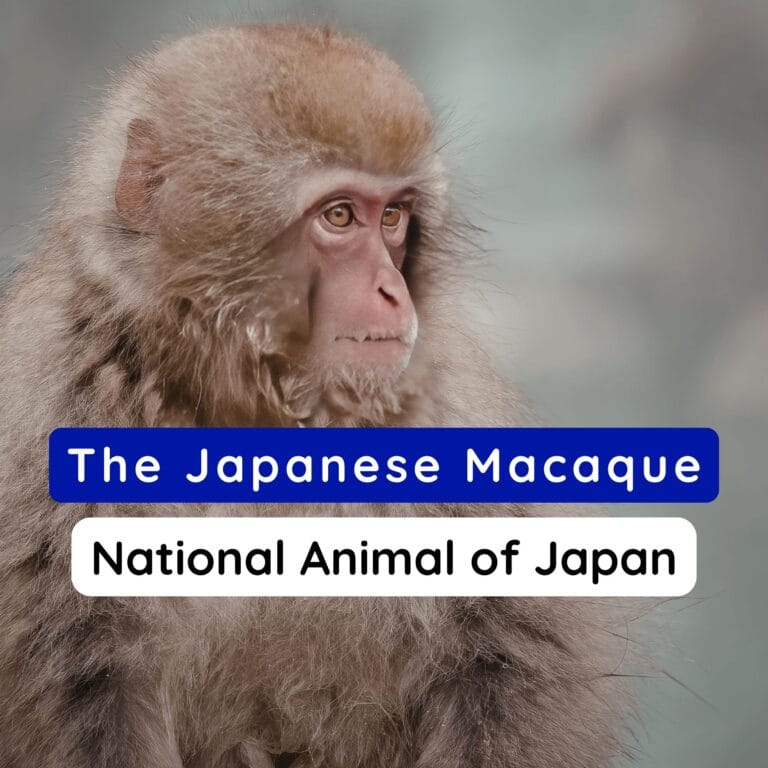
Traditional symbols: The cherry blossom, chrysanthemum, green pheasant, crane, and Mount Fuji are powerful national associations, but their legal status differs.
Mongolia
Flag: Red, blue, and red vertical bands, with the Soyombo symbol on the hoist-side red band.
State emblem: A wind horse, Soyombo sign, blue sky, lotus, wheel, and other Buddhist-influenced elements.
Anthem: The National Anthem of Mongolia.
Cultural symbols: Horses, the steppe, the ger, and the traditional Naadam sports strongly represent Mongolian identity.
South Korea
Flag: The Taegeukgi has a red-and-blue taegeuk at the center and four black trigrams.
National emblem: A taegeuk surrounded by five stylized petals.
Anthem: “Aegukga.”
Natural symbol: The mugunghwa, or Rose of Sharon, is the country’s recognized national flower. The tiger remains a major historic and cultural symbol.
National Symbols of South-eastern Asian Countries
South-eastern Asia includes mainland countries, large archipelagos, small island states, monarchies, and republics. Its symbols often feature rice, tropical flowers, birds, temples, royal objects, marine life, and independence colors.
Brunei
Flag: Yellow with diagonal white and black bands and the red national crest.
Emblem: A crescent, royal parasol, wings, hands, flag, and Arabic inscriptions.
Anthem: “Allah Peliharakan Sultan.”
Cultural focus: Many national symbols connect the state with Islam, the monarchy, peace, and royal protection. Simpor is widely recognized as the national flower.
Cambodia
Flag: Blue and red bands with a white image of Angkor Wat.
Royal arms: Royal umbrellas, lions, a crown, a sacred sword, and royal inscriptions.
Anthem: “Nokor Reach.”
Natural symbols: The kouprey, giant ibis, and rumduol flower have official national importance. Angkor Wat is a state symbol as well as a world-famous cultural landmark.
Indonesia
Flag: Two horizontal bands, red above white.
National emblem: Garuda Pancasila, carrying a shield and a scroll with the motto “Bhinneka Tunggal Ika,” meaning “Unity in Diversity.”
Anthem: “Indonesia Raya.”
Natural symbols: Officially selected flora and fauna include the jasmine, moon orchid, Rafflesia arnoldii, Komodo dragon, Javan hawk-eagle, and Asian arowana.
Laos
Flag: Red-blue-red horizontal bands with a white disc.
National emblem: Pha That Luang, a dam, road, fields, forest, cogwheel, and rice.
Anthem: “Pheng Xat Lao.”
Cultural symbols: The dok champa flower, elephant, and Pha That Luang are strongly associated with Laos. Their official categories should be stated precisely.
Malaysia
Flag: Red-and-white stripes with a blue canton, yellow crescent, and fourteen-point star.
Coat of arms: A shield supported by two tigers, with a crescent, star, state colors, and the motto “Bersekutu Bertambah Mutu.”
Anthem: “Negaraku.”
Natural symbols: The hibiscus is the national flower, while the Malayan tiger is a central national and conservation symbol.
Myanmar
Flag: Yellow, green, and red bands with a large white star.
State seal: A map of the country surrounded by traditional design elements and guardian lions.
Anthem: “Kaba Ma Kyei.”
Cultural symbols: The padauk flower, green peafowl, white elephant, and chinthe are closely linked with Myanmar, but official status should be confirmed by category.
Philippines
Flag: Blue and red bands with a white triangle, golden sun, and three stars.
Coat of arms: The sun and stars appear with symbols linked to the country’s colonial history.
Anthem: “Lupang Hinirang.”
Natural symbols: The sampaguita, narra tree, and Philippine eagle have formal national recognition. The carabao also holds major cultural importance.
Flag: Red above white, with a crescent and five stars.
Coat of arms: A shield supported by a lion and tiger, with the motto “Majulah Singapura.”
Anthem: “Majulah Singapura.”
Official symbols: The Lion Head and Vanda Miss Joaquim orchid have formal national status. Singapore’s National Symbols Act 2022 came into force on 1 August 2023, showing how legal recognition can be more precise than popular online lists.
Thailand
Flag: Red, white, blue, white, and red horizontal bands.
National emblem: The Garuda, a mythological bird with deep Hindu and Buddhist roots.
Anthem: “Phleng Chat Thai.”
Natural symbols: The Thai elephant and ratchaphruek flower have recognized national importance. Royal symbols must be distinguished from state symbols.
Timor-Leste
Flag: Red with overlapping yellow and black triangles and a white star.
National emblem: A shield-like design containing Mount Ramelau, a star, a book, weapons, agricultural elements, and the motto “Unidade, Acção, Progresso.”
Anthem: “Pátria.”
Cultural symbol: The crocodile plays a central role in the country’s founding legend and is often used as a cultural image.
Vietnam
Flag: A yellow five-pointed star on a red field.
National emblem: A gold star, rice ears, and a cogwheel on a red background.
Anthem: “Tiến Quân Ca.”
Popular symbols: The lotus, bamboo, water buffalo, and áo dài represent Vietnamese culture. The lotus is widely promoted as a national flower, but writers should explain the basis of that claim.
National Symbols of Southern Asian Countries
Southern Asia combines Himalayan kingdoms, large republics, island states, and countries shaped by Persian, Islamic, Hindu, Buddhist, and colonial histories. The region has many clearly declared animals, birds, flowers, trees, and state mottos.
Afghanistan
Afghanistan requires special care because its current symbols reflect a continuing political and diplomatic dispute.
The Taliban authorities use a white flag with the shahada and describe the country as the Islamic Emirate of Afghanistan.
The former Islamic Republic used a black-red-green tricolor with the national emblem.
Russia became the first state to formally recognize the Taliban government in July 2025. Other governments have maintained different levels of contact without the same formal recognition.
Articles should label each flag, emblem, and anthem by government, period, and recognition status instead of presenting one version without context.
Flag: A red disc placed slightly toward the hoist on a green field.
National emblem: A water lily surrounded by rice sheaves, jute leaves, and stars.
Anthem: “Amar Sonar Bangla.”
Natural symbols: The Royal Bengal tiger, oriental magpie-robin, water lily, jackfruit tree, mango tree, and hilsa fish represent major official categories.
Bhutan
Flag: Yellow and orange with a white dragon holding jewels.
National emblem: A lotus, thunderbolts, a jewel, and two dragons.
Anthem: “Druk Tsendhen.”
Natural symbols: Bhutan recognizes the takin, raven, Himalayan blue poppy, and Himalayan cypress. These symbols connect the monarchy, Buddhism, mountain ecology, and national identity.
Flag: Saffron, white, and green with the navy-blue Ashoka Chakra.
State emblem: The Lion Capital of Ashoka, with the motto “Satyameva Jayate.”
Anthem and song: “Jana Gana Mana” is the national anthem, while “Vande Mataram” is the national song.
Natural symbols: The Bengal tiger, Indian peacock, lotus, banyan tree, and Ganges hold recognized national status.
Important distinction: India’s states and union territories have their own animals, birds, flowers, and trees. These are not national-level symbols.
Iran
Flag: Green, white, and red with the national emblem and repeated Arabic script along the band edges.
Emblem: A stylized design based on the word “Allah,” formed with crescents and a sword.
Anthem: The National Anthem of the Islamic Republic of Iran.
Historic distinction: The Lion and Sun belonged to earlier Iranian state traditions. Persian leopards, Asiatic lions, roses, and cypress trees remain cultural icons but need careful official labeling.
Maldives
Flag: A white crescent inside a green rectangle on a red field.
National emblem: A coconut palm, crescent, star, national flags, and a scroll.
Anthem: “Qaumii Salaam.”
Natural identity: The coconut palm, tuna, coral reefs, and marine life strongly represent the Maldives. Each official designation should be checked against government records.
Nepal
Flag: Two joined triangular pennants containing a moon and sun.
Coat of arms: Mount Everest, hills, the national map, joined hands, a wreath, and the national motto.
Anthem: “Sayaun Thunga Phulka.”
Natural symbols: The cow, Himalayan monal, rhododendron, and crimson color have national status. The flag’s shape makes Nepal unique among sovereign states.
Pakistan
Flag: A dark-green field with a white vertical band, crescent, and star.
State emblem: Cotton, wheat, tea, and jute appear around a shield, with a crescent, star, floral design, and the motto “Iman, Ittihad, Nazm.”
Anthem: “Qaumi Taranah.”
Natural symbols: The markhor, chukar partridge, jasmine, and deodar cedar are widely recognized national symbols. Provincial animals and plants should be listed separately.
Sri Lanka
Flag: A golden lion holding a sword, four bo leaves, and green and orange vertical bands.
National emblem: A lion, lotus petals, grain, a Buddhist wheel, and a sun-and-moon design.
Anthem: “Sri Lanka Matha.”
Natural symbols: The Sri Lankan junglefowl, blue water lily, and Ceylon ironwood have recognized national status. The lion mainly reflects historical state and royal traditions rather than the island’s present wildlife.
National Symbols of Western Asian Countries
Western Asia includes Arab monarchies, republics, Mediterranean countries, and South Caucasus states. National imagery draws from Islam, Christianity, ancient kingdoms, royal authority, Arab independence, mountains, deserts, agriculture, and maritime trade.
Armenia
Flag: Red, blue, and orange horizontal bands.
Coat of arms: An eagle and lion support a shield showing Mount Ararat and symbols of historic Armenian royal houses.
Anthem: “Mer Hayrenik.”
Cultural symbols: Mount Ararat, the apricot, khachkar stone crosses, and the Armenian eternity sign hold strong cultural meaning.
Azerbaijan
Flag: Blue, red, and green with a white crescent and eight-pointed star.
State emblem: A flame inside an eight-pointed star, surrounded by oak and wheat.
Anthem: “Azərbaycan Marşı.”
Cultural symbols: The Karabakh horse, fire, pomegranate, and traditional carpets are major national associations.
Bahrain
Flag: A white band and red field divided by five white points.
Coat of arms: A shield based on the national flag, topped by a royal crown.
Anthem: “Bahrainona.”
Cultural symbols: Pearls, dhows, falcons, date palms, and the Arabian oryx connect Bahrain with Gulf ecology and maritime trade.
Cyprus
Flag: A copper-colored map of the island above two olive branches.
Coat of arms: A dove carrying an olive branch, the year 1960, and an olive wreath.
Animal symbol: The Cypriot mouflon is one of the island’s strongest natural symbols.
Political care: The Republic of Cyprus and the self-declared Turkish Republic of Northern Cyprus use different flags and institutions. They must not be combined in one symbol list.
Georgia
Flag: A large red cross with four smaller red crosses on white.
Coat of arms: Saint George defeating a dragon, supported by two lions.
Anthem: “Tavisupleba.”
Motto: “Strength is in Unity.”
Cultural symbols: Grapevines, wine traditions, the Borjgali sun symbol, and the Caucasus mountains have deep importance.
Iraq
Flag: Red, white, and black horizontal bands with the words “Allahu Akbar.”
Coat of arms: The Eagle of Saladin carrying a shield in national colors.
Anthem: “Mawtini.”
Cultural symbols: Date palms, the Tigris and Euphrates, and ancient Mesopotamian imagery represent Iraq, but ancient symbols are not automatically modern state emblems.
Israel
Flag: A blue Star of David between two blue horizontal stripes on white.
State emblem: A menorah between olive branches.
Anthem: “Hatikvah.”
Natural symbols: The hoopoe, cyclamen, and Israeli gazelle have received national recognition through public or state processes. The menorah is a state symbol as well as a much older Jewish symbol.
Jordan
Flag: Black, white, and green bands with a red triangle and seven-pointed star.
Coat of arms: A crown, royal mantle, eagle, shield, weapons, flags, wheat, and palm leaves.
Anthem: “As-salam al-malaki al-urdoni.”
Natural symbol: The black iris is Jordan’s national flower. The Arabian oryx also plays an important conservation and heritage role.
Kuwait
Flag: Green, white, and red horizontal bands with a black trapezoid.
Emblem: A golden falcon surrounding a dhow sailing on blue-and-white waves.
Anthem: “Al-Nasheed Al-Watani.”
Cultural symbols: The dhow, falcon, pearl diving, camel, and desert landscape connect the country with its maritime and Bedouin history.
Lebanon
Flag: Red, white, and red bands with a green cedar tree.
Emblem: A shield using the same red, white, and cedar design.
Anthem: “Kulluna lil-Watan.”
Natural symbol: The Lebanon cedar is both an ecological symbol and a historic image linked with strength, endurance, and the mountains.
Oman
Flag: White, red, and green with the national emblem in the upper hoist.
National emblem: A khanjar dagger over two crossed swords.
Anthem: “Nashid as-Salaam as-Sultani.”
Cultural symbols: Frankincense, dhows, the Arabian oryx, forts, and the khanjar connect Omani identity with trade, state authority, and desert heritage.
Qatar
Flag: A maroon field separated from a white band by nine serrated points.
Emblem: Crossed swords, a dhow, palm trees, sea waves, and national colors.
Anthem: “As Salam al Amiri.”
Natural symbol: The Arabian oryx is Qatar’s best-known animal symbol and also appeared as the mascot of the 2006 Asian Games.
Saudi Arabia
Flag: Green with the Islamic declaration of faith and a white sword.
National emblem: A palm tree above two crossed swords.
Anthem: “Aash Al-Malik.”
Meaning: The swords represent strength and the founding struggle, while the palm represents growth and prosperity. The religious text requires especially respectful handling.
State of Palestine
Flag: Black, white, and green horizontal bands with a red triangle.
Emblem: The Eagle of Saladin carrying a shield in the Palestinian colors.
Anthem: “Fida’i.”
Natural and cultural symbols: The olive tree, Palestinian sunbird, poppy, keffiyeh, and Dome of the Rock hold strong national meaning. Writers should distinguish official decisions from broad cultural use.
Syria
Syria’s state symbols changed after the fall of Bashar al-Assad’s government in December 2024.
Current flag: Green, white, and black horizontal bands with three red stars.
Current emblem: A golden eagle introduced in July 2025, with design elements linked to the country’s governorates and the three stars of the flag.
Status note: Syria remained in a transitional political period in 2026, so dates are essential when discussing its flag, emblem, anthem, or government identity.
Cultural symbols: Jasmine, olive trees, the Umayyad Mosque, and traditional dabke dance remain important cultural associations.
Türkiye
Flag: Red with a white crescent and star.
State insignia: Türkiye commonly uses the crescent and star, but it does not have a formally adopted coat of arms comparable to those of many other countries.
Anthem: “İstiklâl Marşı.”
Cultural symbols: The gray wolf, tulip, Angora cat, Turkish carpet, and double-headed eagle belong to different historic and cultural traditions. They should not all be labeled official.
Flag: Green, white, and black horizontal bands with a red vertical band.
National emblem: A golden falcon with a central disc and seven stars representing the seven emirates.
Anthem: “Ishy Bilady.”
Natural symbols: The Arabian oryx, falcon, and ghaf tree are major national symbols. UAE-wide symbols must be separated from the individual symbols of Abu Dhabi, Dubai, Sharjah, and the other emirates.
Yemen
Flag: Red, white, and black horizontal bands.
Emblem: A golden eagle holding a scroll, with a shield showing the Marib Dam and a coffee plant.
Anthem: “United Republic.”
Natural symbols: The Arabian leopard, coffee plant, Socotra dragon’s blood tree, and traditional jambiya are strong national associations.
Accuracy note: Political division can produce competing government usage, so current official sources and dates are necessary.
Asian National Symbols
Asian Countries and Their National Symbols at a Glance
A single table containing every flag, animal, bird, flower, tree, emblem, anthem, and motto would become too wide. Regional summaries are easier to read.
Central Asia Comparison
Kazakhstan: Sun and eagle flag; shanyrak emblem; strong steppe and horse imagery.
Kyrgyzstan: Tunduk flag; falcon-and-mountain emblem; snow leopard national symbol.
Tajikistan: Crown and seven stars; cotton and wheat in the emblem.
Turkmenistan: Carpet patterns; Akhal-Teke horse; crescent and stars.
Uzbekistan: Crescent and twelve stars; Humo bird; cotton and wheat.
Eastern Asia Comparison
China: Five-star flag; Tiananmen emblem; panda and dragon as popular symbols.
North Korea: Red-star flag; Mount Paektu and industrial imagery.
Japan: Sun-disc flag; no general national coat of arms; cherry blossom as a traditional symbol.
Mongolia: Soyombo flag; wind horse; steppe and equestrian heritage.
South Korea: Taegeukgi; taegeuk emblem; mugunghwa national flower.
South-eastern Asia Comparison
Mainland patterns: Temples, elephants, rice, royal symbols, revolutionary stars, and Buddhist imagery.
Maritime patterns: Tropical plants, marine animals, ships, island identity, and independence colors.
Clear official examples: Singapore’s Vanda Miss Joaquim, Malaysia’s hibiscus, the Philippine eagle, Cambodia’s giant ibis, and Indonesia’s selected flora and fauna.
Southern Asia Comparison
Mountain states: Bhutan and Nepal use dragons, mountains, Buddhist elements, and Himalayan species.
Large republics: India, Pakistan, and Bangladesh recognize several natural symbols in addition to flags, emblems, and anthems.
Special cases: Afghanistan requires dated political context, while the Maldives and Sri Lanka use symbols closely linked with island ecology.
Western Asia Comparison
Arab monarchies: Crowns, swords, falcons, palms, dhows, Islamic text, and royal colors appear often.
Mediterranean countries: Cedars, olive branches, crosses, ancient history, and coastal identity have greater visibility.
Caucasus states: Eagles, lions, mountains, fire, Christian imagery, and historic royal symbols are common.
Flags of Asian Countries and Their Meanings
Asian flags use a wide range of designs, from Japan’s single red disc to Cambodia’s detailed image of Angkor Wat. Each flag must be studied through its own official history. A color does not carry one fixed meaning across the continent.
Common Colors in Asian Flags
Red: May refer to courage, sacrifice, revolution, unity, prosperity, or historic struggle.
White: Often represents peace, purity, honesty, or a community within the nation.
Green: Can represent agriculture, nature, fertility, Islam, or hope.
Blue: May stand for sky, sea, peace, freedom, or Turkic heritage.
Yellow or gold: Often relates to royalty, sunlight, prosperity, Buddhism, or national wealth.
Black: Can represent strength, historic dynasties, past hardship, or a community within the state.
Stars, Suns, Crescents, and Other Shapes
Stars can represent unity, political ideals, regions, communities, or historic traditions. Singapore’s five stars represent democracy, peace, progress, justice, and equality. China’s five stars express the relationship between the Communist Party and the people.
Crescents appear in several Muslim-majority countries, but their meanings and historical origins differ. The sun appears in Japan, Kazakhstan, Kyrgyzstan, the Philippines, Nepal, and several emblems, yet it can represent life, freedom, energy, hope, or geographic position.
Animals, Plants, Buildings, and Weapons on Flags
Cambodia: Angkor Wat
Bhutan: A dragon
Sri Lanka: A lion holding a sword
Saudi Arabia: A sword and religious text
Lebanon: A cedar tree
Kazakhstan: A steppe eagle
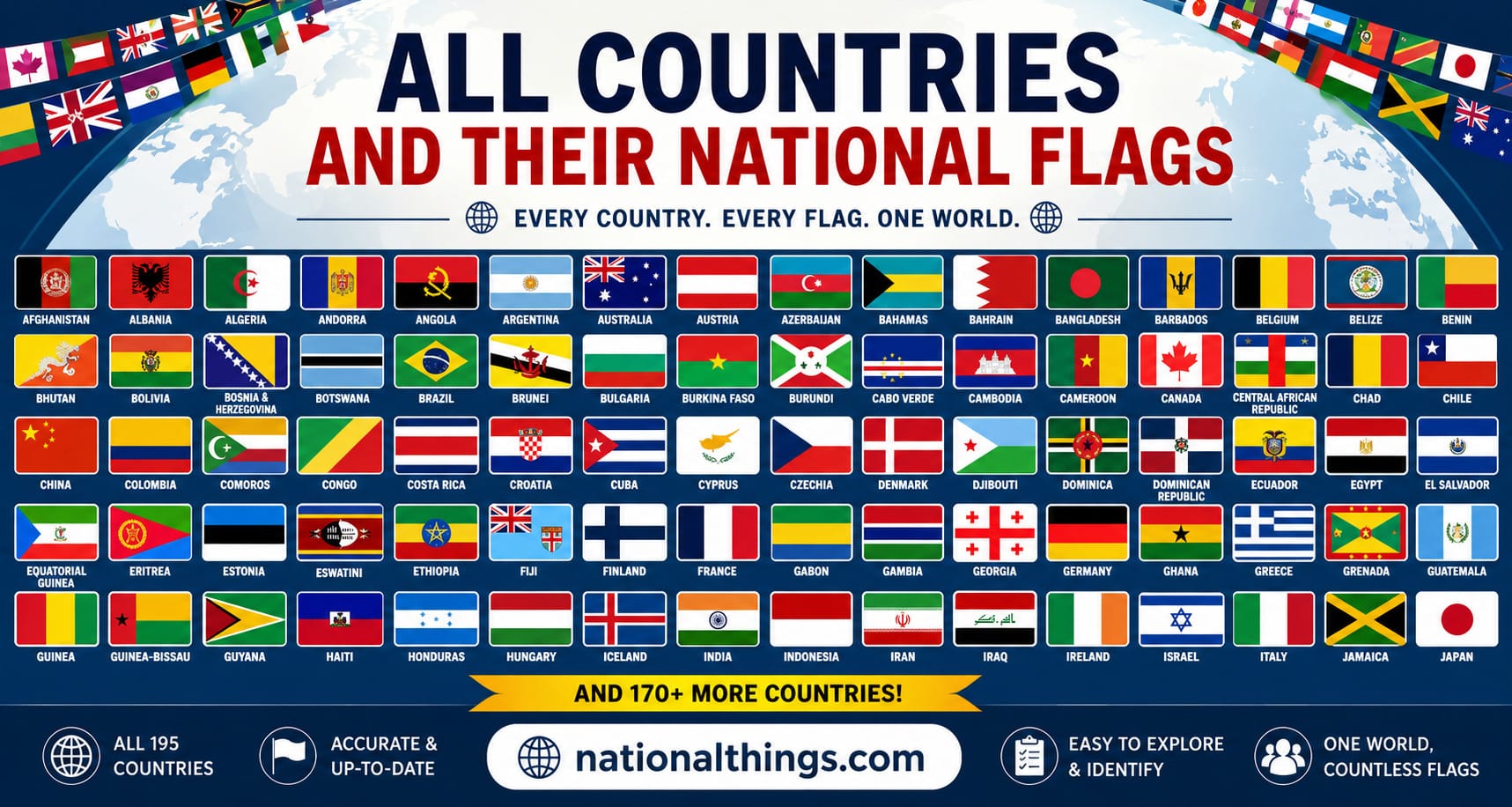
Guatemala is not Asian: This reminder matters because poorly edited flag lists sometimes mix continents.
These detailed objects make the flags easy to recognize, but they also require accurate drawing and respectful use.
Similar-Looking Asian Flags
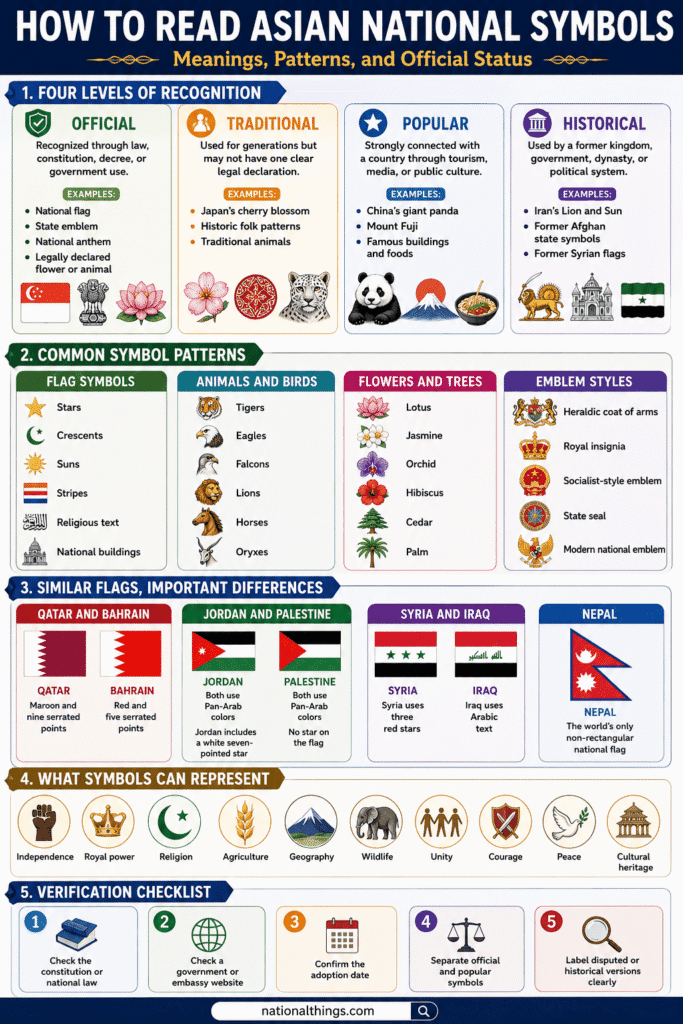
Some pairs cause frequent confusion:
Indonesia and Monaco: Both use red over white, although their proportions differ.
Qatar and Bahrain: Both use white and a serrated edge. Qatar is maroon with nine points; Bahrain is red with five.
Jordan and Palestine: Both use Pan-Arab colors and a red triangle. Jordan adds a white seven-pointed star.
Syria and Iraq: Both use Pan-Arab colors, but Syria has three red stars while Iraq contains Arabic text.
Malaysia and the United States: Both use stripes and a blue canton, but Malaysia adds a crescent and fourteen-point star.
National Emblems and Coats of Arms Across Asia
Asian countries do not follow one emblem style. Some use European heraldry. Others use socialist-style wreaths, royal insignia, calligraphic designs, religious symbols, seals, or modern graphic emblems.
Animals in Asian National Emblems
Eagles: Appear in Kazakhstan, Iraq, Palestine, Yemen, Armenia, and other state traditions.
Lions: Appear in Singapore, Sri Lanka, Armenia, Georgia, and Malaysia.
Mythical animals: Bhutan uses a dragon, Indonesia uses Garuda, and Thailand uses Garuda as its state emblem.
Horses: Kazakhstan and Turkmenistan give horses a central place in official imagery.
The same animal can mean royal power, courage, independence, history, divine protection, or geographic heritage.
Agricultural and Natural Imagery
Wheat, rice, cotton, jute, dates, palms, mountains, rivers, and forests appear across Asian emblems. These images usually point to:
Food and agriculture
Economic history
Fertile land
National geography
Work and prosperity
Bangladesh uses rice and jute. Pakistan’s emblem includes important crops. China surrounds its emblem with grain. Uzbekistan and Tajikistan use cotton and wheat.
Religious, Royal, and Political Imagery
Crowns show monarchy or historic sovereignty. Cogwheels may represent workers and industry. Grain wreaths often appear in socialist-influenced designs. Religious text appears on the Saudi flag and Iraqi flag, while crosses appear in Georgia’s flag and heraldic tradition.
A symbol can have both religious and political meaning. Writers should use official explanations rather than guessing from appearance alone.
National Animals and Birds of Asian Countries
Asia has tigers, snow leopards, elephants, falcons, peacocks, cranes, eagles, oryxes, and many other famous species. However, a protected or iconic animal is not always an official national animal.
Big Cats and Other Predators
The Bengal tiger represents India and Bangladesh in different official categories.
The Malayan tiger is a major Malaysian identity symbol.
The snow leopard connects several Central and Southern Asian mountain cultures.
The markhor is Pakistan’s national animal.
The Arabian leopard is strongly associated with Yemen and the Arabian Peninsula.
Repeated use does not reduce a species’ value. Each country may connect the same animal with a different history or landscape.
Horses, Camels, Cattle, and Other Heritage Animals
Horses are central in Kazakhstan, Kyrgyzstan, Mongolia, Turkmenistan, and Azerbaijan. Camels represent desert travel and Bedouin heritage across the Arabian Peninsula. Nepal recognizes the cow as its national animal.
A national breed is not automatically a national animal. The Akhal-Teke and Karabakh horse have exceptional cultural status, but their legal categories must be described accurately.
Eagles, Falcons, Cranes, Peacocks, and Other Birds
Birds often represent freedom, vision, courage, royal power, or ecological uniqueness.
India recognizes the Indian peacock.
Pakistan recognizes the chukar partridge.
Bangladesh recognizes the oriental magpie-robin.
The Philippines recognizes the Philippine eagle.
Cambodia recognizes the giant ibis.
Israel selected the hoopoe.
Bhutan uses the raven as an important national bird and royal symbol.
Mythological Animals
Garuda appears in Indonesia and Thailand. Dragons appear in Bhutanese and East Asian traditions. Sri Lanka’s flag uses a heraldic lion. Korea has many historic tiger and phoenix images.
A mythological creature can be an official emblem without being a national animal in the biological sense.
National Flowers, Trees, and Plants of Asia
Plants can represent purity, endurance, beauty, agriculture, religion, climate, or national survival. Similar flowers appear in several countries, but their local meanings differ.
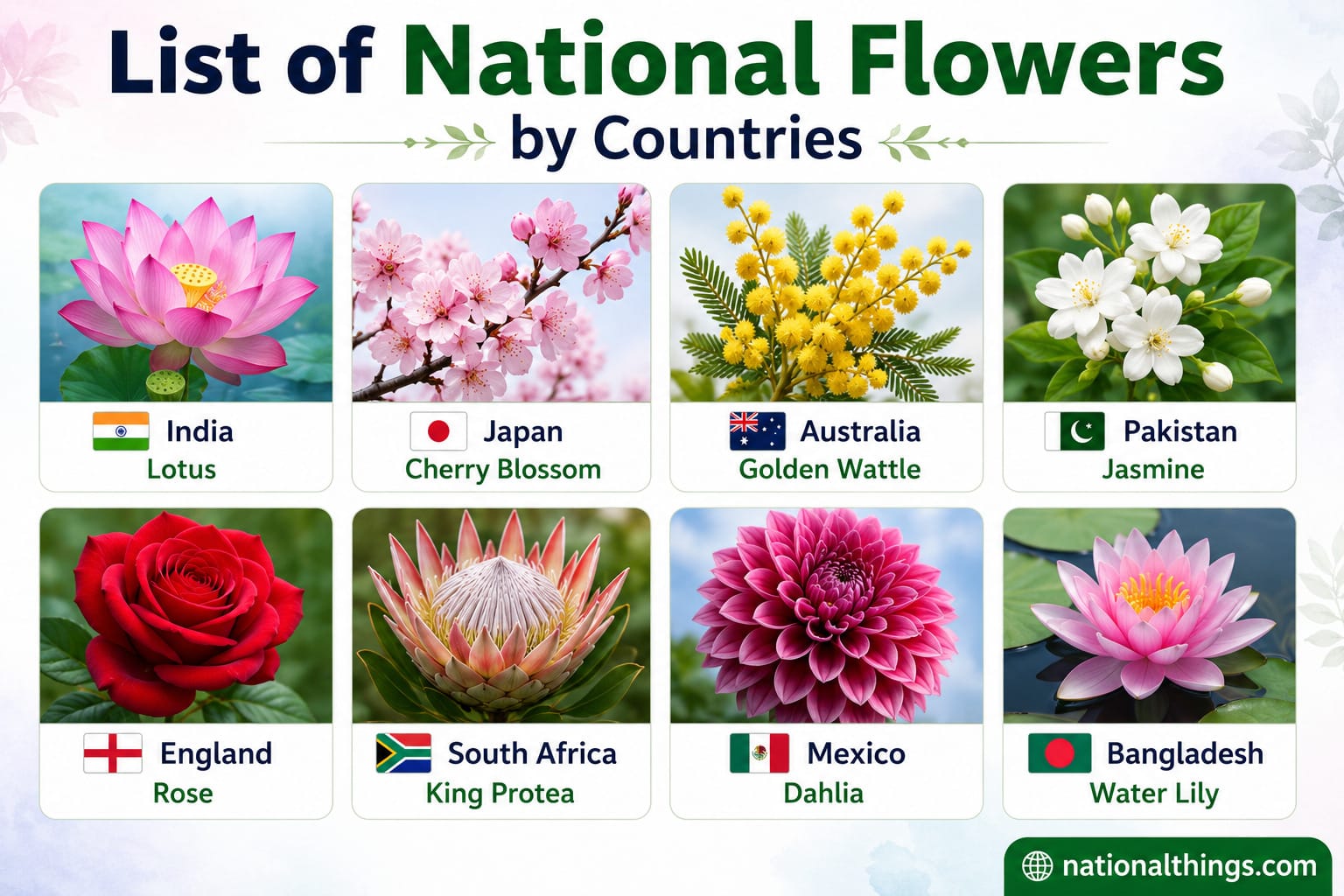
Lotus, Jasmine, Orchids, and Other Flowers
Lotus: Officially important in India and culturally important in several Buddhist and Hindu societies.
Jasmine: Pakistan’s national flower and an important cultural flower in parts of Western and Southern Asia.
Orchid: Singapore recognizes Vanda Miss Joaquim.
Hibiscus: Malaysia’s national flower.
Rhododendron: Nepal’s national flower.
Blue poppy: Bhutan’s national flower.
Water lily: Bangladesh and Sri Lanka recognize different water-lily forms.
Common names can hide species differences. Scientific names help prevent mistakes.
Cedars, Palms, Pines, and Other National Trees
Lebanon’s cedar is visible on its flag. Pakistan recognizes the deodar cedar. The banyan represents India, while Ceylon ironwood represents Sri Lanka. Coconut palms carry major importance in the Maldives.
A tree shown on an emblem is not automatically an officially declared national tree. The design role and legal category should be checked separately.
Crops, Fruits, and Agricultural Symbols
Rice, wheat, cotton, jute, tea, dates, olives, and coffee appear because agriculture shaped national economies and daily life. Yemen’s emblem contains a coffee plant. Pakistan’s emblem shows four major crops from the period when the emblem was adopted.
Economic importance alone does not create official status. A crop should be called a national symbol only when a reliable source supports that description.
National Anthems, Mottos, and Other State Identifiers
Anthems and mottos turn national identity into words and music. They commonly discuss freedom, homeland, loyalty, faith, unity, monarchy, or sacrifice.
National Anthems
A useful anthem profile should provide:
The current title
Original language
Adoption date
Writer and composer, when confirmed
Main theme
Former versions only when needed
Political change can affect an anthem. Afghanistan and Syria require dated explanations. Japan’s “Kimigayo” has a long historic text, while many post-colonial states adopted new songs after independence.
National Mottos
A motto may appear:
In the constitution
On the coat of arms
On an official seal
In royal usage
Through strong public tradition
Examples include Indonesia’s “Unity in Diversity,” Pakistan’s “Faith, Unity, Discipline,” and Georgia’s “Strength is in Unity.” Translations should follow reliable official or academic sources.
Currencies and Currency Symbols
Currencies help identify countries, but they are not automatically national symbols. Examples include the Japanese yen, Indian rupee, Chinese renminbi, Saudi riyal, and South Korean won.
A currency may contain national images on coins and banknotes. The currency itself and the images printed on it are separate subjects.
Regional Patterns in Asian National Symbolism
Asian symbolism follows geography and history, but no single design represents the whole continent.
Nature, Geography, and Climate
Mountain countries use peaks, snow animals, rivers, and rising suns.
Island states use marine life, ships, palms, fish, and waves.
Desert countries use falcons, camels, oryxes, swords, palms, and traditional boats.
Agricultural states use rice, wheat, cotton, tea, jute, and fruit.
Forest regions use tigers, elephants, orchids, and tropical trees.
Religion and Spiritual Traditions
Islamic text, crescents, Buddhist wheels, Hindu-influenced Garuda images, Christian crosses, Shinto-linked traditions, and older folk beliefs all appear in Asian symbolism.
Religious influence must be explained carefully. Singapore’s crescent represents a young nation on the rise, not simply religion. A crescent does not carry one automatic meaning on every flag.
Monarchy and Royal Heritage
Bhutan, Brunei, Cambodia, Japan, Jordan, Malaysia, Oman, Qatar, Saudi Arabia, Thailand, Bahrain, and the United Arab Emirates retain different forms of monarchy.
Their symbols may include:
Crowns
Royal umbrellas
Dragons
Swords
Royal colors
Sacred birds
Dynastic emblems
A royal emblem may belong to the monarch rather than the whole country.
Independence, Revolution, and Modern Statehood
Red stars, cogwheels, grain wreaths, revolutionary colors, and independence-era slogans appear in countries shaped by twentieth-century political movements.
New governments may replace:
Flags
Coats of arms
Anthems
Mottos
State seals
Official color systems
That is why every symbol needs an adoption date and current-status check.
Indigenous, Ethnic, and Folk Traditions
Yurt patterns, carpets, textile designs, mythological animals, folk instruments, traditional clothing, and oral legends can represent national culture.
However, Asia contains many multiethnic countries. One group’s traditional image should not be presented as the symbol of every citizen without proper national context.
Similar Symbols and Important Differences
Symbols may look alike because neighboring countries share religions, ecosystems, historic empires, artistic traditions, or independence movements.
Countries Sharing the Same National Animal or Bird
Tigers represent more than one Asian country. Eagles and falcons appear across Central, Southern, and Western Asia. Arabian oryxes represent several Gulf conservation programs.
The correct question is not only, “Which animal appears?” It is also:
Is it legally official?
Is it a national animal, bird, emblem, mascot, or protected species?
When did the country recognize it?
Does the same common name refer to the same species?
Countries Using Similar Flowers or Trees
Lotus flowers, jasmine, orchids, palms, cedars, and rhododendrons appear in more than one country. Meanings can include purity, resilience, beauty, religion, climate, or local ecology.
Exact species matter. “Water lily” and “lotus” are often mixed in general articles even though they are not always the same plant.
Similar Emblems with Different Meanings
Eagles in Iraq, Palestine, Yemen, Armenia, and Kazakhstan do not have one shared meaning. Their forms come from different historical, heraldic, political, or cultural traditions.
Arrangement also matters. A bird may:
Hold a shield
Spread its wings
Carry a scroll
Appear above mountains
Face a particular direction
Contain national colors
Symbols Shared Across Modern Borders
The olive tree belongs to a wider Mediterranean culture. The snow leopard crosses several national borders. Persian, Turkic, Arab, Himalayan, and Buddhist traditions also extend beyond one modern state.
A shared symbol should not be described as the exclusive creation or property of one country unless clear evidence supports that claim.
Official vs. Unofficial National Symbols in Asia
Many websites copy the same national-symbol lists without checking the original source. A repeated claim can still be wrong.
Evidence of Official Recognition
Strong evidence includes:
Constitutions
National-symbol laws
Government proclamations
Presidential or royal decrees
Parliamentary records
Official gazettes
Government portals
Embassy websites
National museums or archives
Singapore offers a clear legal example because its National Symbols Act defines several national and presidential symbols. Other countries may rely on older decrees, customary practice, or separate laws.
Symbols Recognized by Tradition
A traditional symbol may have broad acceptance without one formal law. Japan’s cherry blossom is a good example of a plant with deep national importance but a more complex official status than many simple lists suggest.
The correct labels are traditional symbol, widely recognized symbol, or cultural icon.
Popular and Tourism-Related Symbols
Tourism agencies often promote animals, food, buildings, clothing, or landscapes. These images may become internationally famous, but tourism promotion does not automatically give them legal national status.
Examples include:
China’s Great Wall
Japan’s Mount Fuji
Cambodia’s Angkor Wat
India’s Taj Mahal
Dubai’s Burj Khalifa
Türkiye’s hot-air balloons in Cappadocia
Conflicting or Unverifiable Claims
When reliable sources disagree, use careful wording:
“Commonly associated with”
“Widely described as”
“Promoted as a national symbol”
“Selected through a public vote”
“Official legal status could not be confirmed”
This language gives the reader useful information without turning uncertainty into a false fact.
Asian Countries and Their National Symbols
Common Misconceptions About Asian National Symbols
Errors often begin when writers try to fill every category for every country.
Every Country Has a National Animal, Bird, and Flower
Some countries legally recognize many natural symbols. Others focus mainly on their flag, emblem, and anthem.
A blank category is more accurate than an invented answer. Write “No confirmed official designation found” when reliable evidence is missing.
The Most Famous Animal Is Always the National Animal
China’s panda is globally famous. Japan is strongly linked with cranes and koi. Mongolia is closely linked with horses. Fame alone does not prove a legal title.
A species may instead be:
A conservation symbol
A royal animal
A cultural icon
A tourism mascot
A sports symbol
A national treasure
An endemic species
Every Emblem Is a Coat of Arms
China, Indonesia, Thailand, and several other Asian countries use official emblems that do not follow a standard European heraldic form.
Use the name preferred by the country: state emblem, national emblem, coat of arms, crest, seal, or royal arms.
Religious Symbols Always Have One Meaning
A crescent may represent religion, a young state, historic rule, or a wider cultural tradition. A star may represent unity, regions, political ideals, or divine guidance.
Meanings must come from the country’s official explanation, not from a general symbol dictionary.
Historical Symbols Are Still Current
Iran’s Lion and Sun belongs to an earlier state era. Afghanistan’s tricolor and white flag relate to different governments. Syria changed its flag and emblem after the fall of the Assad government.
Old symbols remain historically important, but they should never appear as current without a date.
Territories and Dependencies Are Separate Countries
Hong Kong and Macao have regional flags, emblems, and legal systems, but they are Special Administrative Regions of China. They should not be added to a sovereign-country total without a clear label.
The same care applies to disputed territories and partially recognized states.
How to Verify National Symbols by Country
A reliable national-symbol article should use a fixed research process.
Recommended Source Priority
Check sources in this order:
Constitution or national law
Official gazette or legislation database
Office of the president, monarch, or prime minister
Government ministry or national portal
Embassy or permanent mission
National museum, archive, or cultural institution
Academic books and respected encyclopedias
News reports for recent changes
Tourism and general websites only as supporting sources
Information to Record for Every Symbol
Record:
Exact name
Original-language name
Symbol category
Official or unofficial status
Adoption date
Legal or government source
Meaning
Former version
Scientific name for a plant or animal
Date the source was last checked
How to Handle Missing Information
Do not guess. State that no reliable official declaration was found. When several sources give different answers, explain the disagreement and identify which source has greater authority.
A clear uncertainty note is more trustworthy than a complete-looking but inaccurate list.
Trusted Sources and References
United Nations Statistics Division: M49 Geographic Regions This United Nations reference explains how Asia is divided into Central Asia, Eastern Asia, South-eastern Asia, Southern Asia, and Western Asia. It also helps readers understand why countries such as Türkiye, Kazakhstan, Cyprus, Georgia, and Armenia may appear in different regional classifications.
United Nations: Member States This official UN list provides the current names of United Nations member countries. Readers can use it to check whether a place is recognized as a UN member state and confirm its official country name.
United Nations: Non-Member States This page explains the status of UN non-member observer states. It is especially useful for understanding the State of Palestine and the difference between observer-state status and full UN membership.
World Intellectual Property Organization: Article 6ter This WIPO resource explains how national flags, coats of arms, state emblems, official signs, and other government symbols receive international protection against unauthorized commercial use.
National Portal of India: National Symbols This official Government of India resource provides verified information about India’s national flag, state emblem, anthem, song, calendar, animal, bird, flower, tree, and other national identity elements.
Singapore Statutes Online: National Symbols Act 2022 This official legal source shows how Singapore defines and protects its national flag, coat of arms, anthem, pledge, national flower, presidential symbols, and other state identifiers. It also gives readers a clear example of how national symbols can receive formal recognition through law.
FAQs About National Symbols of Asian Countries
How many countries are included in this guide to Asian national symbols?
This guide uses 48 country-level profiles under the UN M49 regional structure. It includes the State of Palestine and places Türkiye, Cyprus, Armenia, Azerbaijan, and Georgia in Western Asia. It does not count Hong Kong and Macao as separate sovereign countries.
What are the main national symbols of an Asian country?
The main state symbols are usually the flag, emblem or coat of arms, and anthem. Some countries also recognize a motto, animal, bird, flower, tree, fruit, fish, national color, or other category.
Are all national animals and birds officially recognized?
No. Some come from laws or official proclamations. Others come from public votes, conservation programs, tradition, school material, or tourism promotion.
Which national symbols are most common across Asia?
Flags, emblems, and anthems are the most consistent categories. Common visual elements include stars, crescents, suns, eagles, lions, grain, mountains, swords, flowers, and trees.
Why do neighboring Asian countries use similar colors and symbols?
Neighboring states may share historic empires, religions, independence movements, ecosystems, ethnic communities, or artistic traditions. Similar design does not always mean the same meaning.
Which Asian countries are transcontinental?
Russia, Türkiye, and Kazakhstan are the clearest examples. The South Caucasus states and Cyprus also create classification debate because geography, culture, and political organizations use different boundaries.
Are Hong Kong and Macao countries with separate national symbols?
No. They are Special Administrative Regions of China. Each has a regional flag and emblem, but these are not symbols of separate sovereign states.
Which Asian country has the most officially recognized national symbols?
There is no dependable ranking because countries define categories differently. India and Bangladesh recognize many natural and cultural categories, but a fair comparison would require the same legal standard for all 48 profiles.
Conclusion: Understanding the Country Symbols and Meanings of Asia
The National Symbols of Asian Countries show how states turn history, geography, wildlife, faith, royal heritage, and political change into recognizable designs. A flag may be legally protected, while a famous animal may be only a cultural icon. A flower may have official status in one country and traditional importance in another.
The most accurate approach is simple: identify the current symbol, verify its source, record its adoption date, and label unofficial associations clearly. This method gives students, travelers, and general readers a more useful picture of Asia than a copied list with equal but unsupported categories.