

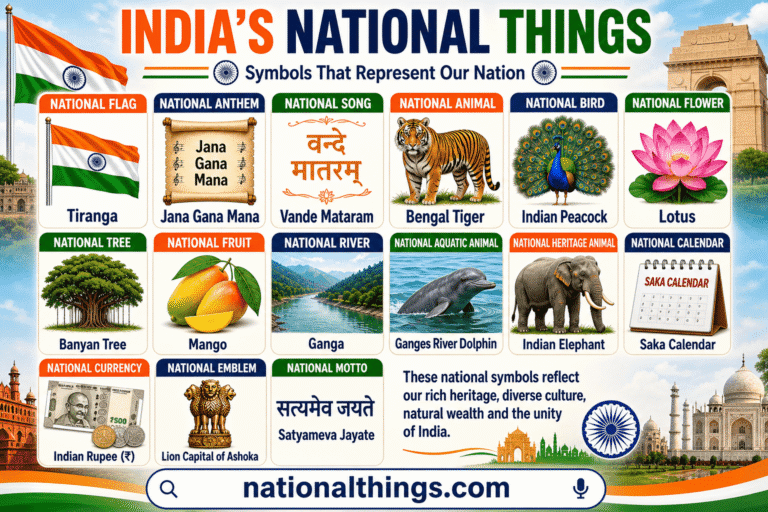
National Things of India: Explained with Symbols and Importance
India’s National Things are a set of official symbols that represent the identity, culture, and values of the country in…
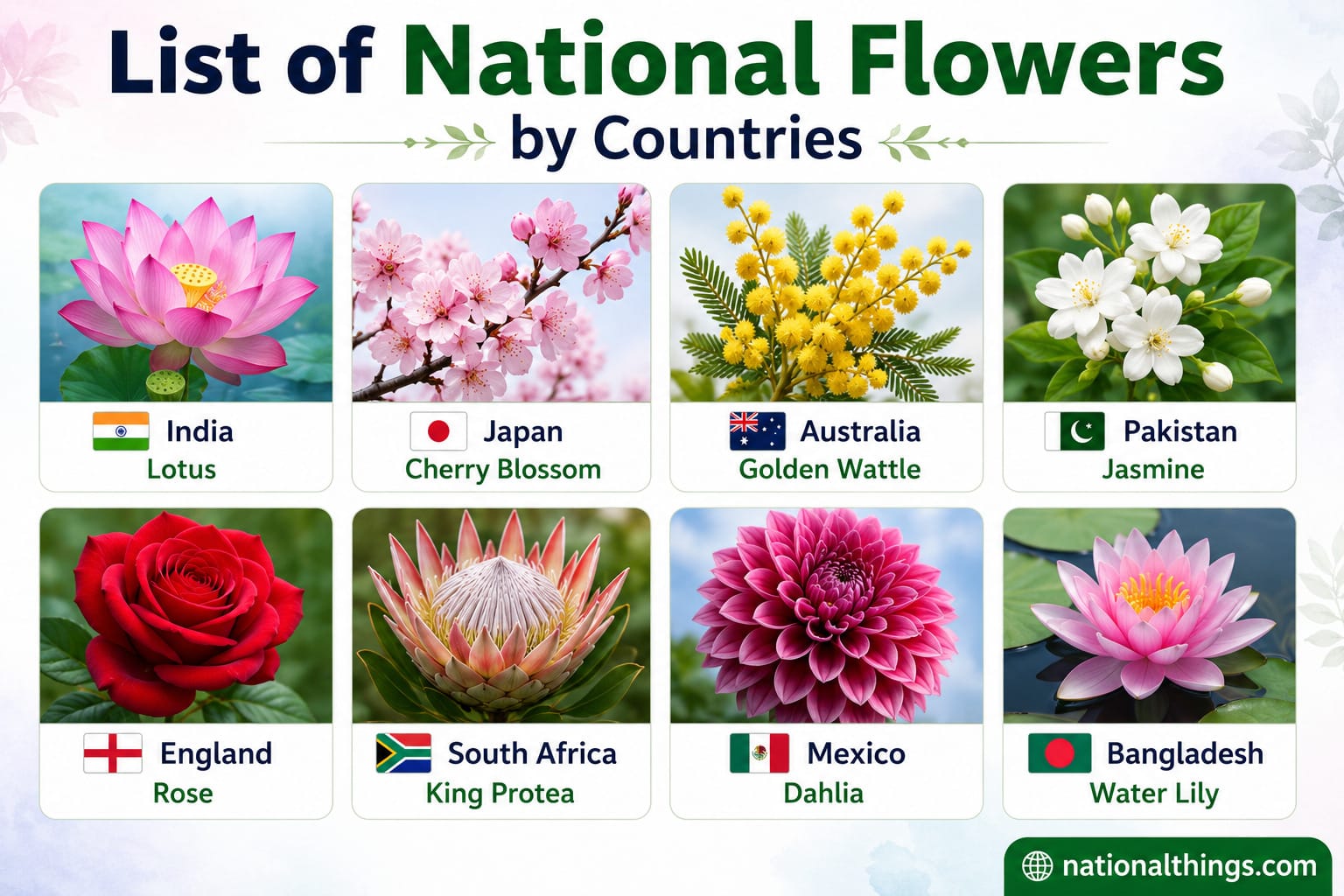
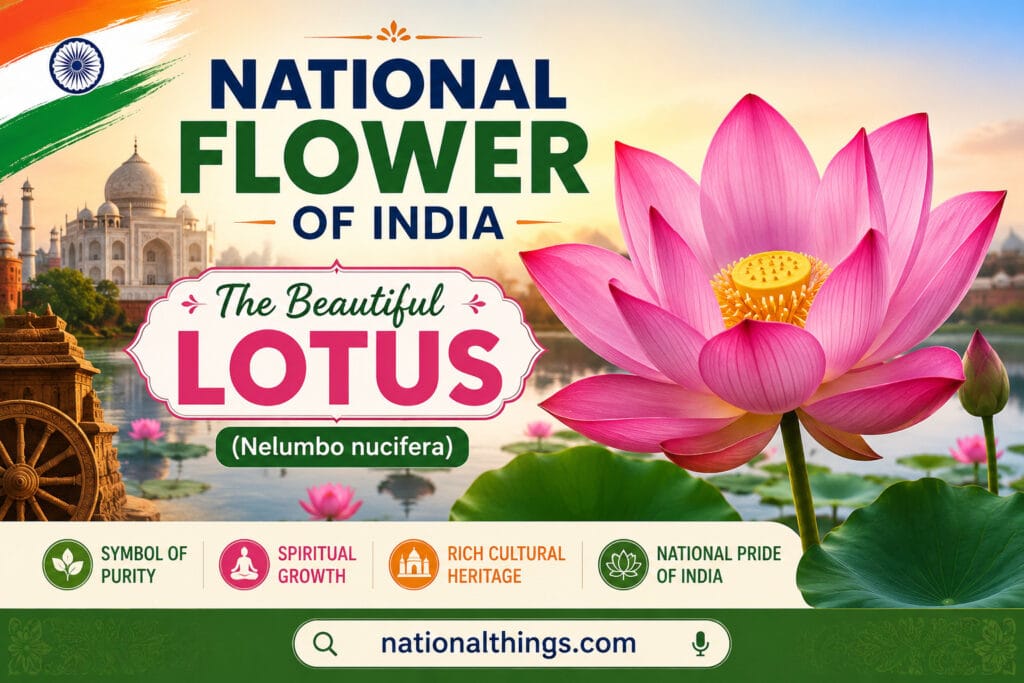
The National Flower of India is the Lotus scientifically known as Nelumbo nucifera. This sacred flower represents purity, wisdom, peace, and spiritual growth in Indian culture. The lotus grows in muddy water but blooms clean and beautiful which makes it a powerful symbol of strength and positivity. It holds special importance in Hinduism, Buddhism, and Jainism and appears in Indian temples, art, literature, and traditions. The lotus has been an important part of Indian heritage for thousands of years and proudly represents the cultural identity of India.
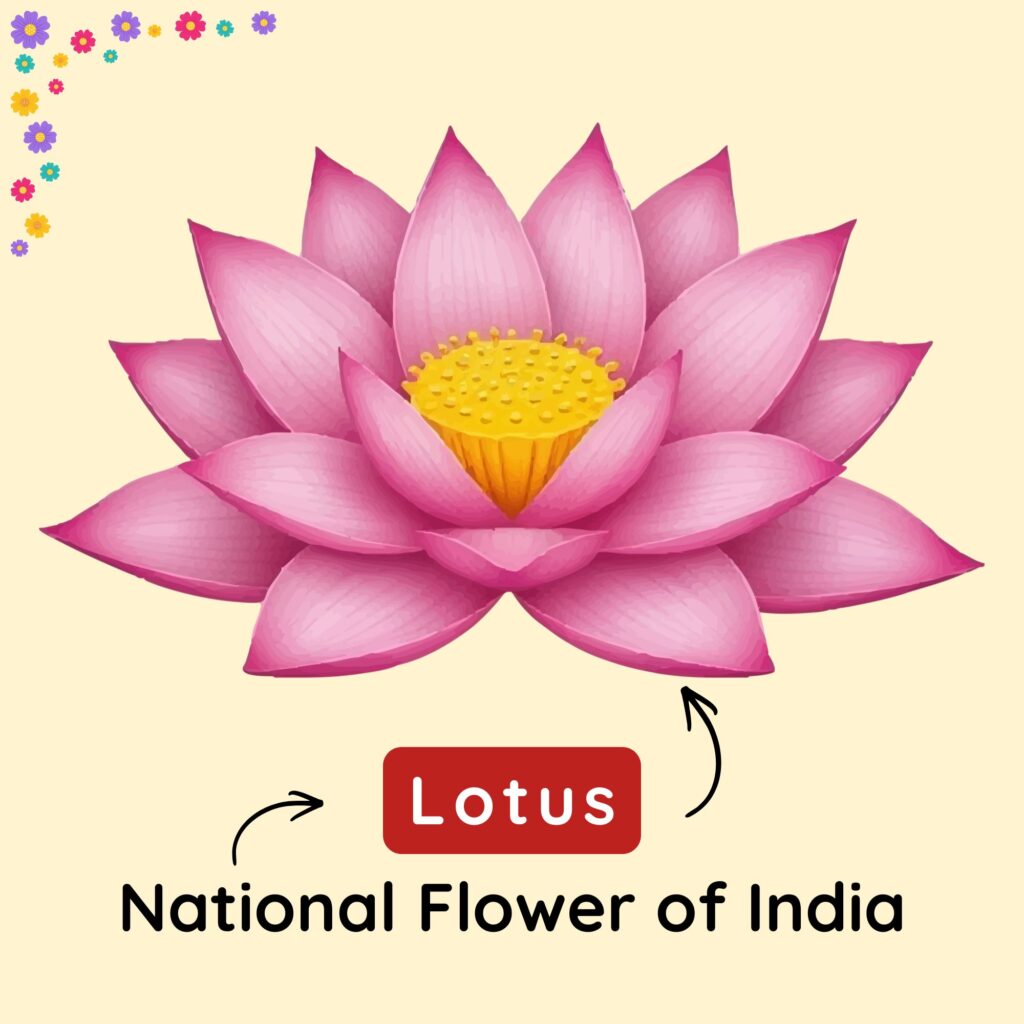
The national flower of India is the lotus flower. Its scientific name is Nelumbo nucifera. India officially chose the lotus as its national flower because it represents purity, strength, peace, and spiritual life.
The lotus grows in ponds, lakes, and slow-moving water areas. It rises above muddy water and blooms with clean, bright petals. This natural process gave the flower deep meaning in Indian culture. People see the lotus as a symbol of rising above problems and living a pure life.
The flower usually appears in pink and white colors. A mature lotus plant can grow up to 150 centimeters tall. Its leaves float on water while the flower stands above the surface. The plant also produces seeds that can stay alive for many years.
Many Indian temples, historical buildings, paintings, and coins show lotus designs. You can also see the lotus in Indian festivals, religious books, and traditional art.
Related: National Symbols of India
India selected the lotus because it reflects the country’s cultural and spiritual identity. The flower appears in ancient Indian history, literature, religion, and architecture.
The lotus stands for the following:
One special quality makes the lotus different from many flowers. It grows in dirty water but remains fresh and clean. Indians connect this quality with human life. People believe a person should stay honest and pure even during difficult situations.
The lotus also has strong religious value. Hindu gods like Lakshmi and Brahma are often shown sitting on lotus flowers. In Buddhism the lotus represents spiritual growth and enlightenment.
India’s government wanted a flower that connected deeply with national traditions. The lotus matched that purpose perfectly.
The lotus has been part of Indian history for thousands of years. Ancient Indian texts, including the Rigveda and Mahabharata, mention the flower many times.
Archaeologists found lotus symbols in old temples, sculptures, and cave paintings across India. Ancient kings used lotus patterns in palace decorations, jewelry, and royal seals.
During the Maurya and Gupta Empires, artists carved lotus flowers into stone pillars and temple walls. The design became common in Indian architecture.
Buddhist history also increased the importance of the lotus. Buddhist monks carried lotus symbols to countries like China, Japan, Thailand, and Sri Lanka. As Buddhism spread, the lotus became an international symbol of peace and spirituality.
According to the Indian Ministry of Culture, the lotus remains one of the oldest cultural symbols used continuously in India for more than 2000 years.
Research published by the Royal Botanic Gardens Kew explains that the sacred lotus is native to Asia and has existed for millions of years. Source: https://powo.science.kew.org/
In Hinduism, the lotus has sacred meaning. Many gods and goddesses sit or stand on lotus flowers.
Examples include:
Hindu people also use lotus flowers during:
The flower represents a pure soul and spiritual growth.
Buddhism gives special respect to the lotus. Buddhists believe the flower represents the path toward enlightenment.
Different lotus colors have different meanings:
Many Buddhist temples use lotus symbols in paintings, statues, and meditation halls.
Indian artists have used lotus designs for centuries. You can see lotus patterns in the following:
Famous Indian poets also wrote about the lotus in Sanskrit, Tamil, and Hindi literature. Ancient writers compared beautiful eyes, faces, and sunrise scenes with lotus flowers.
India has several lotus varieties. Each one has unique colors and uses.
The Sacred Lotus is the most famous type in India.
Features include:
This variety appears in temples and cultural ceremonies.
The white lotus symbolizes peace and spiritual purity.
Common uses:
It grows mainly in calm freshwater areas.
The pink lotus is India’s most recognized lotus variety.
Key facts:
Many Indian states grow pink lotus plants naturally.
Blue lotus flowers are rare in India today. Ancient Indian texts and paintings mention them often.
The flower symbolized the following:
Some historians believe blue lotus plants were more common in ancient India than they are today.
The lotus is not only a symbolic flower. People also use different parts of the plant in daily life.
Traditional Indian medicine uses lotus roots, seeds, and leaves.
Ayurvedic experts use lotus for:
Some modern studies show lotus seeds contain antioxidants that help protect body cells.
Several Indian dishes include lotus parts.
Popular food uses include:
Lotus stems contain fiber, vitamins, and minerals.
People use lotus flowers in the following:
The flower also appears in yoga centers and meditation spaces because it creates a calm atmosphere.
The scientific name of the lotus is Nelumbo nucifera.
The flower represents the following:
Lotus plants grow best in:
The flower blooms mostly during summer.
The lotus connects strongly with India’s identity. It appears in:
India also named a major political party after the lotus symbol, which shows its deep national importance.
The national flower of India is the lotus (Nelumbo nucifera). It grows in freshwater ponds and rivers and is admired for its purity, beauty, and cultural importance.
The Lotus was chosen as the national flower of India because it represents purity, strength, and spiritual awakening. It is culturally significant, appears in Indian art, temples, and literature, and reflects the nation’s values of resilience and beauty.
The scientific name of the national flower of India is Nelumbo nucifera. This aquatic plant has large round leaves and pink or white petals.
The national flower of India, the lotus, symbolizes purity, enlightenment, spiritual growth, and new beginnings. It grows in muddy water but blooms clean, teaching resilience and hope.
The national flower of India, the lotus, grows naturally in freshwater ponds, lakes, and slow-moving rivers. It prefers warm climates and spreads across many regions of India.
The national flower of India has strong religious importance across many faiths. Hindu traditions connect the lotus with deities such as Lakshmi and Saraswati. Buddhists view the flower as a symbol of spiritual awakening and enlightenment. In Jainism, the lotus represents purity and inner peace.
The national flower of India, the lotus, is one of the oldest flowers in the world. Its seeds can remain viable for years, and all parts of the plant are useful in medicine and cooking. It grows in muddy water yet blooms clean, making it a symbol of purity, beauty, and cultural importance.
Related Articles: