

National Animal of Mexico: The Golden Eagle
Mexico is a country full of history, culture, and amazing wildlife. Just like every nation has symbols that represent its…
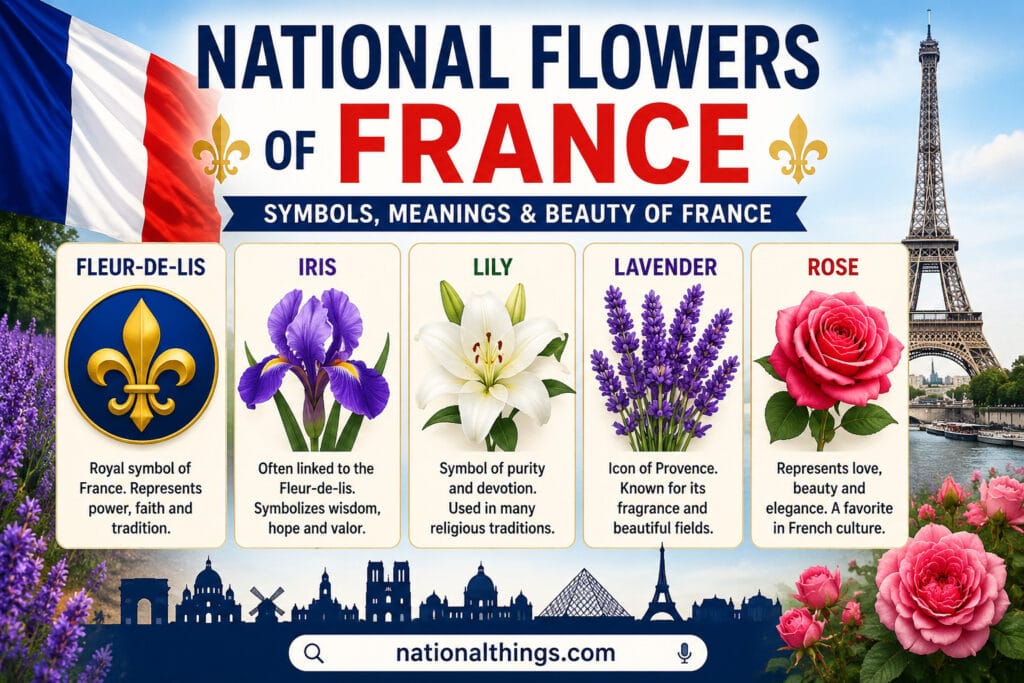
France is a country known for its rich culture, history, and natural beauty. Among its many symbols, national flowers hold a special place. Flowers are more than just beautiful plants; they represent history, pride, and national identity. France has a flower that is recognized as its national symbol: the Fleur-de-lis.
In this article, we will explore the national flowers of France, their history, symbolism, and why they are important today.
National flowers of France have a deep connection with the country’s history, culture, and royal identity. France does not have one officially declared national flower by law. Still many people recognize the Fleur-de-lis as the most important floral symbol of the country. The Fleur-de-lis is not a real flower species. It is a stylized design that looks similar to a lily or iris flower.
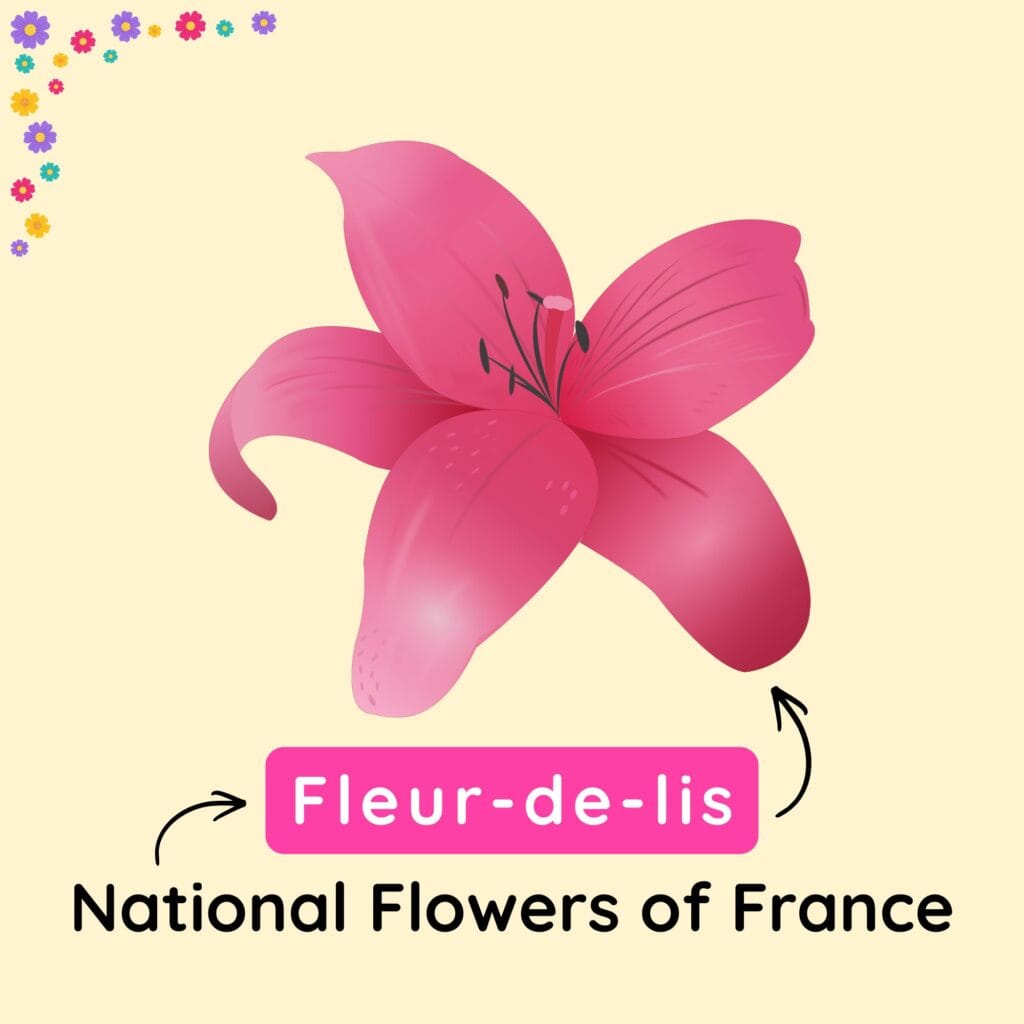
For centuries French kings used this flower symbol on royal flags, coins, clothing, and buildings. Today people still connect it with French identity, art, and tradition.
France is also famous for real flowers that grow across the country. Lavender roses, lilies, and irises all hold cultural value in French society. These flowers appear in gardens, perfumes, festivals, paintings, and fashion.
Some important facts about the national flower of France include the following:
The floral identity of France mixes history, beauty, religion, and national pride in one tradition.
The Fleur-de-lis became linked with France because of the French monarchy. Historians say King Clovis I used the symbol after converting to Christianity around the year 500. Over time later kings made it part of the royal emblem.
The design usually shows three petals tied together at the base. Many experts believe it represents the following:
French kings placed the fleur-de-lis on:
The symbol became especially important during the rule of the Capetian dynasty. Kings wanted people to connect the flower with strength and divine authority.
Some historians argue the symbol actually represents an iris instead of a lily. The yellow iris grew near the River Lys in northern France. This may explain the name “fleur-de-lis,” which means “flower of the lily.”
Today the symbol still appears in many places across France, including:
The Fleur-de-lis remains one of the strongest cultural symbols in French history.
Flowers have played an important role in France for hundreds of years. During medieval times, nobles and kings used flowers as symbols of social status and political identity.
The royal courts of France loved decorative gardens. Kings spent large amounts of money building beautiful flower gardens around castles and palaces. One famous example is the gardens at the Palace of Versailles built under King Louis XIV.
French flower traditions changed during different historical periods.
France now has one of the richest flower cultures in Europe.
According to the French perfume industry group FEBEA, France remains one of the leading perfume producers in the world. Many perfumes use flowers grown in regions like Grasse and Provence.
Source: https://www.febea.fr
Flowers hold strong cultural meaning in France. People use flowers in celebrations, religion, fashion, and daily life. The national flowers of France represent beauty, elegance, and tradition. French artists, writers, and designers often use flower themes in their work.
Many towns organize flower festivals every year. These events include:
The city of Nice hosts the famous Battle of Flowers Festival during the Nice Carnival. Decorated floats covered with flowers move through the streets while performers throw flowers into the crowd.
Churches in France often use lilies during religious ceremonies because they symbolize purity. Many statues of the Virgin Mary include lily flowers.
French fashion brands use floral designs in the following:
Painters such as Claude Monet also used flowers heavily in their artwork. His garden in Giverny became famous for water lilies and flower landscapes.
Flowers remain part of normal life in France. People commonly buy flowers for:
Fresh flower markets still operate in many French cities today.
France has several flower varieties linked to its identity and culture.
The Fleur-de-lis is the strongest symbolic flower connected with France. It represents:
The symbol still appears in architectural flags and logos.
Many historians believe the Fleur-de-lis actually represents the iris flower. Yellow irises grow naturally in parts of France, especially near rivers and wetlands.
Important features of iris flowers:
Lilies hold religious and royal meaning in France. White lilies often symbolize purity and peace. French churches frequently display lilies during Easter celebrations.
Lavender fields in Provence are one of France’s most famous natural attractions. It is important because it supports the following:
French lavender products include the following:
France has a long tradition of rose cultivation. Many French gardens grow rare rose species.
Roses play a major role in:
The city of Lyon became famous for rose breeding during the 19th century.
| Flower or Symbol | Main Meaning | Common Use in France |
|---|---|---|
| Fleur-de-lis | Royal power and tradition | Flags, architecture, logos |
| Iris | Historical identity | Garden’s artwork |
| Lily | Purity and religion | Churches ceremonies |
| Lavender | Beauty and perfume | Tourism, oils, perfumes |
| Rose | Romance and elegance | Gifts, perfumes, gardens |
This chart shows how each flower connects to a different part of French culture and history.
The flowers linked with France serve many practical and cultural purposes.
France leads the global perfume market. Flower oils remain important ingredients in luxury perfumes.
Popular perfume flowers include the following:
The city of Grasse is known as the perfume capital of France.
Flower tourism brings millions of visitors every year.
Popular destinations include:
Many tourists visit during summer when flowers bloom fully.
Some flowers appear in French cooking.
Examples include:
French chefs sometimes use edible flowers for decoration.
French botanists helped develop plant studies during the 18th and 19th centuries. Botanical gardens in Paris still preserve rare flower species.
The national flowers of France continue to influence culture, economy, tourism, and art even today.
The national flower of France is the Fleur-de-lis. It is a stylized lily that represents French royalty, purity, and national pride. This symbol has been part of French history for hundreds of years and appears in art, architecture, and official emblems.
The Fleur-de-lis is important because it represents French history, culture, and monarchy. It symbolizes purity, faith, and unity. The emblem was used by kings, churches, and cities, making it a lasting national symbol that connects modern France with its historical roots.
The Fleur-de-lis symbolizes purity, royalty, faith, and strength. It is linked to the Virgin Mary in Christianity and was a key emblem of French kings. Today, it is also a symbol of French culture and national pride.
No, the Fleur-de-lis is not a real flower. It is a stylized design inspired by lilies. While it looks like a flower, its meaning and use in French history make it a national symbol rather than an actual plant.
Today, the Fleur-de-lis is used in government logos, city emblems, sports teams, art, and architecture. It remains a cultural symbol that represents French identity, history, and heritage.
The Fleur-de-lis became a symbol of France during the Middle Ages. French kings adopted it as a royal emblem, linking it to monarchy, religion, and national identity. It has remained a recognized symbol of France for over 1,000 years.
The Fleur-de-lis has deep historical significance. It represents the power of French kings, Christian faith, and national unity. It was used in coats of arms, flags, and royal seals, making it a symbol of France’s heritage and identity.
Related Articles: