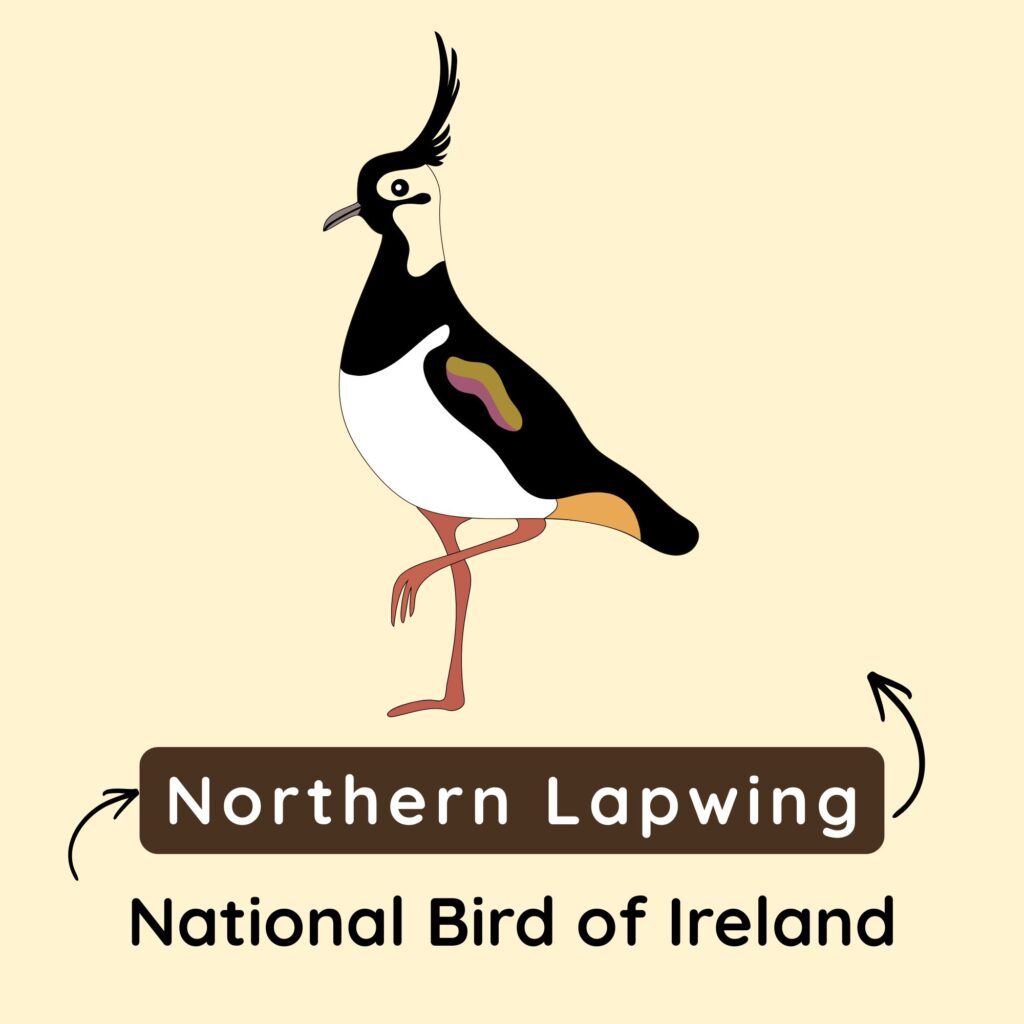
The National Bird of Ireland is the Northern Lapwing (Vanellus vanellus), also known as the Peewit because of its distinctive call. It is a striking bird with unique features and is admired for its beauty, aerial displays, and presence in Irish fields and wetlands.
Appearance of the Northern Lapwing
- Size: Medium-sized, about 28–31 cm long with a wingspan of 67–87 cm.
- Color: Black and white body with shiny green and purple feathers on the back and wings.
- Crest: Has a long, wispy crest on its head.
- Beak & Legs: Short black beak and long reddish legs.
The lapwing’s colorful plumage and crested head make it easy to identify in open fields.
Habitat and Where It Lives
- Common Areas: Wetlands, farmland, meadows, and open fields.
- Distribution: Found all over Ireland, especially in lowland areas.
- Nesting: Prefers ground nests hidden in grass or crops, often near water.
Northern Lapwings are migratory birds. Some move to southern Europe in winter, while others remain in Ireland year-round.
Diet and Eating Habits
- Insects: Beetles, caterpillars, spiders, and worms.
- Seeds and Plants: Occasionally eats seeds and small plants.
- Feeding Style: Probes soil and mud with its beak to find food.
Lapwings are active during the day and feed mostly in wet, soft soil.
Behavior and Nature
- Aerial Displays: Famous for its dramatic flying patterns and twists during mating season.
- Vocal: Known as “Peewit” because of its loud, distinctive call.
- Breeding: Lays 3–4 eggs in a shallow nest on the ground. Both parents protect the chicks.
- Migratory: Some populations migrate in winter; others stay in Ireland.
Their behavior is admired for both beauty and adaptability to farmland and wetlands.
Importance as the National Bird
The Northern Lapwing represents Ireland’s countryside and natural heritage. It was chosen because:
- It is native and widely seen in Irish landscapes.
- Its distinctive appearance and call make it memorable.
- It symbolizes Ireland’s rural beauty and agricultural traditions.
- It is a sign of healthy ecosystems, especially wetlands and meadows.
Fun Facts About the Northern Lapwing
- Its call “pee-wit” gave it the nickname Peewit.
- Known for impressive courtship flights in spring.
- Baby lapwings are called chicks and run soon after hatching.
- Lapwings often nest in farmland fields, making them familiar to farmers.
Conservation Status
The Northern Lapwing is near threatened due to habitat loss and changes in farmland. Conservation efforts include protecting wetlands, preserving grasslands, and maintaining safe nesting areas. Supporting these habitats helps keep the lapwing population healthy in Ireland.
Summary
The Northern Lapwing, or Peewit, is Ireland’s national bird. With its crested head, striking black-and-white plumage, and playful aerial displays, it is admired across the country. Found in wetlands and farmland, it symbolizes Ireland’s natural beauty and agricultural heritage, making it an important part of the Irish landscape.
Frequently Asked Questions
Related Articles
National Symbols of European Countries: Explained with History
National Symbols of European Countries show how nations express their history, political identity, land, beliefs,…
National Symbols of Asian Countries: Explained with Meanings
National Symbols of Asian Countries reveal far more than a flag’s colors or the name…
National Flag of USA: Meaning, Stars, Stripes, History, and Facts
National Flag of USA is one of the most recognized national flags in the world….
National Symbols of African Countries: Explained with Meanings
National symbols of African countries tell the continent’s story through colors, animals, plants, songs, and…
National Bird of the USA: The Bald Eagle
The National Bird of the USA is the bald eagle, a powerful North American bird…
National Currency of All Countries: List, Codes, and Symbols
The national currency of all countries may look like a simple list. The subject becomes…