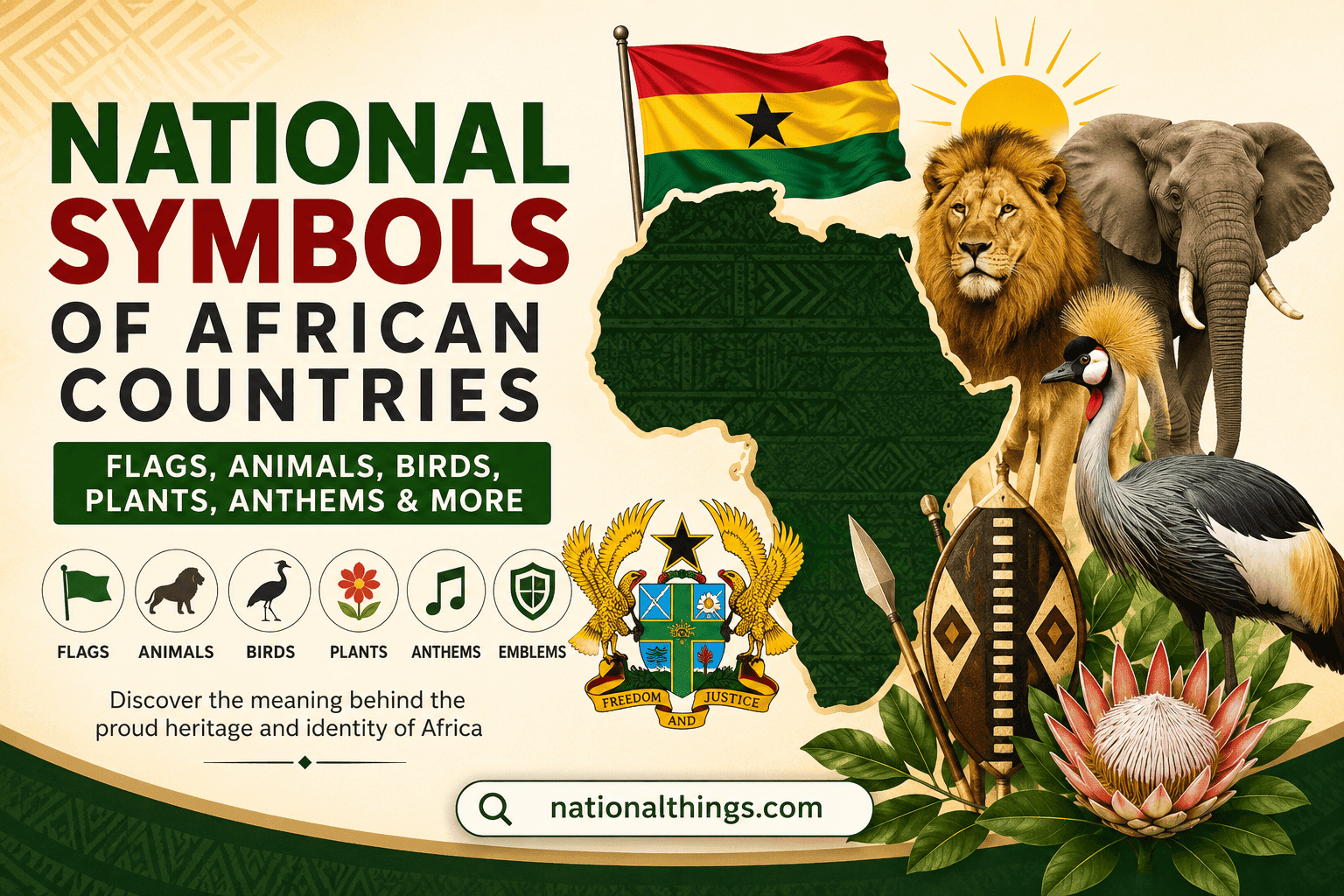


National Symbols of African Countries: Explained with Meanings
National symbols of African countries tell the continent’s story through colors, animals, plants, songs, and emblems. Ghana’s black star represents…
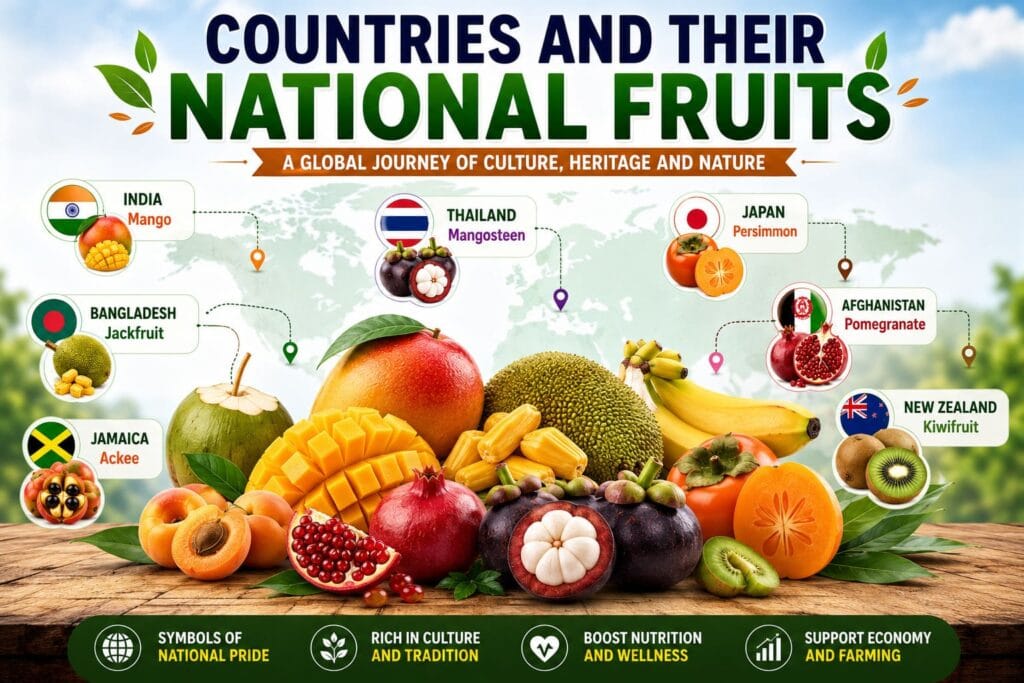
This article is about countries and their national fruits and the interesting stories behind them. Have you ever wondered why some countries are closely linked to fruits like mangoes, jackfruits, or pomegranates? These fruits are more than just food. They reflect a country’s culture, history, agriculture, and traditions. By exploring national fruits by country, you can learn how different nations use fruits as symbols of pride and identity.
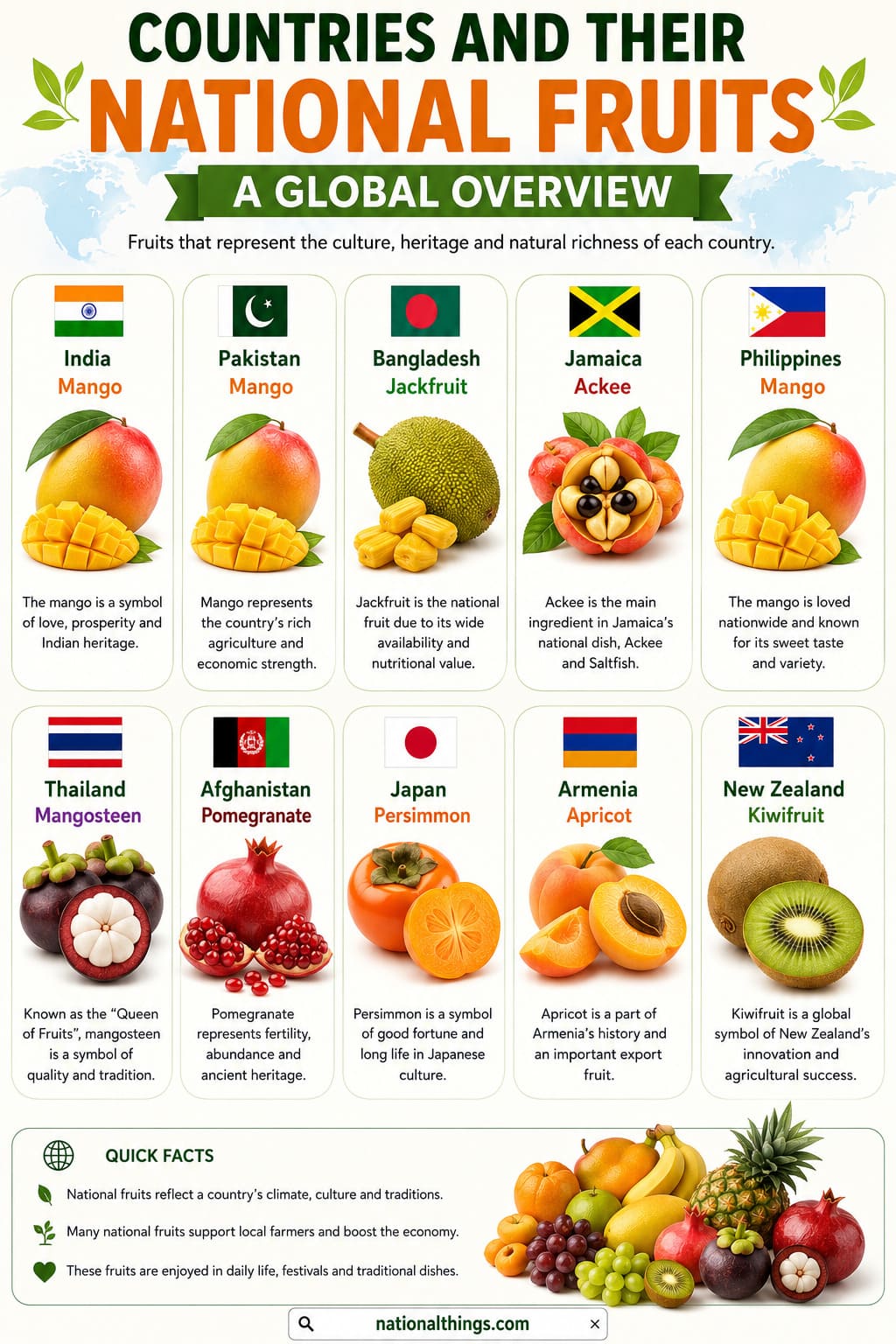
Countries and Their National Fruits tell an interesting story about culture, agriculture, history, and national identity. Have you ever wondered why India is linked with mangoes or why Jamaica proudly recognizes the ackee fruit? Every country chooses symbols that represent its people and traditions. Along with national flags, flowers, and animals, many nations also recognize a national fruit.
A national fruit often reflects what grows well in a country, what people eat regularly, and what has cultural importance. Some fruits have been part of local traditions for hundreds of years. Others support farming industries and provide income through exports. Learning about national fruit by countries helps us understand how food and culture connect across the world.
This guide explores the history, importance, varieties, uses, and interesting facts about national fruits from different regions. You will also discover how these fruits influence local economies and represent national pride.
Countries select national fruits for several important reasons.
For example, the mango represents India because it has deep roots in Indian history, literature, and cuisine. In Jamaica, the ackee became a national symbol because it is part of the country’s famous national dish, ackee and saltfish.
Many governments officially recognize national fruits, while others become national symbols through public acceptance and cultural importance.
The idea of national symbols became popular during the 19th and 20th centuries when countries sought ways to express their unique identities. Fruits naturally became part of this process because they were closely connected to farming and daily life.
Ancient civilizations often valued certain fruits as symbols of prosperity and health.
Examples include:
Over time, governments, cultural organizations, and local communities began recognizing these fruits as official or unofficial national symbols.
National fruits vary greatly because climate conditions differ across the world.
Some well-known examples include:
| Country | National Fruit |
|---|---|
| India | Mango |
| Pakistan | Mango |
| Bangladesh | Jackfruit |
| Jamaica | Ackee |
| Philippines | Mango |
| Thailand | Mangosteen |
| Afghanistan | Pomegranate |
| New Zealand | Kiwifruit |
| Japan | Persimmon |
| Armenia | Apricot |
These fruits often reflect local growing conditions and cultural traditions.
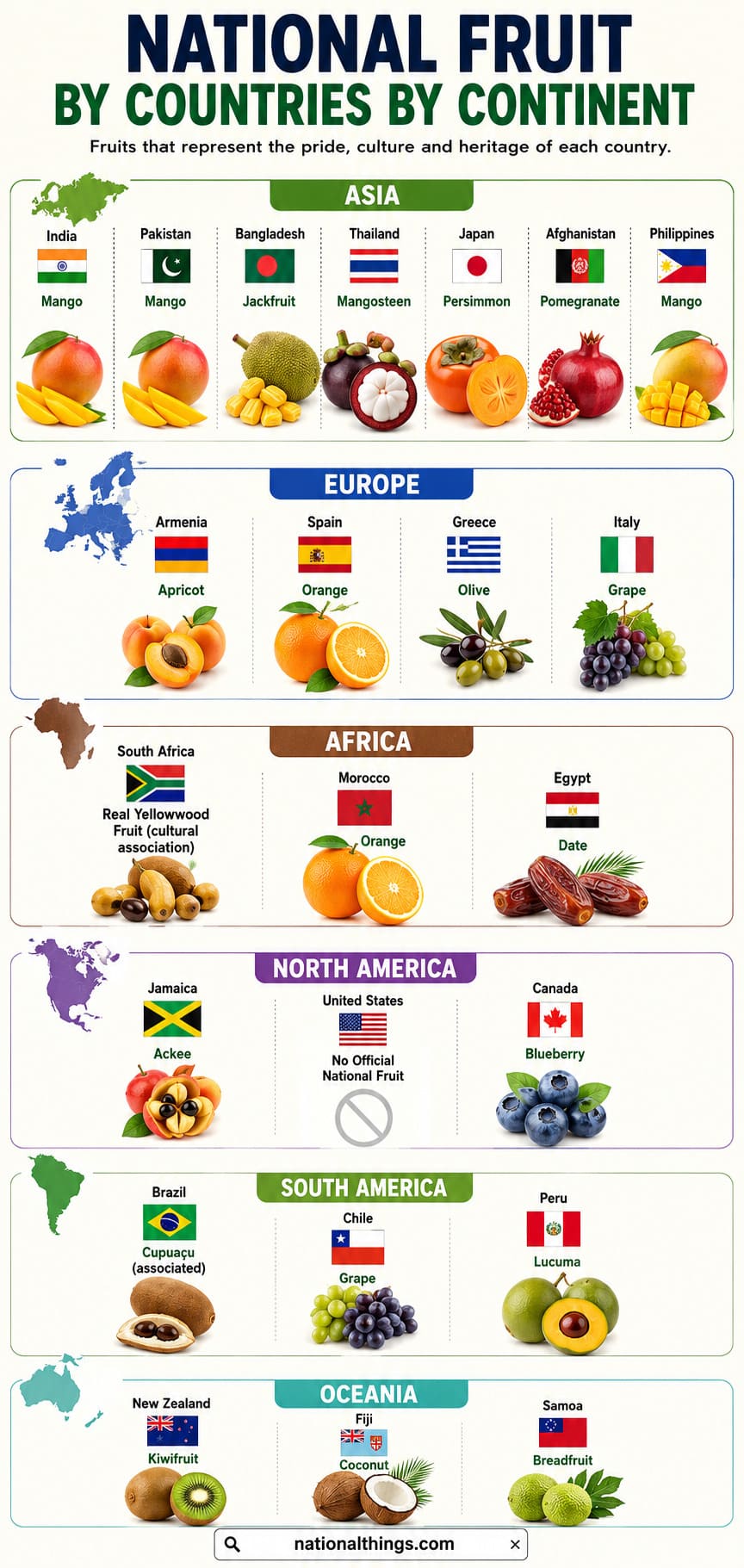
Asia has some of the world’s most famous national fruits.
The region’s warm climate supports many tropical fruit varieties.
Europe’s national fruits often come from temperate climates.
These fruits have influenced local cuisine and trade for centuries.
African countries celebrate fruits that thrive in tropical and dry environments.
Many African fruits support local economies and food security.
North America includes both tropical and temperate fruits.
South America’s rich biodiversity produces many unique fruits.
Island nations depend heavily on tropical fruits.
The following comparison shows how national fruits differ across regions.
| Country | National Fruit |
|---|---|
| India | Mango |
| Pakistan | Mango |
| Bangladesh | Jackfruit |
| Philippines | Mango |
| Thailand | Mangosteen |
| Japan | Persimmon |
| Afghanistan | Pomegranate |
| Armenia | Apricot |
| Spain | Orange |
| Greece | Olive |
| Italy | Grape |
| Morocco | Orange |
| Egypt | Date |
| Jamaica | Ackee |
| Canada | Blueberry |
| Chile | Grape |
| Peru | Lucuma |
| Brazil | Cupuaçu |
| New Zealand | Kiwifruit |
| Fiji | Coconut |
| Samoa | Breadfruit |
| China | Peach |
| South Korea | Persimmon |
| Vietnam | Dragon Fruit |
| Malaysia | Durian |
| Indonesia | Salak (Snake Fruit) |
| Sri Lanka | Jackfruit |
| Nepal | Rhododendron Fruit* |
| Turkey | Fig |
| Iran | Pomegranate |
This overview highlights how geography influences fruit selection.
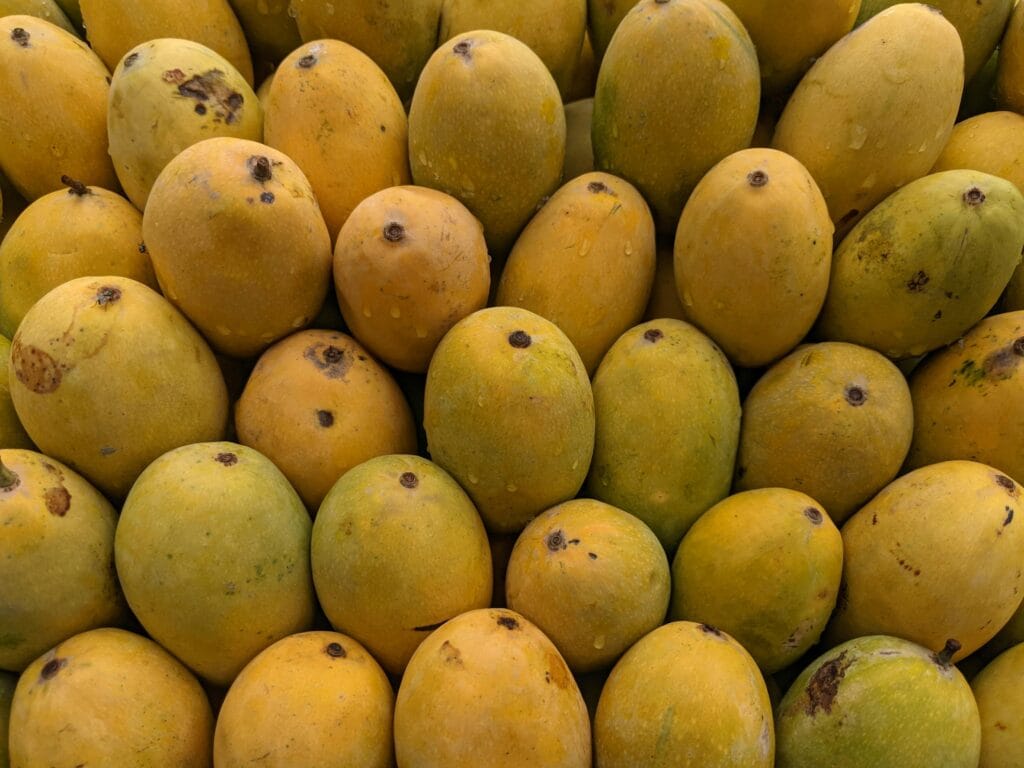
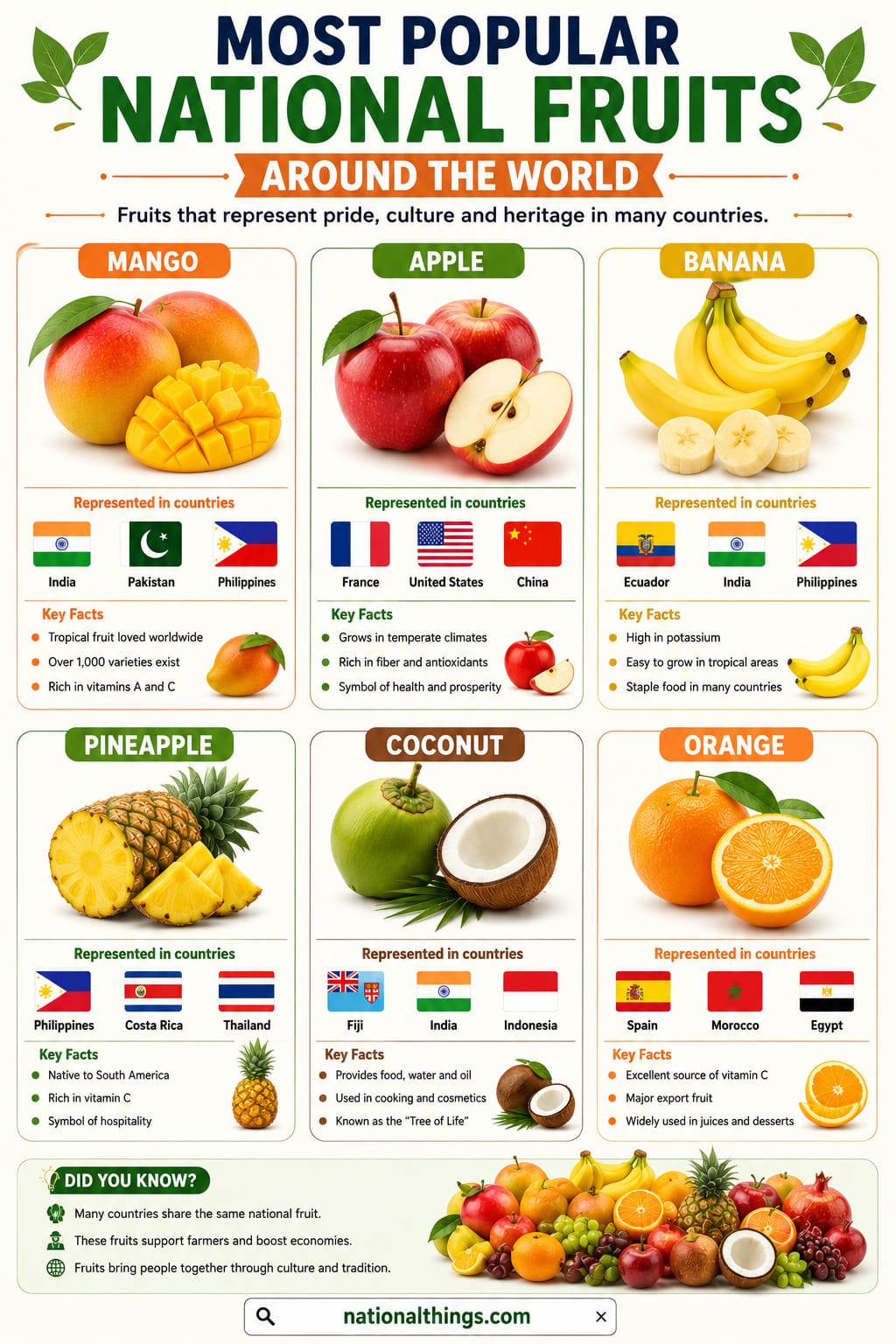
The mango is one of the most recognized national fruits worldwide.
The apple symbolizes health and agriculture in many regions.

Bananas are important in tropical countries.
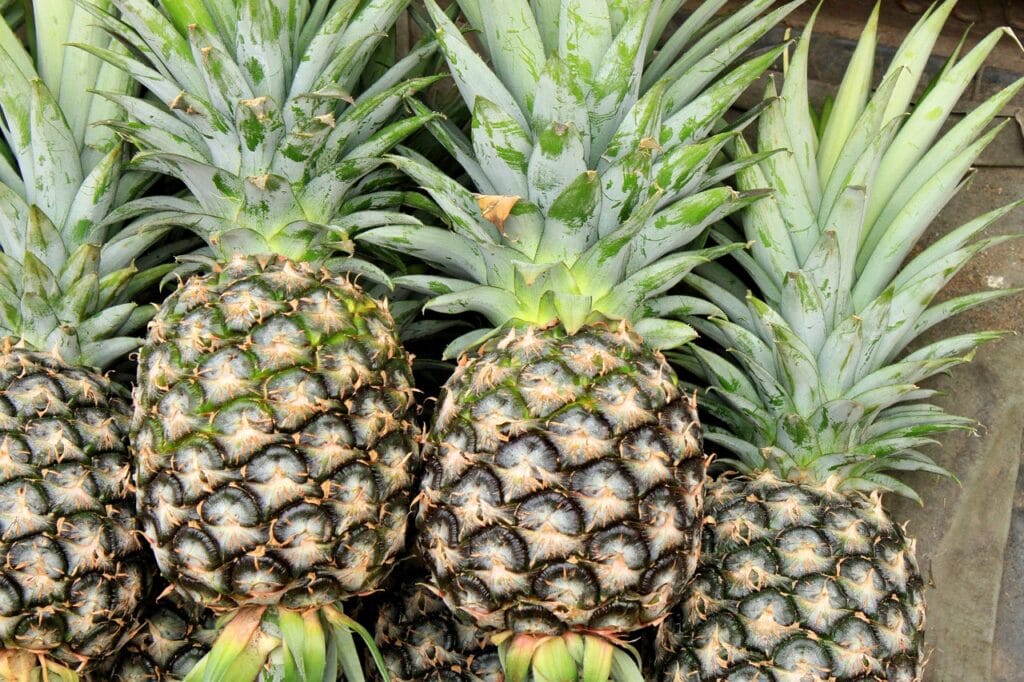
Pineapples represent hospitality in several cultures.
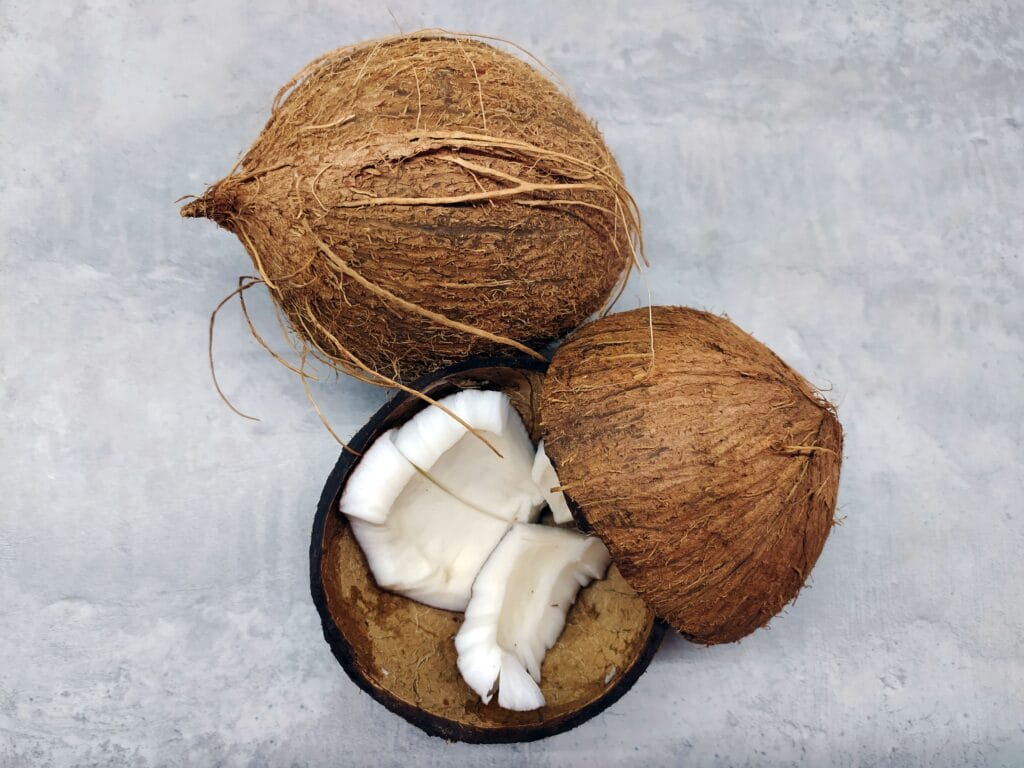
The coconut supports island economies.

Oranges remain important in Mediterranean and North African countries.
National fruits often appear in festivals, art, literature, and local traditions.
These examples show how fruits become more than food. They become symbols of heritage and belonging.
National fruits often contribute significantly to local economies.
Benefits include:
India produces millions of tons of mangoes annually and remains one of the world’s largest mango producers.
According to the Food and Agriculture Organization (FAO), global fruit production exceeds 900 million tonnes annually, showing the massive economic importance of fruit farming worldwide. Source: https://www.fao.org
Many countries use their national fruits to attract international buyers and promote agricultural exports.

Most national fruits provide valuable nutrients.
Scientists continue studying these fruits because of their potential health benefits.
National fruits serve many purposes beyond fresh consumption.
Examples include:
Popular drinks include:
Many communities organize fruit festivals.
Examples:
Countries export national fruits to international markets.
Major exported fruits include:
Export activities create jobs throughout the supply chain.
Here are some fascinating facts:
These facts highlight the unique history behind national fruits.
Different countries choose fruits based on local conditions and traditions.
| Country | National Fruit | Main Reason for Selection |
|---|---|---|
| India | Mango | Cultural and historical importance |
| Pakistan | Mango | Agricultural strength and exports |
| Bangladesh | Jackfruit | Abundant production and food value |
| Philippines | Mango | National pride and widespread cultivation |
| Thailand | Mangosteen | Cultural popularity and premium quality |
| Japan | Persimmon | Traditional and seasonal significance |
| Afghanistan | Pomegranate | Historical and agricultural importance |
| Armenia | Apricot | Deep connection to national heritage |
| Spain | Orange | Major agricultural export |
| Greece | Olive | Ancient cultural and economic value |
| Italy | Grape | Strong wine and farming tradition |
| Morocco | Orange | Export importance and local cultivation |
| Egypt | Date | Historical significance and desert agriculture |
| Jamaica | Ackee | Featured in the national dish |
| Canada | Blueberry | Cultural and regional importance |
| China | Peach | Symbol of longevity and good fortune |
| South Korea | Persimmon | Traditional cultural value |
| Vietnam | Dragon Fruit | Major fruit export and national identity |
| Malaysia | Durian | Most iconic local fruit |
| Indonesia | Salak (Snake Fruit) | Native fruit with cultural significance |
| Sri Lanka | Jackfruit | Important food source and heritage |
| Turkey | Fig | Historic cultivation and exports |
| Iran | Pomegranate | National symbol of fertility and prosperity |
| Chile | Grape | Strong export industry |
| Peru | Lucuma | Traditional fruit used in local cuisine |
| Brazil | Cupuaçu | Native Amazonian fruit |
| New Zealand | Kiwifruit | Global agricultural identity |
| Fiji | Coconut | Economic and cultural importance |
| Samoa | Breadfruit | Traditional staple food |
| Nepal | Lapsi | Indigenous fruit with cultural value |
You May Also Like:
National fruits tell stories about geography, traditions, and daily life.
A tropical country often chooses fruits that grow naturally in warm climates. Countries with strong farming industries may select fruits that support exports and employment. Nations with long cultural histories often choose fruits mentioned in literature, religion, or traditional celebrations.
The connection between people and food makes national fruits powerful cultural symbols. They help preserve traditions while promoting local agriculture to the world.
A national fruit is a fruit officially or culturally recognized as a symbol of a country.
India, Pakistan, and the Philippines are among the countries strongly associated with the mango as a national fruit.
Yes. Several countries recognize the same fruit because it has cultural and agricultural importance in each nation.
Governments, cultural organizations, and public traditions often influence the selection process.
Some are officially designated while others gain recognition through cultural traditions and widespread public acceptance.
The mango ranks among the most widely grown and internationally recognized national fruits due to its popularity across Asia and other tropical regions.