National Things of India: Explained with Symbols and Importance
India’s National Things are a set of official symbols that represent the identity, culture, and values of the country in…
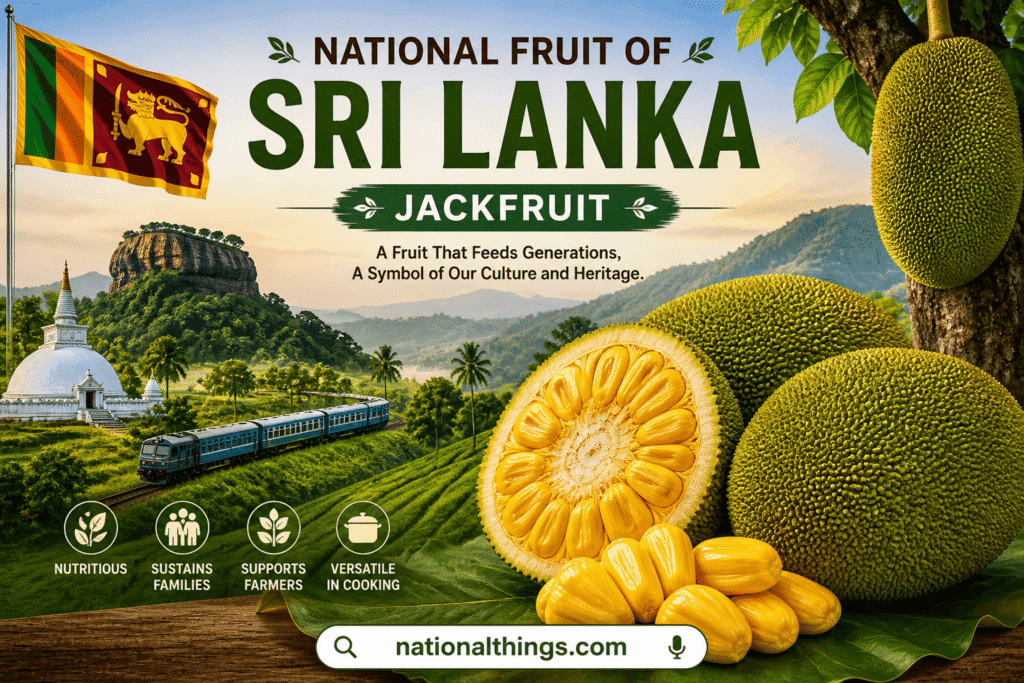
National Fruit of Sri Lanka is jackfruit, a large tropical fruit known for its size, rich nutrition, and wide use in daily meals. This fruit plays an important role in Sri Lankan life because people eat it at different stages, from young to fully ripe. It grows easily in the country’s warm climate and provides food for many families without high cost. Jackfruit is not just a fruit but a reliable food source that supports both rural households and local traditions. Its ability to be used in curries, snacks, and even as a meat substitute makes it one of the most practical and valuable fruits in Sri Lanka.
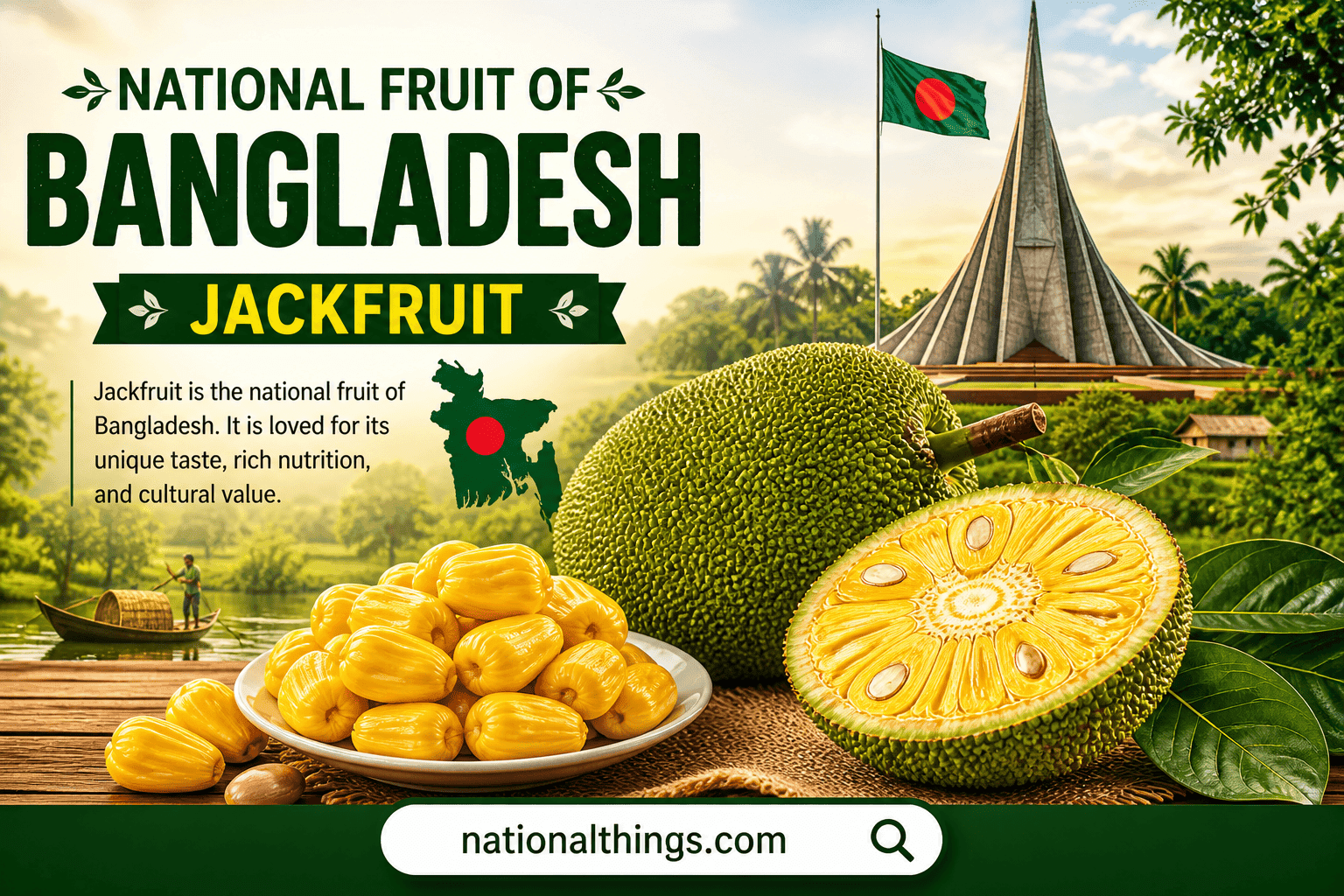
National Fruit of Sri Lanka is jackfruit. Locally people call it “kos” when it is mature and “polos” when it is young. The scientific name is Artocarpus heterophyllus. This fruit grows on a large tree and can reach a weight of 10 to 25 kilograms, and some fruits even go beyond 40 kilograms. It has a rough green outer skin and yellow sweet flesh inside. Each fruit contains many bulbs and seeds.
Jackfruit is not just a fruit in Sri Lanka. It is a daily food source for many families. People eat it at different stages of growth, which makes it very useful compared to many other fruits.
Sri Lanka selected jackfruit because it supports food security and traditional life. It grows easily in tropical climates without heavy care. Farmers do not need expensive fertilizers or constant irrigation.
During times of food shortage, jackfruit has helped many households survive. The fruit can replace rice in meals because it is filling and rich in carbohydrates. This practical value is one of the main reasons it became the National Fruit of Sri Lanka.
Another reason is cultural identity. Jackfruit trees are common in villages and home gardens. Almost every rural home has at least one tree.
Jackfruit has a long history in South Asia. Historical records suggest it originated in the Western Ghats of India and spread to Sri Lanka many centuries ago. Traders and travelers played a role in this spread.
Ancient Sri Lankan texts mention jackfruit as a staple food. Kings encouraged people to plant jackfruit trees because they provide food for many years. A single tree can produce fruit for decades.
Over time, jackfruit became deeply connected with farming culture and traditional cooking methods.
Jackfruit belongs to the Moraceae family, which also includes figs and mulberries. The tree can grow up to 20 meters tall. It has thick green leaves and a strong trunk.
Key botanical facts include:
The fruit has a unique structure. The edible bulbs surround large seeds. The outer skin protects the fruit from pests.
Sri Lanka has several types of jackfruit based on texture and taste.
This type has firm flesh. It is less juicy and easy to cut into pieces. People prefer it for eating raw or cooking.
This variety has soft and juicy flesh. It has a stronger aroma and sweeter taste. It is often eaten fresh.
Agricultural experts have developed improved varieties. These hybrids focus on better yield and disease resistance.
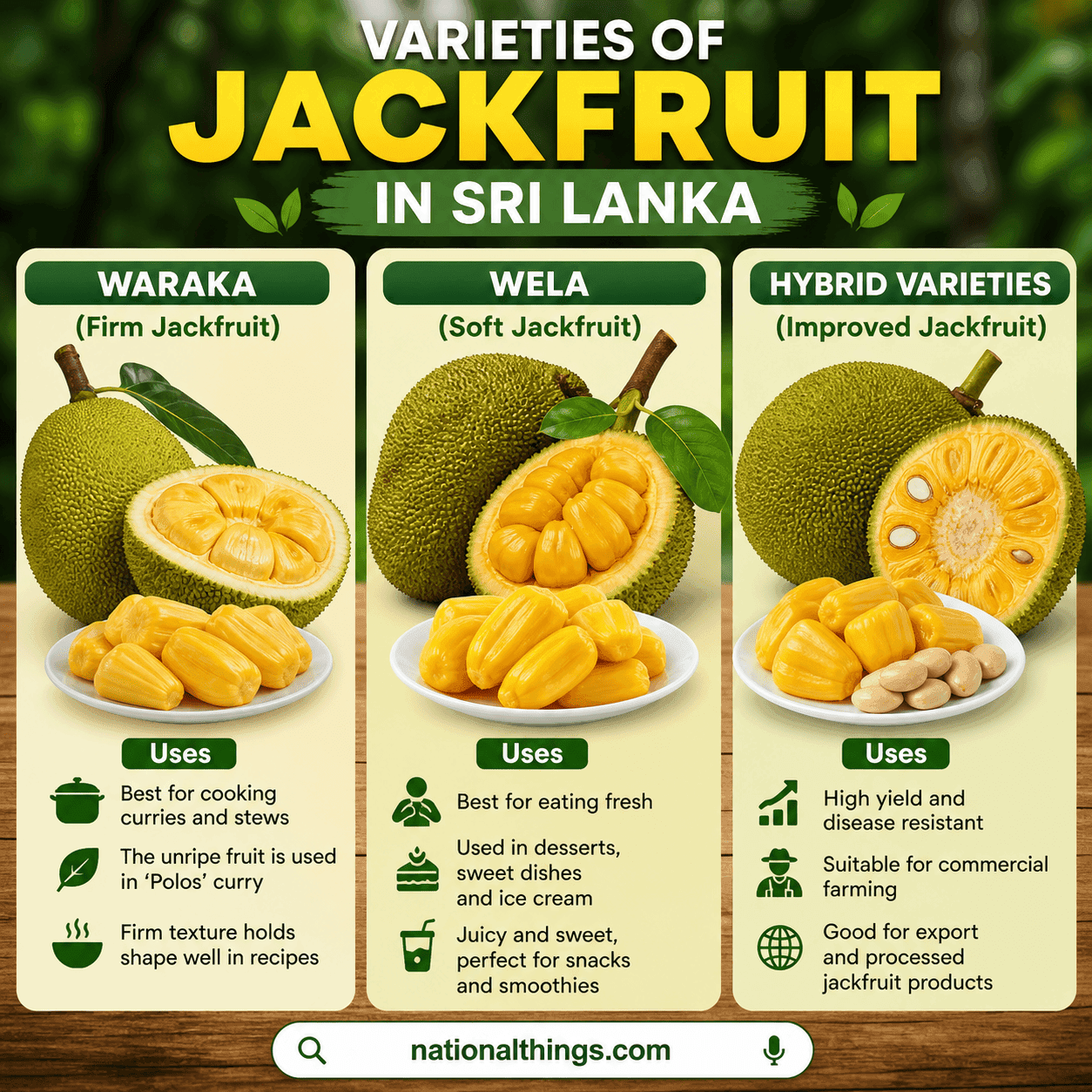
Each type serves a different purpose in cooking and consumption.
Jackfruit provides many nutrients that support health. It contains carbohydrates, fiber, vitamins, and minerals.
Key nutrients include:
According to the United States Department of Agriculture, 100 grams of raw jackfruit provides about 95 calories and 1.5 grams of fiber.
Source: https://fdc.nal.usda.gov
This nutritional value makes it a strong food option in many diets.
Jackfruit plays a major role in Sri Lankan culture. It appears in daily meals, festivals, and traditional practices.
In rural areas, families cook jackfruit in large pots and share meals together. This creates a strong sense of community. During religious events, people prepare jackfruit dishes as offerings.
The tree itself holds value. Planting a jackfruit tree is seen as a long-term investment for future generations.
Jackfruit supports local economies in Sri Lanka. Farmers sell fresh fruit in markets and roadside stalls. Small businesses also process jackfruit into chips, flour, and packaged food.
Key economic roles include:
With the rise in plant-based diets, global demand for jackfruit has increased. This trend opens new export opportunities for Sri Lanka.
Jackfruit is very versatile in cooking. People use it in both savory and sweet dishes.
Young jackfruit has a texture similar to meat. People cook it with spices to make a rich curry. It is popular as a meat substitute.
Mature jackfruit has a firmer texture. It is often boiled or cooked with coconut milk and spices.
Seeds are also edible. People boil or roast them. They have a taste similar to chestnuts.
Each part of the fruit gets used, which reduces waste.
Jackfruit offers several health benefits when included in a balanced diet.
Some studies suggest that jackfruit seeds contain compounds with antioxidant properties. These compounds help protect cells from damage.
Farmers grow jackfruit trees in tropical regions with warm temperatures and good rainfall. The tree does not require complex care.
Key steps in cultivation include:
Harvesting requires skill. Farmers cut the fruit carefully from the tree using knives. The fruit produces sticky latex, so they often apply oil on their hands to handle it easily.
Here is a quick overview of important facts about jackfruit:
This simple summary helps readers understand the core details quickly.
Jackfruit has gained attention worldwide due to its use as a plant-based meat alternative. Many vegan and vegetarian products now use jackfruit.
Countries in Europe and North America import processed jackfruit. Sri Lanka has started exporting canned and frozen jackfruit products.
The global shift toward plant-based diets creates strong demand. This trend can benefit Sri Lankan farmers and businesses.
Jackfruit has many unique features that make it special.
These facts show how useful and unique jackfruit is compared to other fruits.
The National Fruit of Sri Lanka is jackfruit.
Yes. People eat ripe jackfruit raw. It has a sweet taste.
Yes. Young jackfruit has a texture similar to meat, so many people use it in vegetarian dishes.
A jackfruit tree can produce fruit for many decades if cared for properly.
Yes. People boil or roast the seeds and eat them as snacks or in meals.
Related Articles: