

National Animal of UK: The Lion
Lion – The National Animal of the United Kingdom The National Animal of the UK is the lion. The lion…
National Fruit of the Philippines reflects the country’s rich food culture and strong agricultural roots. Mango, especially the Carabao variety, stands out for its natural sweetness, bright color, and smooth flesh. People across the Philippines enjoy it in many ways, such as fresh slices, dried snacks, juices, and traditional desserts. Farmers grow mangoes in many regions, making it an important source of income and export value. Its wide use in daily meals and its global reputation make mango a true symbol of the Philippines.
National Fruit of the Philippines is the mango, locally called “mangga.” The country officially recognizes the mango because of its strong link to daily life, food culture, and agriculture. Among many types of mangoes grown worldwide, the Philippine mango stands out for its very sweet taste and smooth texture.
The most famous type is the Carabao mango. It has a thin seed, bright yellow flesh, and a strong natural sweetness. Many experts and food groups rate it as one of the sweetest mangoes in the world. In 1995, the Guinness Book of World Records recognized the Carabao mango as the sweetest mango variety.
The mango earned its place as the national fruit because it represents the country in several important ways. It reflects the climate, farming practices, and food traditions of the Philippines.
People across the country eat mangoes daily. Farmers grow them in many provinces, and local markets sell them fresh, dried, or processed into different products. The fruit also appears in festivals, school programs, and export markets.
Key reasons for its status include:
Mango trees have grown in the Philippines for hundreds of years. Early records show that mango cultivation started before Spanish colonization in the 1500s. Local farmers developed methods to grow mangoes in tropical conditions.
During the Spanish period, trade increased the spread of mango varieties. Over time, farmers improved techniques such as grafting and controlled flowering. These methods helped increase production and quality.
In the modern era, mango farming became a key part of agriculture. Provinces like Zambales, Guimaras, and Pangasinan became known for high-quality mango production.
The scientific name of mango is Mangifera indica. It belongs to the Anacardiaceae family, which also includes cashew and pistachio.
Key botanical features:
Philippine mango trees grow best in warm climates with dry and wet seasons. Controlled use of potassium nitrate helps farmers trigger flowering at the right time.
Mango plays a strong role in Filipino culture. It appears in daily meals, celebrations, and local traditions.
Many festivals celebrate mango harvests. One example is the Manggahan Festival in Guimaras. This event promotes local mango products and attracts tourists from different countries.
Families often serve mango during gatherings. It pairs with sticky rice, desserts, and even savory dishes like green mango with shrimp paste. This mix of sweet and sour flavors reflects local taste preferences.
Mango farming supports thousands of farmers across the country. It creates jobs in farming, processing, packaging, and export.
The Philippines exports mangoes to countries like Japan, South Korea, and the United States. These markets prefer Philippine mangoes because of their sweetness and quality.
According to the Philippine Statistics Authority, the country produced over 700,000 metric tons of mangoes in 2022.
Source: https://psa.gov.ph
Key economic benefits:
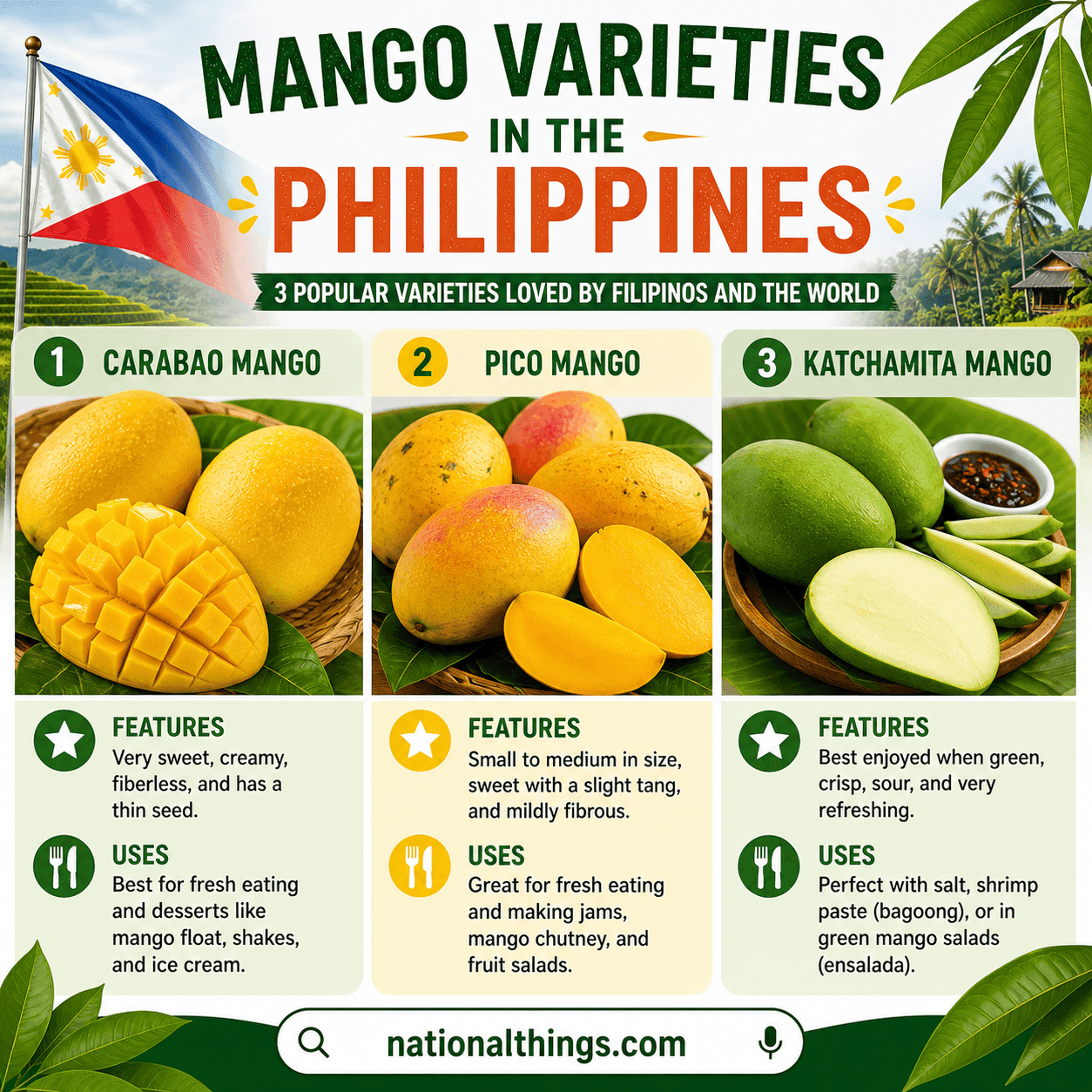
This is the most popular variety. It is known for its very sweet taste and smooth texture. It has little fiber and a rich yellow color.
Pico mango is smaller and slightly more fibrous. It has a balanced sweet and sour flavor. Many people use it in local dishes.
This variety is often eaten while still green. It has a sour taste and is commonly paired with salt or shrimp paste.
Farmers follow careful steps to produce high-quality mangoes. They prepare the soil, plant grafted seedlings, and manage irrigation.
Key steps in mango farming:
Harvesting happens when the fruit reaches the right size and maturity. Workers pick mangoes by hand to avoid damage. After harvest, they sort and pack the fruit for local sale or export.
Mango is very versatile. People use it in many forms, both fresh and processed.
People eat ripe mangoes as a snack or dessert. They often slice them and serve them chilled.
The Philippines produces dried mango slices that are popular worldwide. These products have a long shelf life and retain sweetness.
Common dishes include mango float, mango ice cream, and mango sticky rice. Green mango also appears in salads.
Mango juice and smoothies are popular in both homes and restaurants. They provide a refreshing drink in hot weather.
Mango offers many health benefits. It contains vitamins, minerals, and natural sugars.
Key nutrients in mango:
A 100-gram serving of mango provides around 60 calories. It is a healthy option when eaten in moderate amounts.
Major mango-producing regions include:
Production varies by season, with peak harvest from March to May. Weather conditions affect yield and quality.
Philippine mango stands out in several ways compared to mangoes from other countries.
Key differences:
Other mangoes may have a firmer texture or more sour taste. These differences affect how people use them in cooking.
The national fruit is mango, especially the Carabao variety.
It supports the economy, appears in daily meals, and represents local culture.
Guimaras is widely known for high-quality mangoes.
Yes, green mango is popular and often eaten with salt or shrimp paste.
Yes, it is exported to many countries due to its sweetness and quality.
Related Articles: