
National Animal of Canada – History, Meaning and Facts
The National Animal of Canada is the North American beaver. This hardworking animal has been an important symbol of Canada…
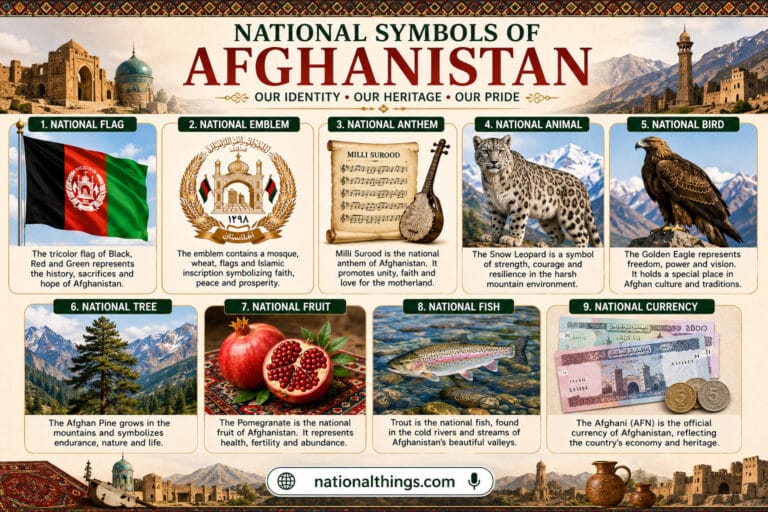
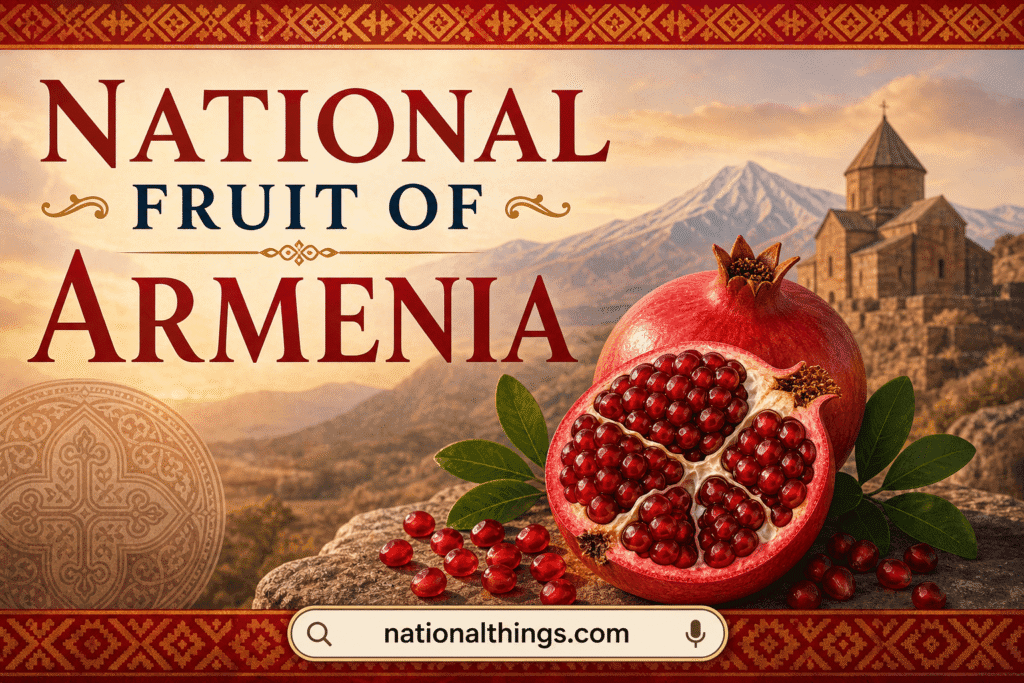
The National Fruit of Armenia is the Pomegranate, a fruit that holds deep cultural and historical meaning in the country. In Armenia, the pomegranate is not treated as an ordinary fruit. It is seen as a symbol of life, strength, and long tradition. People value it for its rich taste, its many seeds, and its connection to ancient Armenian heritage. The fruit grows well in Armenia’s warm regions and has been part of local farming and daily diet for centuries. Its presence in festivals, art, and family traditions shows why it continues to represent the identity of the nation today.
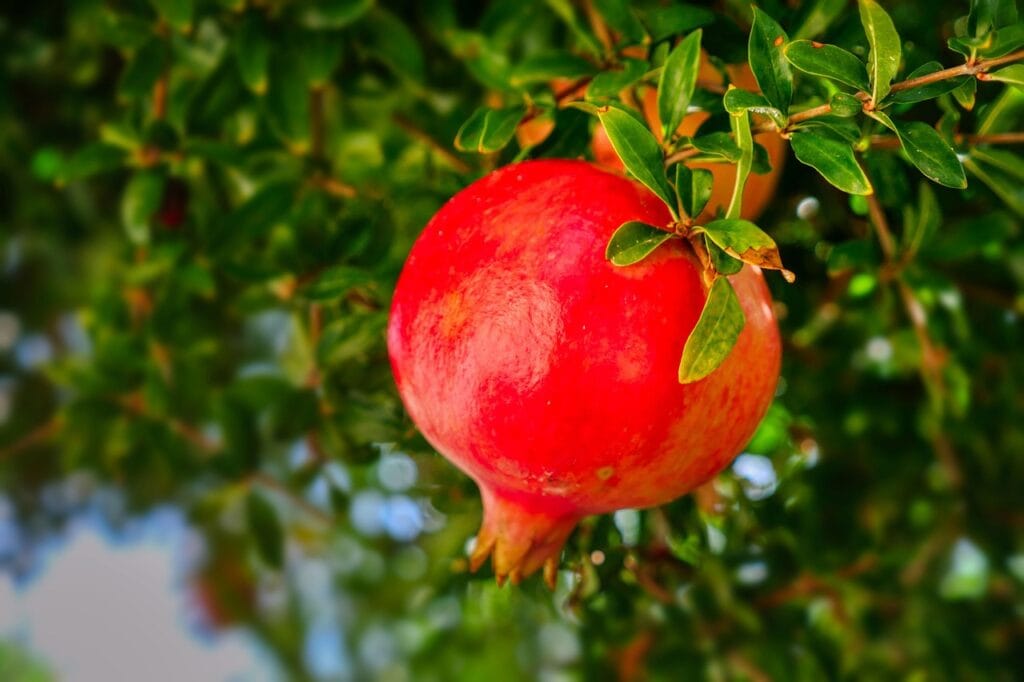
National fruit of Armenia is the phrase most commonly associated with the pomegranate. The pomegranate is not just a fruit in Armenia. It is a national symbol that represents identity, history, and daily life. People in Armenia value it for food, culture, and meaning.
The fruit grows in warm climates and has a hard outer skin with many juicy seeds inside. These seeds are called arils. They are used fresh, in juice, or dried for cooking.
Armenia officially recognizes the pomegranate as a national cultural symbol, and many people refer to it as the national fruit of Armenia because of its deep connection with tradition and heritage.
The pomegranate became the national fruit of Armenia because it has been part of Armenian life for thousands of years. It is strongly linked to survival, fertility, and abundance.
Several reasons explain its status:
Unlike imported fruits, the pomegranate is deeply rooted in local agriculture. Families often grow it in home gardens, which strengthens its cultural importance.
The history of the national fruit of Armenia goes back to ancient times. Archaeological findings show that pomegranates were cultivated in the South Caucasus region for thousands of years.
Historical records show:
The fruit was not only food. It was part of cultural identity. Over time, it became a permanent symbol of Armenian heritage.
The pomegranate plays a strong cultural role in Armenia. It is seen during festivals, weddings, and religious events.
Key cultural uses include:
In Armenian homes, breaking a pomegranate is considered a sign of good fortune. The scattering seeds represent prosperity and future success.
The national fruit of Armenia is widely used as a symbol in Armenian culture. It appears in many forms of expression.
| Category | Uses | Examples |
|---|---|---|
| In art | Representation in visual and cultural artworks | Painted in traditional manuscripts, Carved into church walls, Used in modern national designs |
| In religion | Spiritual and symbolic meanings in faith practices | Represents resurrection and eternal life in Christian symbolism, Often shown in religious ornaments |
| In tradition | Cultural practices and social customs | Given as a gift during important life events, Placed on holiday tables as a sign of blessing |
The fruit’s many seeds are the strongest symbol. They represent unity, where many parts come together as one family or nation.
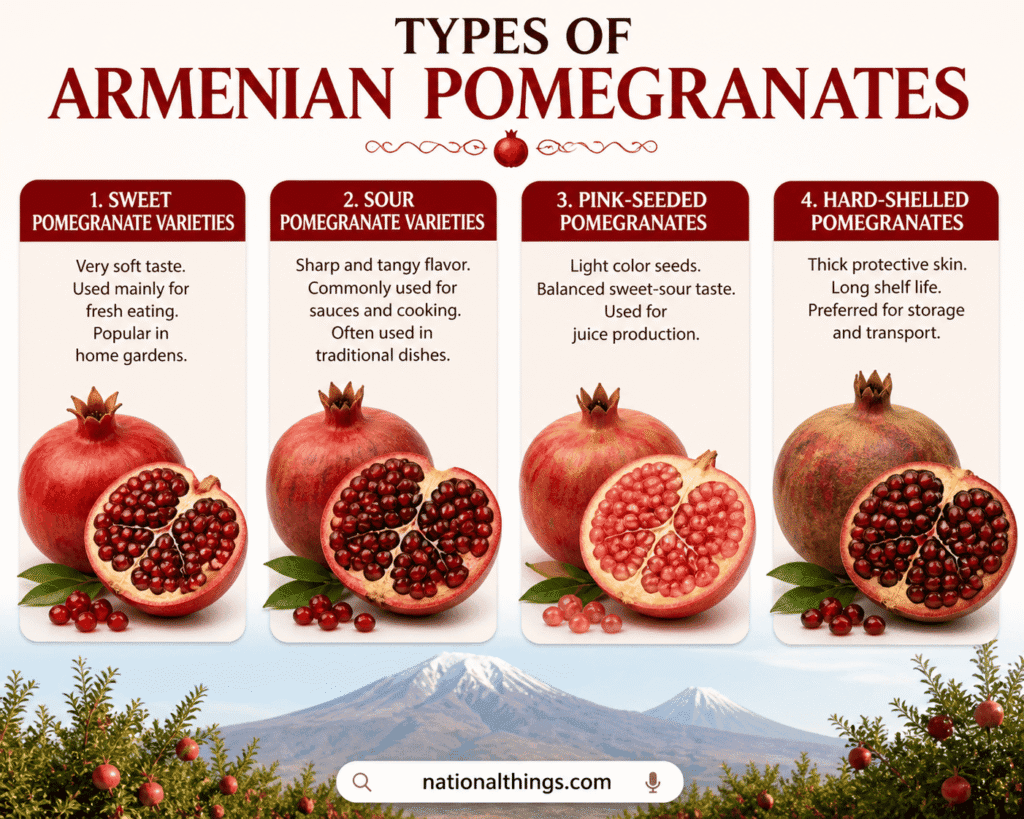
Armenia grows several types of pomegranates. Each type differs in taste, color, and seed texture.
These varieties support both local consumption and small-scale export.
The national fruit of Armenia grows best in warm and dry areas. The most important growing region is the Ararat Valley.
Key conditions:
Farmers often use traditional irrigation methods combined with modern farming tools. Pomegranate trees are long-living and can produce fruit for decades.
Pomegranates are known for their strong nutritional profile.
Main nutrients:
Health benefits include:
A study published in the journal Nutrients found that pomegranate juice can help reduce blood pressure in some cases.
Source: https://www.ncbi.nlm.nih.gov/pmc/articles/PMC4007340/
The national fruit of Armenia is used in many practical ways.
| Category | Uses | Examples |
|---|---|---|
| In food | Ways pomegranate is used in daily diet | Fresh fruit consumption, Juice production, Sauces for meat dishes, Syrups used in desserts |
| In medicine | Traditional and health-related uses | Traditional remedies for digestion, Natural antioxidant source, Herbal mixtures in folk medicine |
| In cosmetics | Beauty and skincare applications | Skin care oils from seeds, Anti-aging products, Natural extracts for creams |
These uses show how the fruit goes beyond nutrition and enters daily lifestyle products.
Pomegranate farming supports small farmers in Armenia. While Armenia is not a top global exporter, it plays a regional role.
Key economic points:
Globally, pomegranate production is dominated by countries like India and Iran. According to FAOSTAT, global pomegranate production is around 3 million metric tons annually.
Source: https://www.fao.org/faostat/
Armenia contributes a smaller share, but its fruit is valued for quality rather than volume.
Pomegranate farming follows a seasonal cycle. Farmers focus on climate, watering, and pruning.
| Factor | Description |
|---|---|
| Climate | Hot summers, mild winters |
| Planting season | Spring |
| Harvest season | Late summer to autumn |
| Tree lifespan | 20–30 years or more |
| Yield | Medium compared to tropical countries |
Armenian farmers often harvest by hand to protect fruit quality. Proper storage helps extend shelf life for markets.
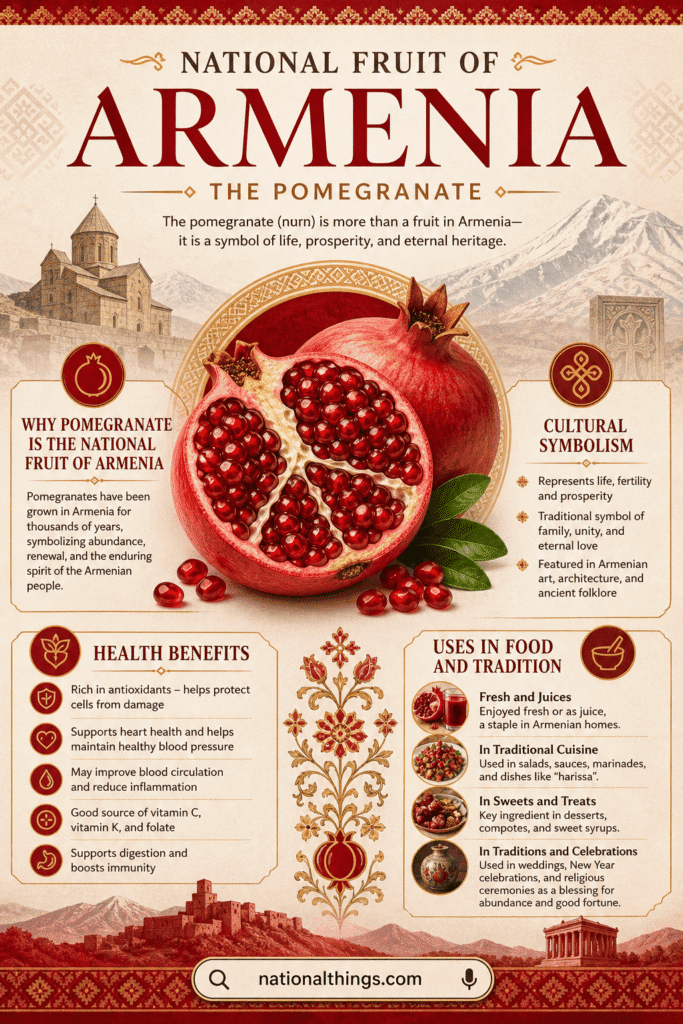
These facts show why the fruit is more than agriculture. It is part of identity.
Because it has deep historical roots, strong cultural meaning, and grows naturally in Armenian climate regions.
It is native to the broader South Caucasus and surrounding regions, including Armenia.
It is used in juices, sauces, meat dishes, and traditional desserts.
It symbolizes fertility, life, unity, and prosperity.
They grow best in warm lowland areas like the Ararat Valley, not in very cold mountain regions.
Related Articles: