National Fruits of 195 Countries
A list of 195 countries and their national fruits might sound simple, but it reveals a fascinating side of every…
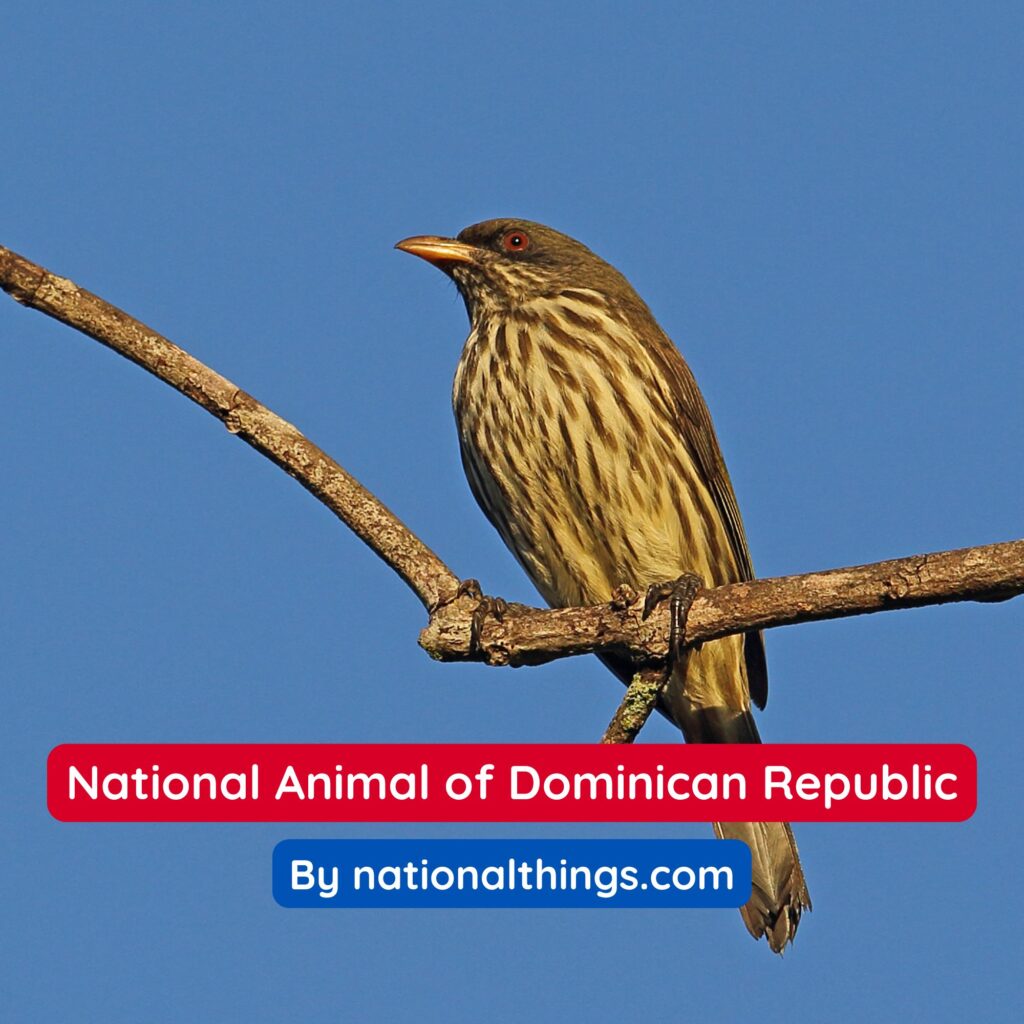
Every country has special symbols that represent its nature, culture, and identity. One of these important symbols is the national animal. The national animal of the Dominican Republic is a small but very interesting bird called the Palmchat.
This bird is unique because it lives mainly on the Caribbean island of Hispaniola, where the Dominican Republic is located. The Palmchat is also known by its Spanish name “Cigua Palmera.”
The Palmchat is not just another bird in the forest. It represents the natural beauty, cooperation, and social life of wildlife in the Dominican Republic. People often see these birds living in groups, building nests together, and making lively sounds in palm trees.
In this article, you will learn everything about the national animal of the Dominican Republic in simple and easy English. The information is written to help learners understand the topic clearly while also giving detailed and accurate knowledge.
The official national animal and national bird of the Dominican Republic is the Palmchat. It is a small songbird that belongs to its own unique bird family called Dulidae.
This bird is special in the world of wildlife because it is the only species in its family. Scientists find this very interesting because most bird families include many species, but the Palmchat stands alone.
The Palmchat is strongly connected with palm trees. It spends most of its time in palm forests, which is why it got the name Palmchat. The bird often builds nests high in palm trees and gathers in groups there.
Some key facts about the Palmchat:
Because this bird is common in the Dominican landscape and easy for people to recognize, it became a perfect national symbol.
The Palmchat has a clear scientific classification used by biologists to identify animals.
| Category | Information |
|---|---|
| Scientific Name | Dulus dominicus |
| Kingdom | Animalia |
| Class | Aves |
| Family | Dulidae |
| Common Name | Palmchat |
This classification shows that the Palmchat belongs to the bird group (Aves) and has its own special family.
The Palmchat is not a large bird, but it has a distinct and recognizable look.
Its body color is mostly olive-brown, with a lighter belly that has small dark streaks. This coloring helps the bird blend easily with tree branches and leaves.
Here are some noticeable features of the Palmchat:
Male and female Palmchats look very similar, so it is difficult to tell them apart just by looking at them.
The bird may not be brightly colored like parrots, but its simple natural colors help it survive in the wild.
The Palmchat lives mainly on the island of Hispaniola.
This island is divided into two countries:
The bird is especially common in the Dominican Republic.
Palmchats prefer areas where palm trees grow in large numbers. These trees give them food, shelter, and nesting places.
Common habitats include:
One interesting fact is that the Palmchat adapts easily to human environments. Even in towns and villages, people can often see these birds flying around palm trees.
Palmchats are very social birds. They rarely live alone and usually stay in groups.
These birds communicate with each other through constant chirping and chattering sounds. This is another reason they are called Palmchat.
Their social behavior includes:
Watching Palmchats in nature can be very interesting. They move quickly from branch to branch and often gather in palm trees.
Their cooperative lifestyle is one of the reasons this bird became an important national symbol.
Palmchats have a mixed diet, meaning they eat both plant and animal foods.
Most of their food comes from fruits and berries, especially those found in palm trees.
Their diet includes:
Insects provide important nutrients, especially when the birds are feeding their young.
Because Palmchats eat fruit and later spread seeds, they help new plants grow in forests. This makes them helpful for the environment.
One of the most fascinating features of the Palmchat is its large communal nests.
Instead of building small nests for one family, Palmchats create huge nests made of sticks and twigs. These nests are usually placed at the top of palm trees.
Inside the nest are many small chambers, where different bird pairs live.
A single nest may contain several families at the same time. Over time, birds continue adding more sticks, and the nest grows bigger.
This shared nesting system is rare among birds and shows the strong social behavior of the Palmchat.
The Palmchat is a bird that many people in the Dominican Republic recognize immediately.
It appears often in:
Because the bird lives in groups and builds shared homes, it represents community and cooperation.
Its Spanish name “Cigua Palmera” is widely known among local people.
Choosing the Palmchat as the national animal helps highlight the country’s unique wildlife and natural heritage.
The good news is that the Palmchat population is stable.
Wildlife organizations currently classify the species as Least Concern, which means it is not at immediate risk of extinction.
However, some environmental issues can still affect the bird:
Protecting forests and palm ecosystems helps ensure that the Palmchat continues to thrive in the future.
Here are some quick and interesting facts:
These facts make the Palmchat a truly unique national symbol.
The national animal of the Dominican Republic is the Palmchat, a fascinating and social bird that lives mainly on the island of Hispaniola.
Although it is small in size, the Palmchat plays an important role in the environment and culture of the Dominican Republic. Its cooperative lifestyle, unique nests, and strong connection with palm trees make it one of the most interesting birds in the Caribbean region.
Learning about the Palmchat helps people understand how wildlife can represent a country’s identity and natural heritage.
Related Articles: