
National Fruit of Bangladesh: Meaning, History and Pictures
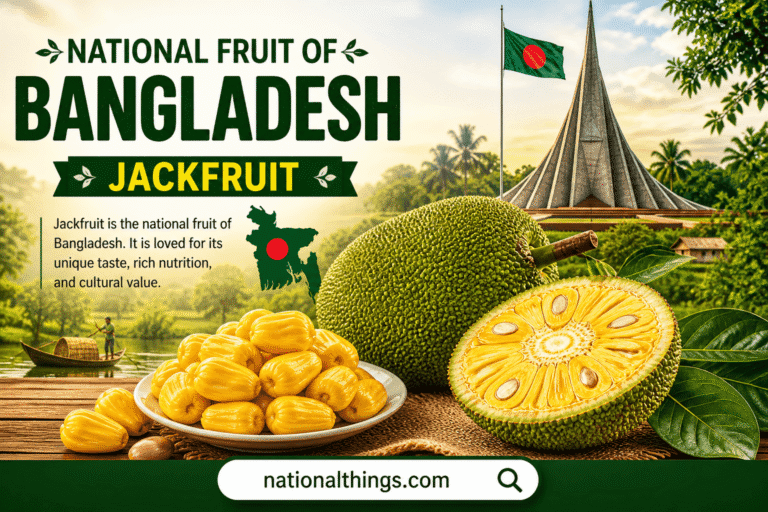
National Fruit of Bangladesh is jackfruit. This fruit is a central part of daily life in the country and grows…
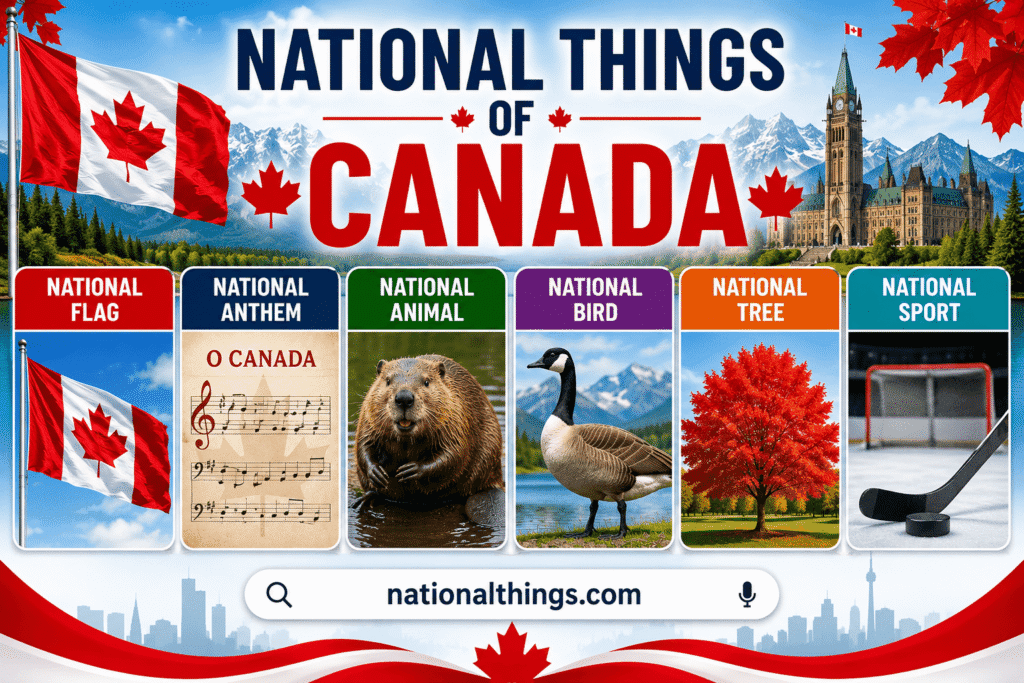
National things of Canada represent the country’s history, culture, wildlife, sports, and identity. These symbols help people understand what makes Canada unique. The maple leaf, the Canadian flag, the beaver, hockey, and the national anthem are some of the most recognized national symbols in the world. Each symbol has a clear meaning connected to Canada’s past traditions and natural environment. Some symbols came from Indigenous history while others became official through government decisions. Today these national things of Canada appear in schools, tourism campaigns, sports events, coins, and international ceremonies.
National things of Canada represent the country’s culture, history, nature, and identity. These symbols help people understand what makes Canada different from other nations. Some national things come from wildlife and forests, while others come from sports traditions, government history, and Indigenous culture.
Canada uses these symbols in schools, passports, sports uniforms, tourism campaigns, and official ceremonies. The maple leaf, the Canadian flag, the beaver, and hockey are some of the most recognized Canadian symbols around the world. These things are not just decorations. Each one carries a strong connection with Canadian life and historical development.
Canada is one of the largest countries in the world. It has different cultures, languages, and traditions across provinces and territories. National symbols help connect people under one shared identity. They also teach visitors and new generations about the country’s values, traditions, and natural environment.
National symbols create a sense of unity. Canada has English-speaking and French-speaking communities along with Indigenous nations and immigrants from many countries. National symbols give people something common that represents the whole country.
The Canadian flag is one of the clearest examples. Canadians wave it during Canada Day celebrations, sports tournaments, and international events. It shows national pride and independence.
National symbols also protect history. The beaver reminds people about the fur trade economy that shaped early Canada. Hockey explains how winter weather influenced sports and community life. The maple leaf reflects the country’s forests and natural beauty.
Tourism also depends heavily on these symbols. Millions of visitors travel to Canada to experience wildlife, snowy mountains, maple forests, and winter sports culture. According to Destination Canada, the tourism industry contributed more than CAD 109 billion to the national economy in 2023. Source: https://www.destinationcanada.com
Many Canadian symbols became popular naturally before they became official national symbols.
The maple leaf started appearing in French Canadian communities during the 1700s. Soldiers later used maple leaf badges during military service. During the 1960s, Canada wanted a flag separate from British influence. After long political debates the current red-and-white maple leaf flag officially started on February 15, 1965.
The beaver became important during the fur trade period. European traders wanted beaver fur for making hats and winter clothing. Fur trading companies expanded across rivers, forests, and lakes throughout North America. Canada officially recognized the beaver as a national symbol in 1975.
“O Canada” first appeared in French during a celebration in Quebec City in 1880. The government officially adopted it as the national anthem in 1980.
Canada also recognized two official sports in 1994:
Lacrosse existed in Indigenous communities long before European arrival.
The Canadian flag contains two red side bars and a white square in the center with a red maple leaf. The design looks simple but carries strong meaning.
Red and white became Canada’s official national colors in 1921 under King George V. The maple leaf in the center has eleven points. Designers selected the shape because it remained clear in windy weather.
The flag represents:
Before 1965 Canada mainly used British-style flags. The current flag helped Canada create a stronger independent identity.
Every year Canadians celebrate National Flag Day on February 15.
“O Canada” is the official national anthem of the country. Schools, sports events, military ceremonies, and public celebrations regularly use the anthem.
The French version came first. English lyrics appeared later and became widely popular. The anthem speaks about patriotism, courage, and loyalty to the country.
In 2018 Canada changed one line in the English version to make the wording more gender-inclusive.
Children learn the anthem in schools from an early age. New citizens also study it during citizenship preparation classes.
The beaver is Canada’s official national animal. It became important because the fur trade helped build the country’s early economy.
Beavers are strong builders. They create dams using branches, mud, and wood. These dams form ponds that support fish, birds, insects, and wetland ecosystems.
Scientists often call beavers ecosystem engineers because they naturally change landscapes in ways that help many other species survive.
Interesting facts about beavers:
The beaver also appears on the Canadian five-cent coin.
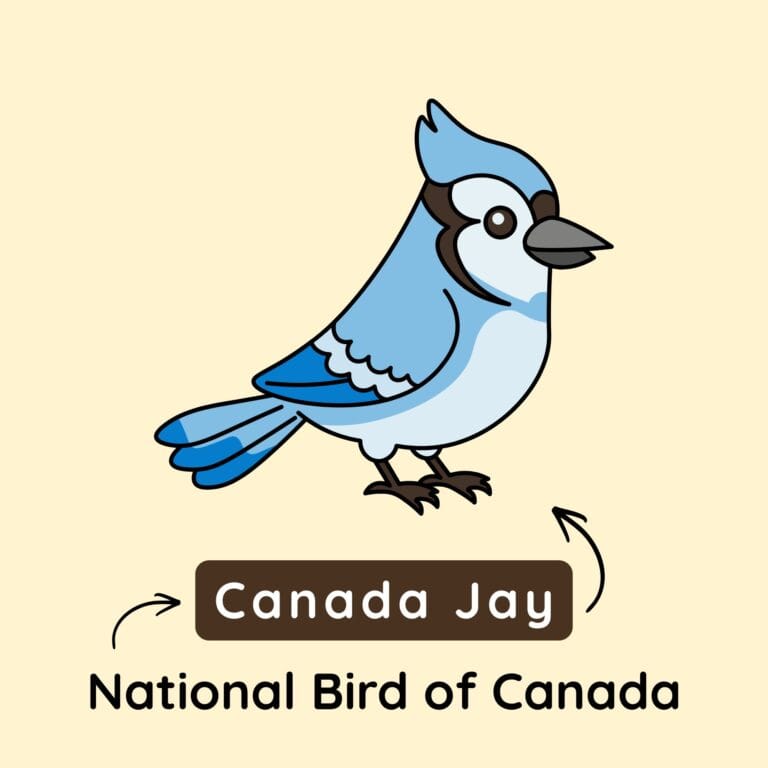
Canada does not officially have one national bird, but many people strongly connect the country with the Canada goose.
This bird travels across North America during migration seasons. People often see large V-shaped groups flying in spring and autumn.
The common loon is another famous Canadian bird. Its image appears on the Canadian one-dollar coin, which people call the “loonie.”
Birdwatching tourism is important in Canada because the country contains huge forests, lakes, wetlands, and national parks.
The maple tree is the strongest tree symbol connected with Canada. Maple forests grow widely in Ontario, Quebec, and several eastern provinces.
Maple trees support the economy and environment. Farmers collect sap from sugar maple trees to produce maple syrup, which Canada exports worldwide.
Canada produces around 71 percent of the world’s maple syrup, according to Agriculture and Agri-Food Canada.
The maple leaf became famous because
Autumn maple forests attract millions of tourists every year because of bright red, orange, and yellow leaves.
Ice hockey is Canada’s official winter sport. The cold climate helped hockey become part of daily Canadian life for generations.
Children play hockey in schools, local clubs, and frozen outdoor ponds during winter months. Families gather around hockey games on television and in arenas across the country.
Canada produced many famous hockey players, including:
International hockey competitions create strong national excitement, especially during the Winter Olympics.
Lacrosse is the official summer sport. Indigenous peoples created the game hundreds of years ago. Traditional lacrosse sometimes involved hundreds of players and very large fields.
Modern lacrosse still remains popular in many Canadian communities.
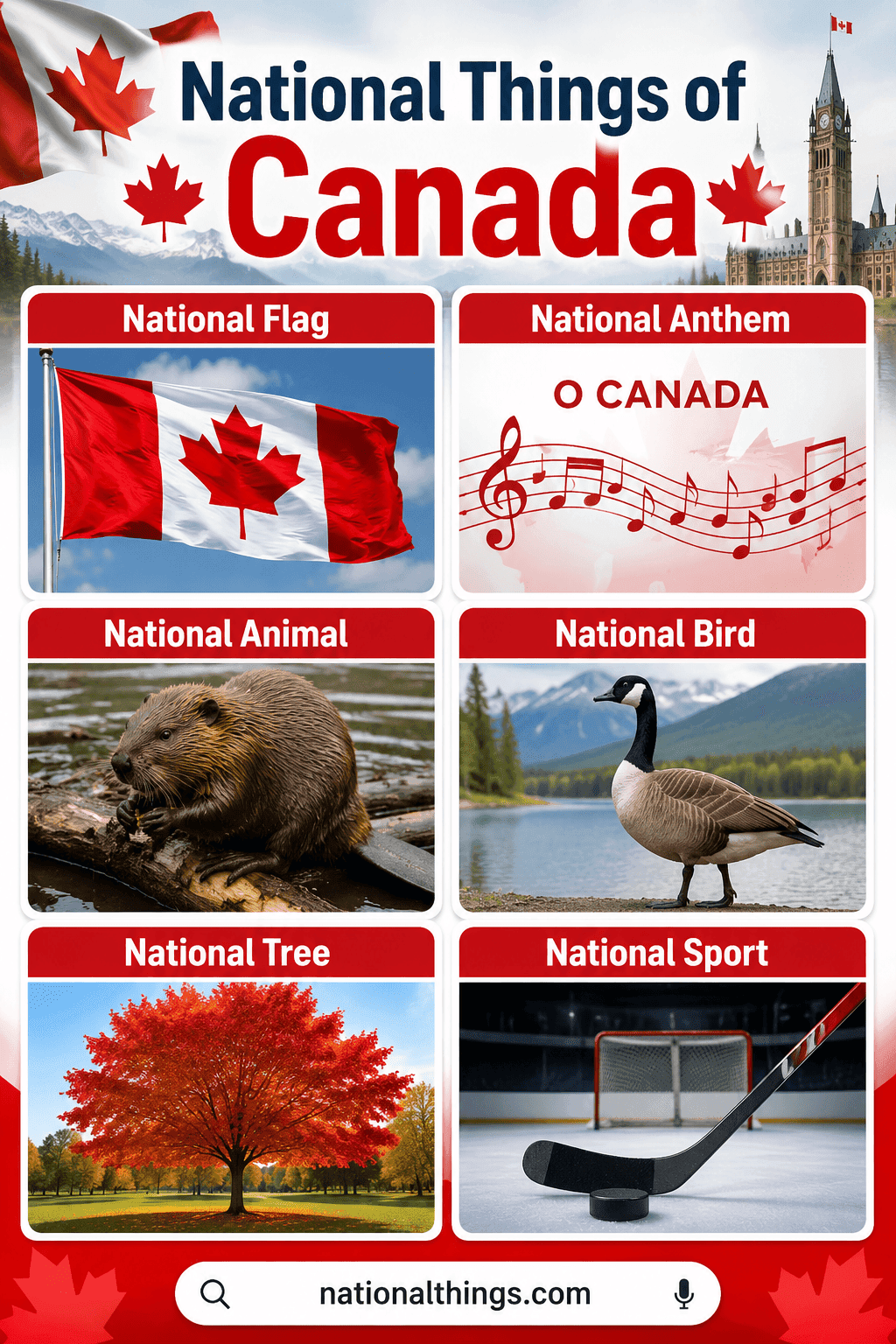
Each Canadian symbol carries a deeper message connected with national history, culture, or geography.
Indigenous peoples shaped many Canadian traditions long before European settlement.
Several important Canadian national things came directly from Indigenous knowledge, including:
These inventions helped people survive travel and hunt across difficult landscapes and cold winters.
Totem poles from the Pacific Northwest tell stories about families’ spiritual beliefs and community history. Inuit art from northern Canada became respected around the world for its unique style and cultural meaning.
Canada now gives greater public attention to Indigenous history through museums, schools, cultural centers, and national events.
Many Canadian symbols became internationally recognized through tourism sports media and global events.
The maple leaf is Canada’s strongest international symbol. It appears on:
The beaver became one of Canada’s oldest economic symbols because fur trading shaped the country’s expansion.
People recognize the Canada goose because of its loud calls, long migration flights, and V-shaped flying formations.
The RCMP became famous for red uniforms, horseback ceremonies, and law enforcement history. The organization started in 1873 to maintain order in western Canada.
Tourists often visit RCMP ceremonies because the uniforms and traditions have become major cultural symbols.
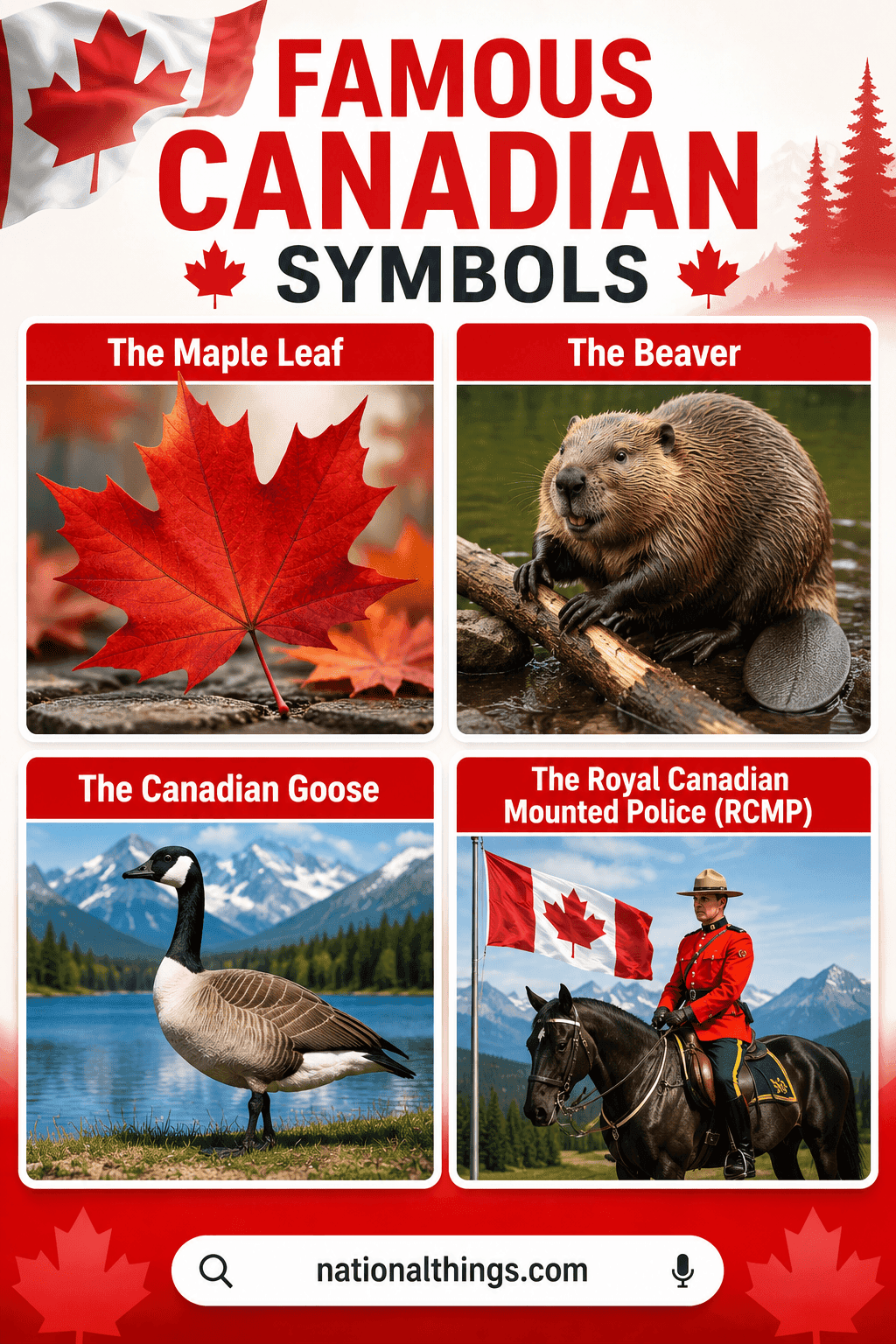
Canadian symbols appear everywhere in daily life. People see maple leaves on clothing, sports jerseys, company logos, and souvenirs. Schools display Canadian flags in classrooms and public buildings.
Coins feature wildlife images such as the following:
Sports culture also shapes daily life. Hockey games bring communities together during winter weekends. Tourism businesses use national symbols heavily in advertisements and travel products. Common items include:
These symbols help build Canada’s image around the world.
| National Symbol | Type | Official Status | Main Meaning |
|---|---|---|---|
| Maple Leaf | Plant Symbol | Official | Unity and nature |
| Beaver | Animal Symbol | Official | Hard work and history |
| Canadian Flag | National Flag | Official | Independence |
| O Canada | National Anthem | Official | Patriotism |
| Hockey | Winter Sport | Official | Community and teamwork |
| Lacrosse | Summer Sport | Official | Indigenous heritage |
| Canada Goose | Bird Symbol | Unofficial | Wildlife and migration |
| RCMP | Cultural Symbol | National Icon | Law and tradition |
Canada protects national symbols through laws, education, and conservation programs.
Government agencies control official use of:
National parks protect forests, rivers, wildlife, and landscapes connected with Canadian identity.
Museums preserve historical objects such as the following:
Schools also teach children about respecting national symbols and understanding Canadian history.
The maple leaf is the most famous national symbol of Canada. It appears on the national flag and many government logos.
The maple leaf represents unity, nature, and Canadian identity. It has been linked with Canada for more than 300 years.
Canada’s official national animal is the beaver because of its importance in the fur trade and Canadian history.
Canada does not officially have a national bird. Many people recognize the Canada goose and the loon as national bird symbols.
Canada’s national symbols represent history, culture, nature, independence, and Indigenous heritage. They help people understand the country’s identity and traditions.
Related Articles: