
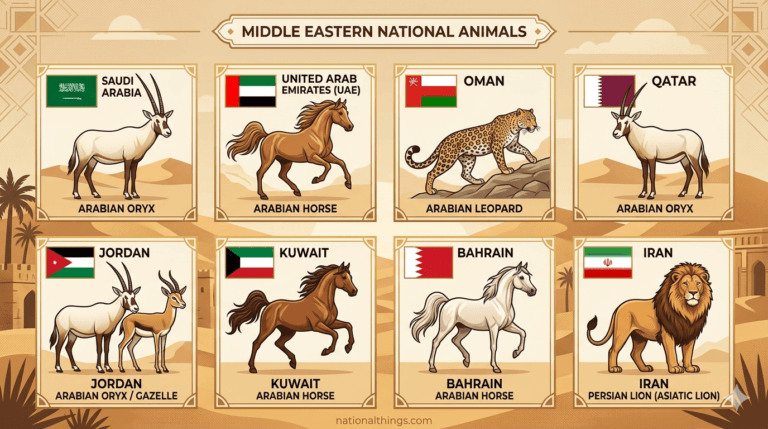
Middle Eastern National Animals
The Middle East is a region rich in culture, history, and natural beauty. Each country in this region also has…
National symbols of Mexico represent the history, culture, freedom, and identity of the Mexican nation. These symbols include the Mexican flag, the national coat of arms, and the national anthem, which officially represent the country across the world. Many of these symbols come from ancient Aztec traditions and historical events that shaped modern Mexico after independence from Spain in 1821. The eagle holding a snake on a cactus in the national emblem comes from an important Aztec legend about the founding of Tenochtitlan, which later became Mexico City. The green, white, and red colors of the Mexican flag also carry deep meanings connected to independence, unity, and hope.
National symbols of Mexico represent the country’s history, culture, freedom, and identity. These symbols show what Mexico values and how the nation remembers its past. The Mexican government officially recognizes some symbols, while people also celebrate many cultural symbols across daily life.
The most important official symbols are the following:
Mexico also has cultural and natural symbols that people strongly connect with in the country. These include mariachi music, the golden eagle, the dahlia flower, and traditional Mexican food.
Each symbol tells a story about Mexico’s ancient civilizations, Spanish influence, independence struggles, and modern national pride.
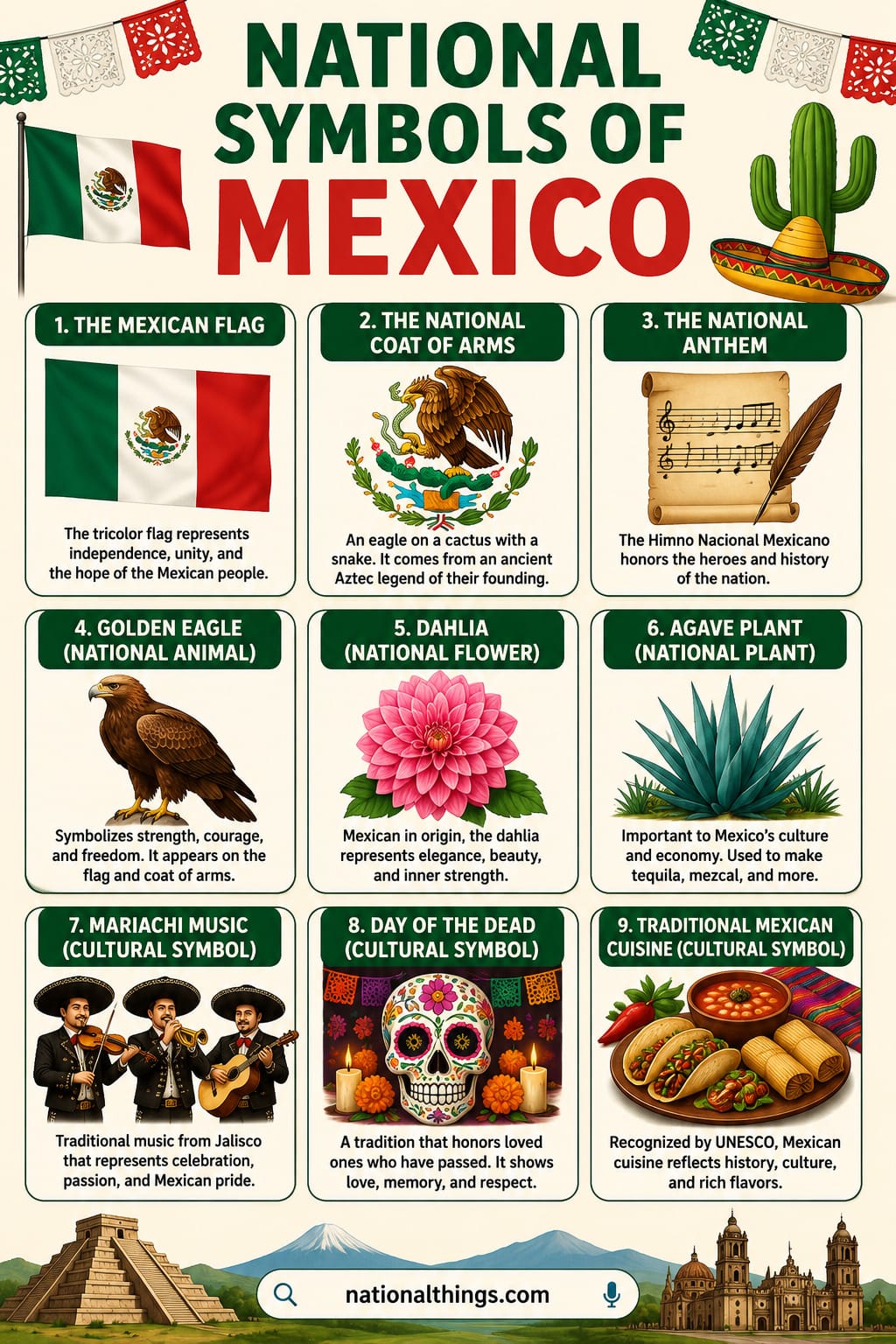
National symbols help people feel connected to their country. In Mexico these symbols appear in schools, government buildings, sports events, festivals, and public holidays.
These symbols are important because they:
For example, children in Mexico sing the national anthem during school ceremonies. Many families also display the Mexican flag during Independence Day celebrations in September.
The history of Mexican national symbols goes back hundreds of years. Many symbols come from the time of the Aztec Empire, while others appeared after Mexico gained independence from Spain in 1821.
The Mexican coat of arms comes from an Aztec legend. According to the story, the Aztecs searched for a sign from their god Huitzilopochtli. They found an eagle sitting on a cactus while eating a snake. They built the city of Tenochtitlan in that place. Today Mexico City stands there.
The Mexican flag changed several times after independence. The modern design became official in 1968, although the main colors existed long before that.
The national anthem was first performed in 1854. Francisco González Bocanegra wrote the lyrics, and Jaime Nunó composed the music.
The Mexican flag has three vertical stripes:
The coat of arms appears in the center of the white stripe.
The colors originally had these meanings:
Today many people connect the colors with the following:
The Mexican flag is one of the most recognized flags in the world because of its strong historical meaning and unique design.
The coat of arms shows:
This image comes directly from the Aztec founding legend. It appears on official documents, coins, passports, and government buildings.
Mexico legally protects the coat of arms. People cannot use it freely for commercial products without permission.
Mexico’s national anthem is called Himno Nacional Mexicano. Many experts consider it one of the world’s most powerful national anthems because of its strong military and patriotic message.
The anthem contains ten stanzas, but most public events only use the chorus and first stanza.
According to the Mexican government, the anthem officially became a national symbol in 1943.
Mariachi music started in western Mexico, especially in the state of Jalisco. Mariachi bands usually include the following:
Musicians wear charro suits with silver decorations and large hats.
UNESCO added mariachi music to the Intangible Cultural Heritage list in 2011 because of its cultural importance.
The charro is a skilled Mexican horse rider. Charro culture developed from ranch workers during colonial times.
Important charro traditions include:
Many people call charrería Mexico’s national sport.
Day of the Dead or Día de los Muertos honors deceased family members. Families create colorful altars with:
The celebration mixes Aztec beliefs with Catholic traditions.
Many people outside Mexico confuse this holiday with Halloween, but the meanings are very different. Day of the Dead focuses on remembrance, family, and respect.
Mexican food is another powerful national symbol. UNESCO recognized traditional Mexican cuisine as intangible cultural heritage in 2010.
Famous dishes include:
Corn chili peppers beans and chocolate all have deep roots in Mexican history.
The golden eagle is Mexico’s national animal. It symbolizes:
This eagle appears on the national flag and coat of arms.
Mexico protects golden eagles because habitat loss reduced their population in some areas.
The Xoloitzcuintli, or Xolo, is one of the oldest dog breeds in the Americas. Ancient Aztecs believed these dogs guided souls to the afterlife.
Key facts about the Xolo:
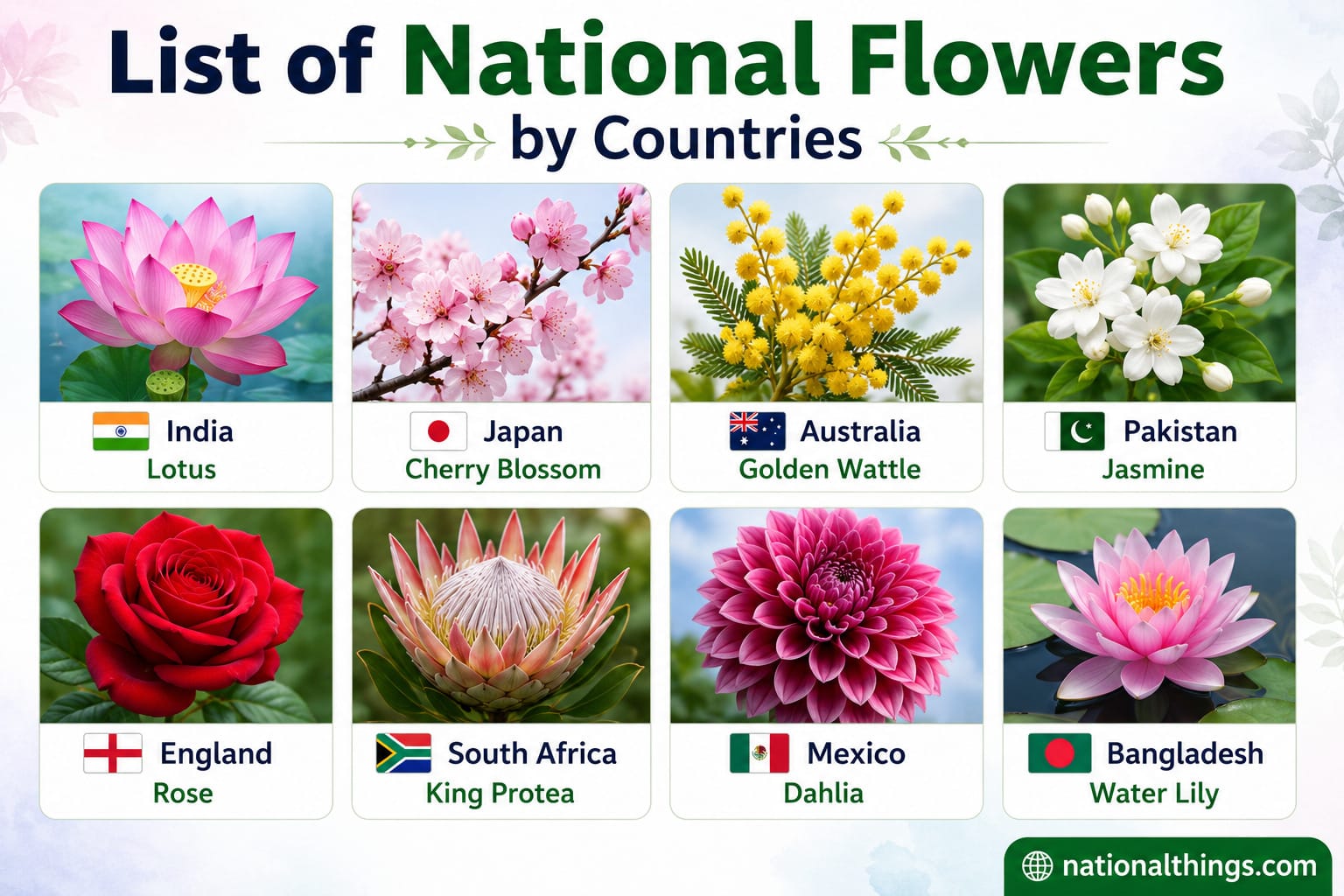
The dahlia became Mexico’s national flower in 1963.
Dahlias grow naturally in Mexico’s mountains and valleys. They come in many bright colors and sizes.
Farmers once used dahlia roots as food and medicine.
Agave plants hold economic and cultural value in Mexico.
People use agave to produce:
Blue agave farms especially shape the landscape of the Jalisco state.
Every detail in the Mexican flag carries meaning.
The eagle represents bravery and national power. The snake often represents enemies defeated by strength and wisdom. The cactus connects the symbol to the land where the Aztecs built their capital city.
The green, white, and red colors became linked to Mexican independence after the end of Spanish rule.
The Mexican government strictly controls how people display the flag. Schools and public offices follow official rules during ceremonies.
Mexican national symbols strongly influence daily life. People use these symbols during:
Mexican immigrants also use these symbols to stay connected to their heritage abroad.
For example, millions of people celebrate Mexican Independence Day in cities across the United States every September.
National symbols also appear in Mexican art movies music and tourism campaigns.
Mexico has laws that protect official symbols from misuse.
The government controls:
Breaking these laws can result in fines.
Schools teach students proper respect for national symbols from a young age. During special ceremonies, students salute the flag and sing the anthem.
Mexico also protects cultural heritage through museums, historical sites, and UNESCO programs.
| Symbol | Type | Meaning |
|---|---|---|
| Mexican Flag | Official Symbol | Freedom, unity, independence |
| Coat of Arms | Official Symbol | Aztec heritage strength |
| National Anthem | Official Symbol | Patriotism, sacrifice |
| Golden Eagle | National Animal | Courage power |
| Dahlia | National Flower | Beauty nature |
| Mariachi Music | Cultural Symbol | Tradition celebration |
| Agave Plant | National Plant | Economy heritage |
| Day of the Dead | Cultural Tradition | Family remembrance |
One important research finding comes from UNESCO, which reported that Mexican cuisine is one of the first national cuisines added to the Intangible Cultural Heritage list. Source: https://ich.unesco.org/en/RL/traditional-mexican-cuisine-00400
Tourism campaigns often use national symbols of Mexico to attract visitors. Travelers connect Mexico with colorful traditions, music festivals, food, and historical sites.
Popular tourist experiences include the following:
Mexican sports fans also proudly wave the national flag during football tournaments and Olympic events.
Movies, fashion, and art continue to spread Mexican symbols worldwide.
Official symbols have legal recognition from the Mexican government. These include:
Unofficial symbols grow through public culture and tradition. These include:
Both official and unofficial symbols shape how people see Mexico around the world.
The Mexican flag is the country’s most recognized national symbol.
The image comes from an Aztec legend about the founding of Tenochtitlan.
The dahlia is Mexico’s national flower.
Mariachi music is one of Mexico’s strongest cultural symbols.
The golden eagle represents Mexico officially.
They protect history culture traditions and national unity.
Related Articles: