


National Things of India: Explained with Symbols and Importance
India’s National Things are a set of official symbols that represent the identity, culture, and values of the country in…
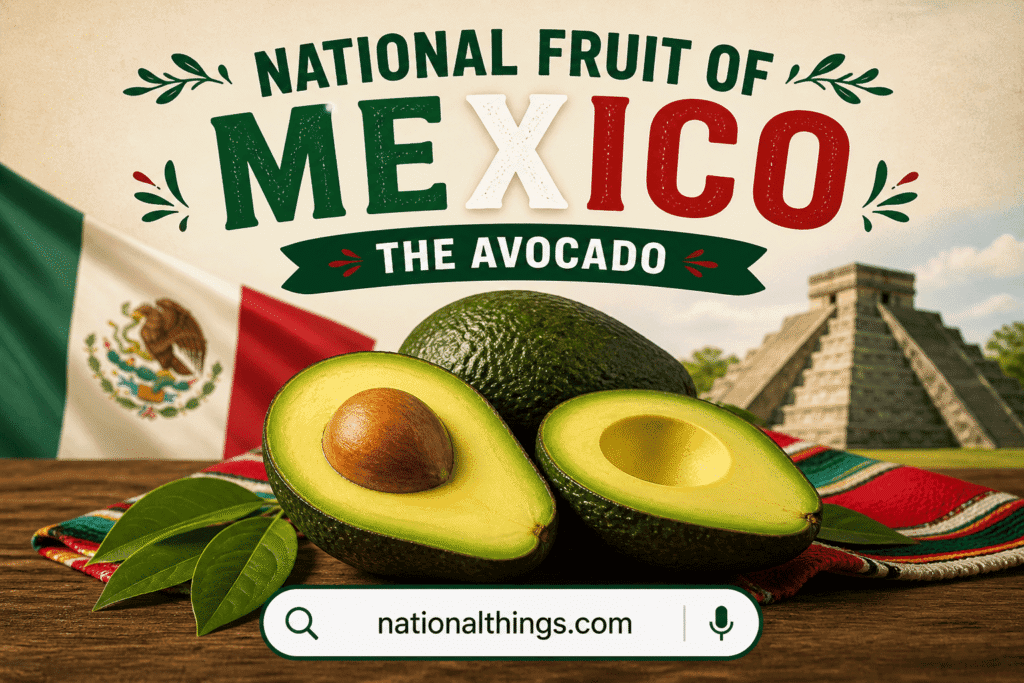
Mexico is widely known for its rich agricultural heritage, and among its most valued fruits, the avocado holds a special place. Recognized as the national fruit, it is deeply connected to the country’s history, culture, and daily diet. The avocado is enjoyed for its creamy texture, mild flavor, and high nutritional value. It is also an important crop that supports farmers and contributes significantly to the economy through local use and international trade. From traditional dishes like guacamole to modern global recipes, the avocado continues to represent Mexico’s natural abundance and agricultural strength.
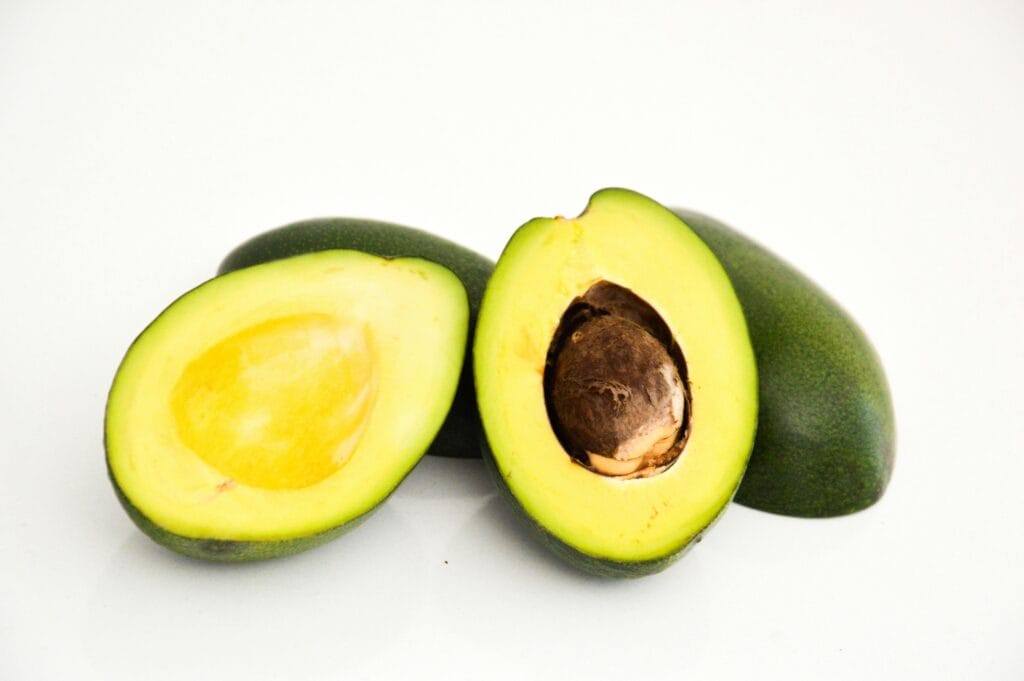
The National Fruit of Mexico is commonly understood as the avocado, a green fruit with a creamy texture and a large seed inside. It grows mainly in warm and volcanic soil regions. Farmers in Mexico have cultivated it for thousands of years, long before modern agriculture existed.
Avocado belongs to the Lauraceae plant family. It grows on evergreen trees that can reach up to 20 meters in height. The fruit itself has a thick outer skin that protects its soft inner pulp. This pulp is rich in healthy fats, especially monounsaturated fat, which makes it different from most fruits.
People in Mexico eat avocado daily. It is used in simple meals like tacos and complex dishes like sauces and soups. Because of this deep connection, avocado earned the reputation as the National Fruit of Mexico.
Avocado became the National Fruit of Mexico because it originated in the region and shaped the country’s agriculture for centuries. The word “avocado” comes from the Nahuatl word “āhuacatl,” used by the Aztecs.
Several reasons explain its national importance:
Mexico supplies a large share of the global avocado market. This economic strength further reinforces its status as the National Fruit of Mexico.
The history of the National Fruit of Mexico begins over 7,000 years ago. Archaeological findings show that early civilizations in central Mexico consumed wild avocados.
The Aztecs and Mayans cultivated avocado trees. They believed the fruit had energy-giving properties. Spanish explorers later recorded avocado consumption during the 16th century and introduced it to other parts of the world.
By the 20th century, commercial farming expanded. Improved farming techniques allowed Mexico to export avocados to the United States and Europe. Today, it is one of Mexico’s most valuable agricultural exports.
Avocado originated in the Puebla region of Mexico. This area has the perfect mix of altitude, temperature, and soil conditions for avocado trees.
In Mexican culture, avocado is more than food. It represents:
The National Fruit of Mexico is often seen during festivals, family gatherings, and street food culture. It connects modern Mexicans to their ancient roots.
Avocado plays a strong role in everyday Mexican life. It appears in traditional dishes like guacamole, which dates back to the Aztec period.
Common cultural uses include:
Families often grow avocado trees in home gardens. This practice keeps the cultural link alive across generations.
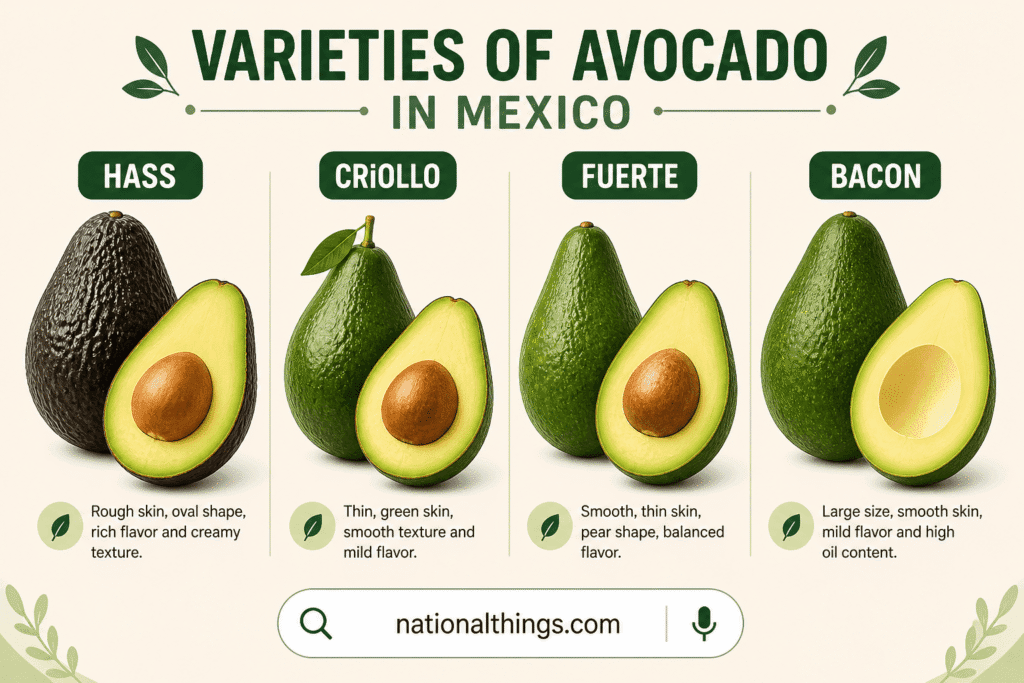
Mexico grows several avocado varieties. Each has unique taste, texture, and farming conditions.
These varieties show the biodiversity behind the National Fruit of Mexico.
Avocado farming is a major part of Mexico’s economy. It provides jobs for farmers, exporters, and transport workers.
Mexico is the world’s largest avocado producer. According to FAOSTAT, Mexico produced around 2.4 million tonnes of avocados in 2023. Source: https://www.fao.org/faostat/
This production supports billions in export revenue. The United States is the biggest importer of Mexican avocados. The industry also supports rural development in states like Michoacán.
The National Fruit of Mexico is known for its high nutritional value. It contains healthy fats, fiber, and important vitamins.
Key nutrients include:
Health benefits:
Avocado is one of the few fruits rich in healthy fats, making it unique in global diets.
Avocado is widely used in Mexican cooking. It fits into both simple and complex recipes.
Common uses include:
Chefs also use avocado to balance spicy flavors. Its creamy texture helps reduce heat from chili-based dishes.
Avocado farming requires specific climate conditions. Mexico’s geography provides ideal environments.
Main producing regions:
Farmers use both traditional and modern irrigation methods. Volcano-rich soil in Michoacán improves fruit quality. Harvesting happens throughout the year, unlike many seasonal fruits.
These facts show how strongly the National Fruit of Mexico influences agriculture and trade.
Avocados from Mexico differ clearly from those grown in other countries.
Mexican avocados are preferred globally because of consistent supply and strong taste profile.
Avocado farming has both benefits and challenges.
Positive impacts:
Challenges:
Farmers in Mexico are increasingly adopting eco-friendly practices like controlled irrigation and forest protection programs.
The avocado is widely recognized as Mexico’s national fruit due to its cultural, economic, and agricultural importance.
It is important because it is used in daily meals, supports farmers, and plays a key role in traditional cuisine.
They are mainly grown in the state of Michoacán, which has ideal climate conditions for avocado farming.
The Hass avocado is the most popular variety due to its creamy texture and strong demand in local and global markets.
Yes, avocados are rich in healthy fats, vitamins, and minerals that support heart health and overall well-being.
Common foods include guacamole, tacos, salads, and various spreads made with fresh avocado.
Related Articles: