

National Fruit of The USA: Interesting History and Facts
The National Fruit of the USA is the Apple. The apple was officially declared the national fruit in 2004. It…
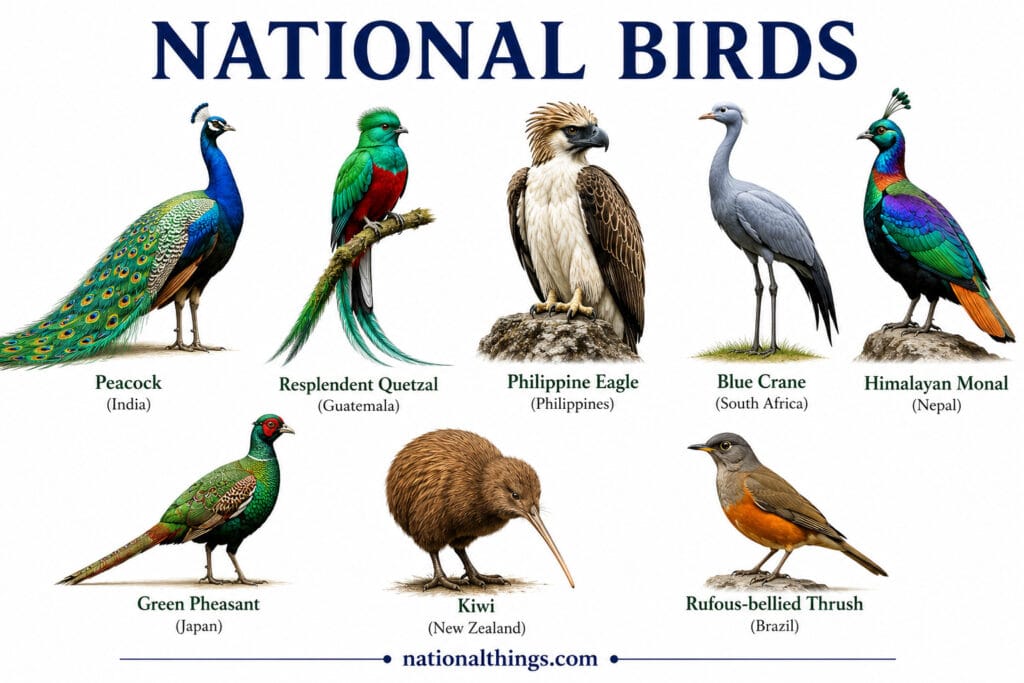
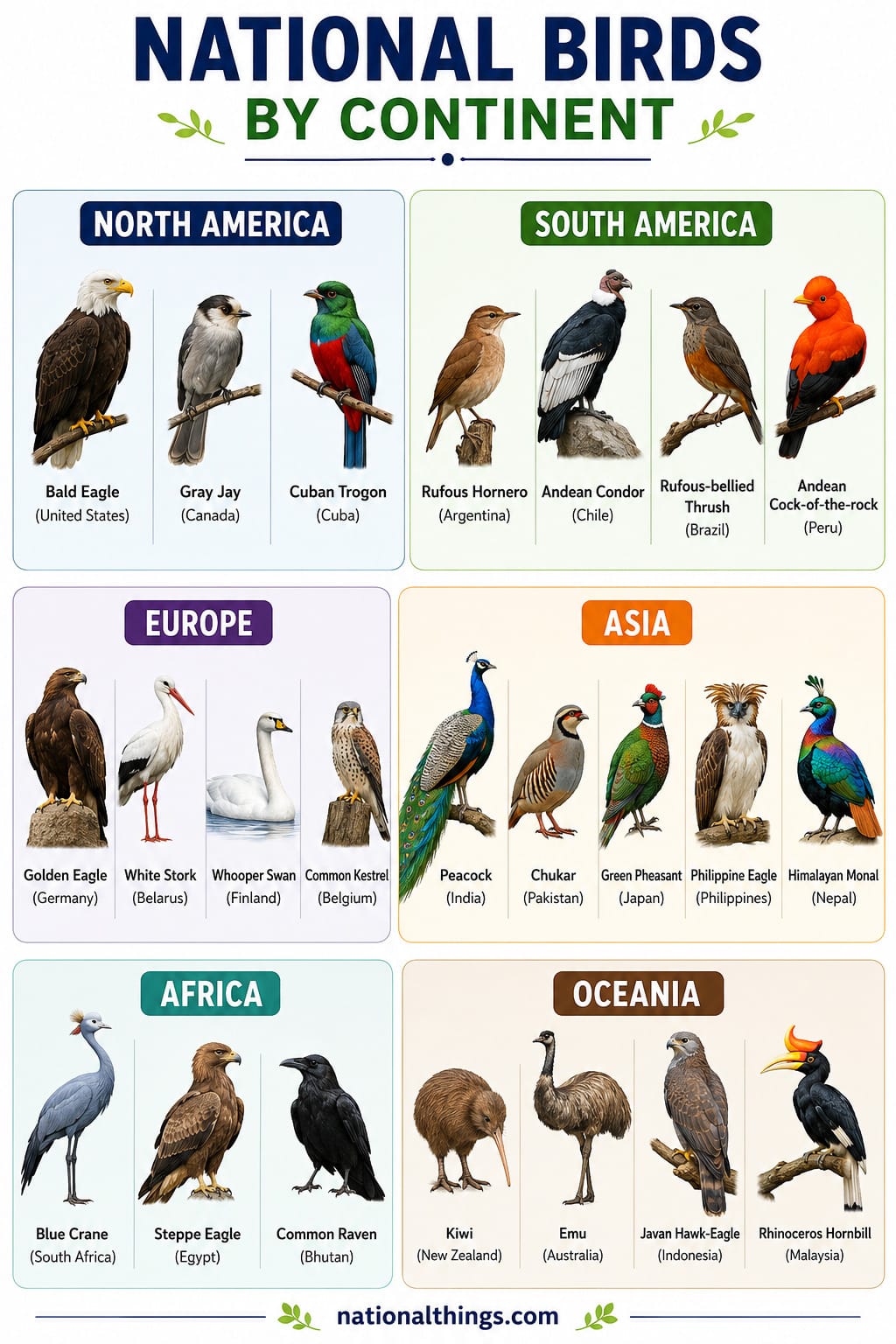
National Birds are more than just official symbols. They show a country’s history, culture, and natural heritage through a single bird. Some nations picked powerful eagles while others chose colorful peacocks or rare local species that exist nowhere else. Learning about these birds helps people understand why they matter to millions of citizens and why many governments work hard to protect them.
A national bird is an officially chosen bird that represents a country. Governments select these birds because they have cultural value, historical importance, or strong connections with the nation’s identity. Some countries make the selection through law while others recognize the bird through tradition or government decisions.
National birds often appear on:
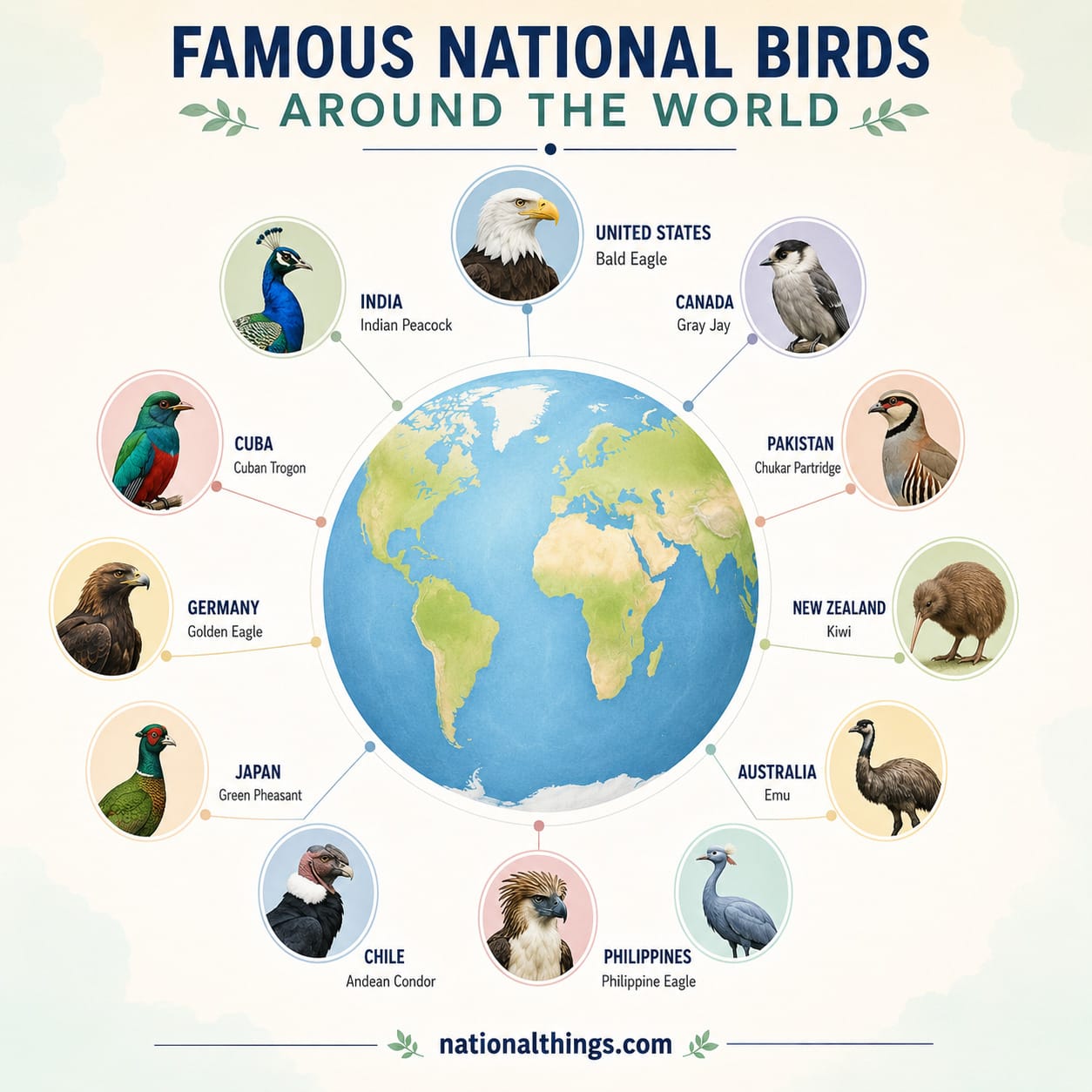
| Country | National Bird |
|---|---|
| Afghanistan | Golden Eagle |
| Albania | Golden Eagle |
| Argentina | Rufous Hornero |
| Australia | Emu |
| Austria | Barn Swallow |
| Bangladesh | Oriental Magpie Robin |
| Belarus | White Stork |
| Belgium | Common Kestrel |
| Bhutan | Common Raven |
| Brazil | Rufous-bellied Thrush |
| Canada | Gray Jay (Canada Jay) |
| Chile | Andean Condor |
| China | Red-crowned Crane (widely recognized, but no officially designated national bird) |
| Colombia | Andean Condor |
| Cuba | Cuban Trogon |
| Czech Republic | Common Kestrel |
| Denmark | Mute Swan |
| Ecuador | Andean Condor |
| Egypt | Steppe Eagle |
| Finland | Whooper Swan |
| France | Gallic Rooster |
| Germany | Golden Eagle |
| Greece | Little Owl |
| Guatemala | Resplendent Quetzal |
| Hungary | Saker Falcon |
| Iceland | Gyrfalcon |
| India | Indian Peacock |
| Indonesia | Javan Hawk-Eagle |
| Iran | Nightingale |
| Ireland | Northern Lapwing |
| Israel | Hoopoe |
| Japan | Green Pheasant |
| Kazakhstan | Golden Eagle |
| Malaysia | Rhinoceros Hornbill |
| Mexico | Golden Eagle |
| Nepal | Himalayan Monal |
| Netherlands | Black-tailed Godwit |
| New Zealand | Kiwi |
| Norway | White-throated Dipper |
| Pakistan | Chukar Partridge |
| Peru | Andean Cock-of-the-rock |
| Philippines | Philippine Eagle |
| Poland | White-tailed Eagle |
| Portugal | Barcelos Rooster |
| Russia | Double-headed Eagle (national emblem rather than a living bird species) |
| South Africa | Blue Crane |
| South Korea | Korean Magpie |
| Sri Lanka | Sri Lanka Junglefowl |
| Thailand | Siamese Fireback |
| United States | Bald Eagle |
To explore more countries and their national birds, check it out: 100 Top Countries and Their National Birds
Notes:
Some countries do not have an officially designated national bird. In those cases, the bird listed is the most widely recognized national symbol or culturally accepted representative.
Countries such as China and Russia are commonly associated with symbolic birds, but these are not officially declared national birds in the same way as the Bald Eagle in the United States or the Peacock in India.
Different sources may vary for a few nations because of historical traditions or unofficial cultural recognition. The table above reflects the most commonly accepted and authoritative references available.
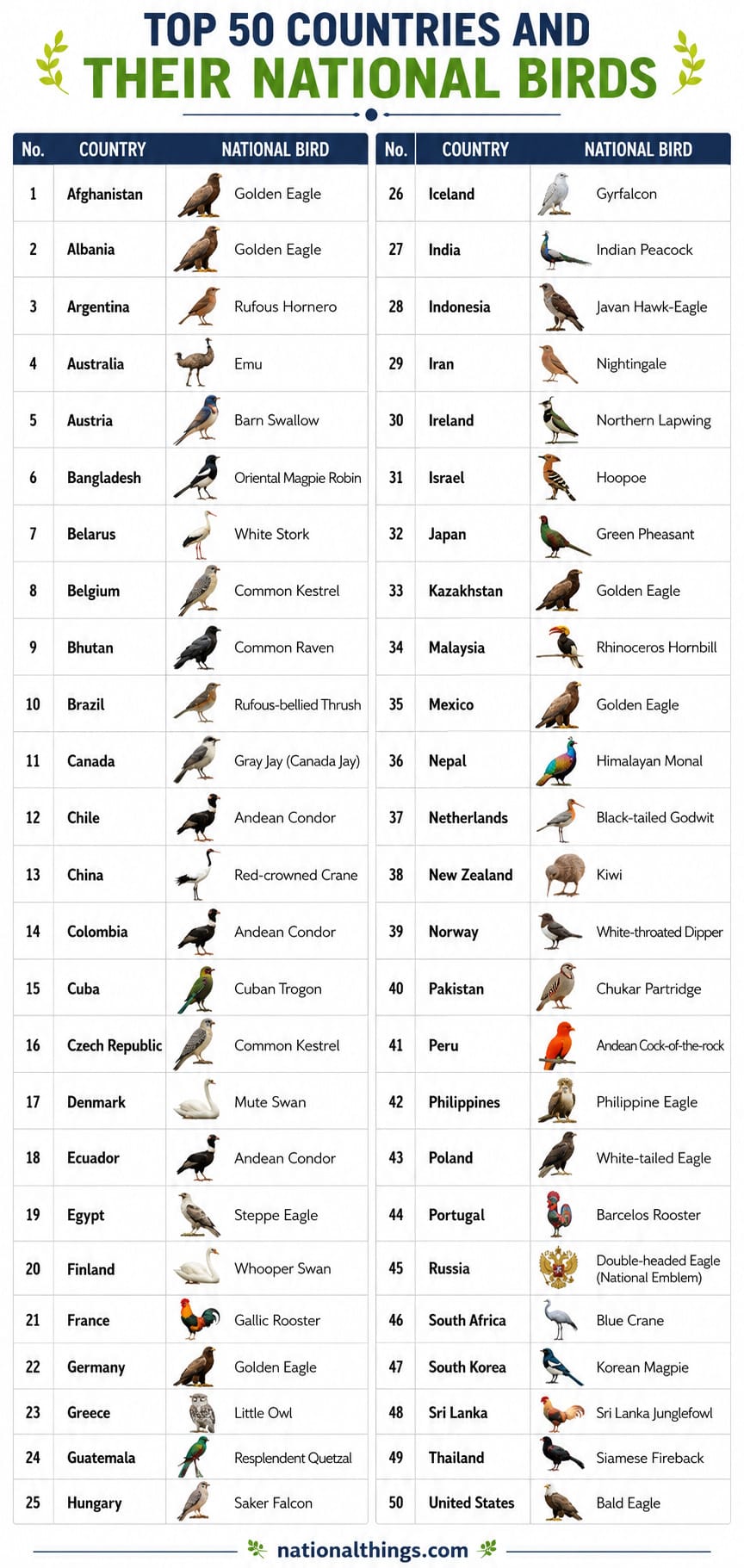
Every country has its own reason for selecting a national bird. The choice usually reflects local traditions and natural history instead of popularity alone.
Some common reasons include:
The Bald Eagle serves as the national bird of the United States.
The Indian Peacock is India’s national bird.
The Chukar Partridge represents Pakistan.
Canada officially recognizes the Gray Jay, also known as the Canada Jay.
The Emu is Australia’s national bird.
The Kiwi has become one of the world’s most recognizable national birds.
Japan’s national bird is the Green Pheasant.
The Philippine Eagle is one of the rarest eagles on Earth.
Brazil selected the Rufous-bellied Thrush.
The Blue Crane represents South Africa.
Here’s a detailed list of national things of South Africa.
Many nations have selected birds that reflect their landscapes and traditions.
The Himalayan Monal displays brilliant rainbow-colored feathers and lives in high mountain forests.
The Sri Lanka Junglefowl exists only on the island and plays an important role in local biodiversity.
The Oriental Magpie Robin is admired for its cheerful singing and is common in gardens and villages.
The Common Raven appears in local myths and royal traditions and symbolizes wisdom.
The Golden Eagle appears on the national flag carrying a snake while standing on a cactus.
The Golden Eagle has long represented strength and imperial history in German symbolism.
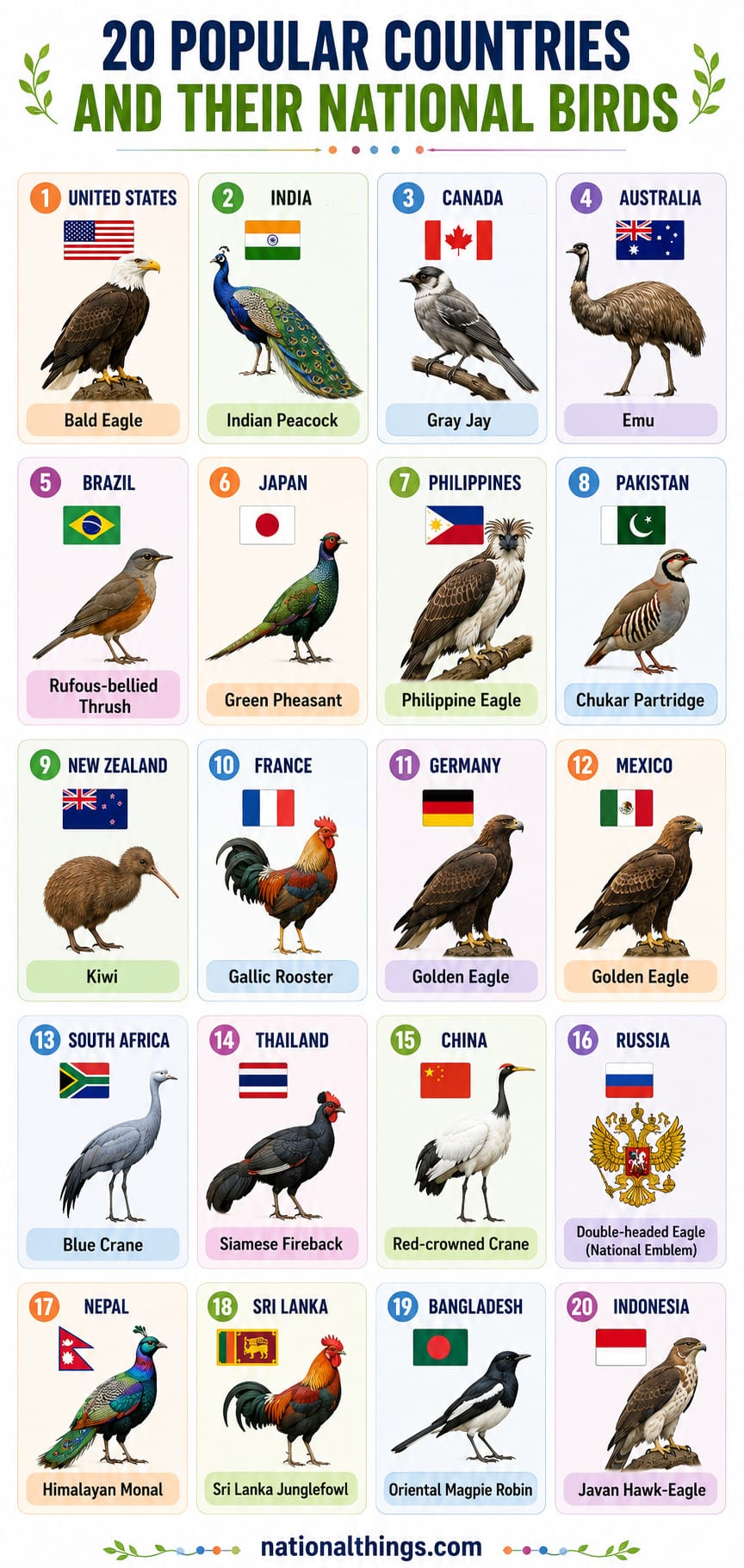
Several national birds share similar symbolic meanings despite living on different continents.
Common themes include:
Large birds of prey like eagles often represent military power and independence, while colorful birds symbolize beauty and cultural identity.
Many national birds have surprising characteristics.
These features make each bird memorable beyond its official title.
Some national birds face serious threats from habitat destruction and illegal hunting. Governments and conservation groups work together to protect these important species.
Protection efforts include:
According to BirdLife International, nearly 49% of the world’s bird species are declining, highlighting the need for stronger conservation efforts and habitat protection. Source: https://www.birdlife.org/state-of-the-worlds-birds/
National birds connect people with nature in a simple but meaningful way. They remind citizens about local wildlife and encourage pride in their country’s environment. Schools use them to teach children about biodiversity, while tourism organizations use them to introduce visitors to unique native species.
A single bird can become a lasting symbol of heritage, identity, and conservation, making it much more than just an official emblem.
You May Also Like:
India has the Peacock as its national bird. It was chosen because of its cultural importance, striking appearance, and strong connection to Indian traditions.
No. The Bald Eagle was once endangered, but successful conservation programs helped its population recover. Today, it remains a protected species and the national bird of the United States.
Yes. Some national birds face threats such as habitat loss, hunting, and climate change. The Philippine Eagle is a well-known example of a national bird that is critically endangered.
Many countries around the world have officially recognized national birds, but not every nation has made a formal selection. The chosen birds vary from powerful eagles to colorful pheasants and flightless species like the Kiwi.
New Zealand is famous for the Kiwi, a small flightless bird that lives only in the country. The Kiwi has become such a strong symbol that New Zealanders are often called “Kiwis.”
Pakistan’s national bird is the Chukar Partridge. It is known for its distinctive striped feathers, red beak, and ability to live in rocky and mountainous areas.
Yes, but it is uncommon. A government can decide to adopt a different national bird if laws or official policies change, though most countries keep the same symbol for many years.
National Birds tell stories about countries through feathers, behavior, and history. Some represent ancient traditions while others highlight rare wildlife found only in one region. Learning about these birds helps people appreciate global biodiversity and understand how nature shapes national identity. Protecting them also protects forests, mountains, wetlands, and ecosystems that support countless other species around the world.