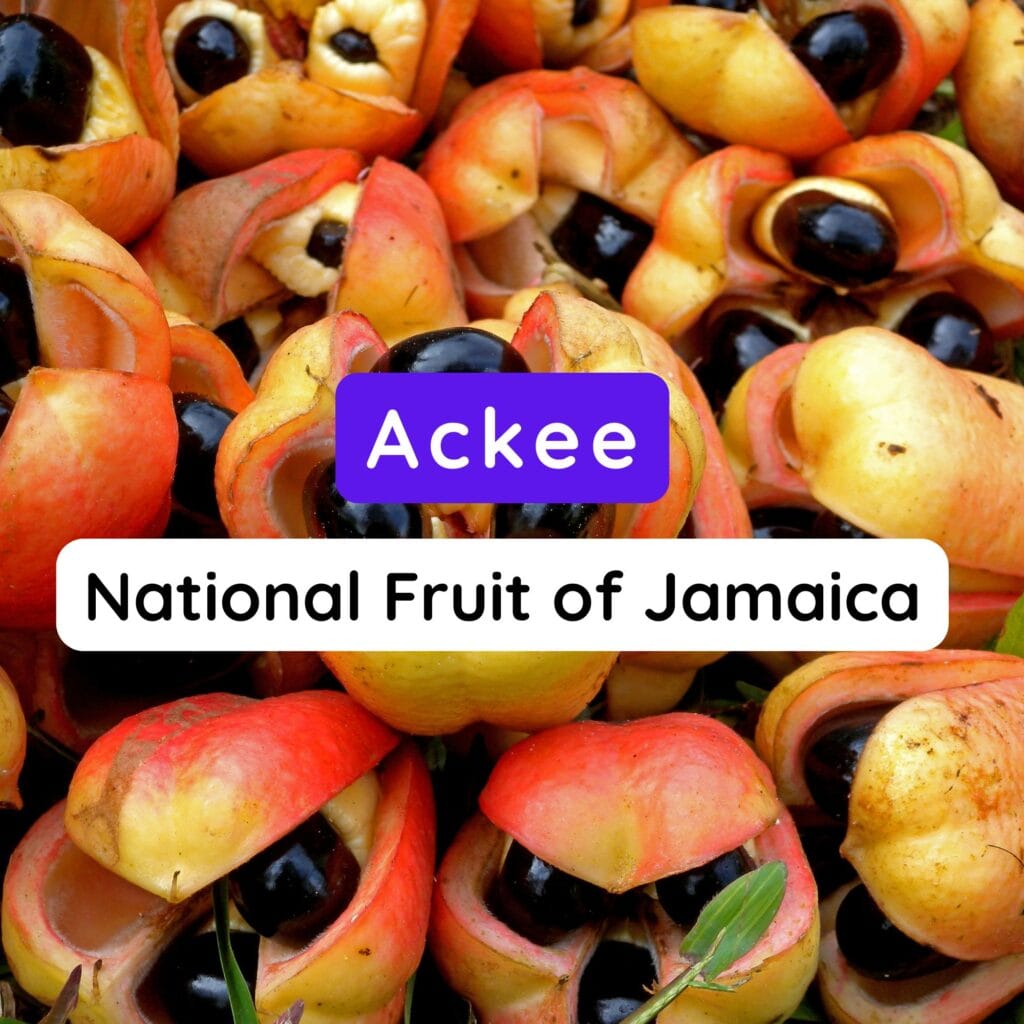
Jamaica is famous for its vibrant culture, delicious cuisine, and tropical fruits. Among its many treasures, the national fruit of Jamaica is the ackee. It is not only a key ingredient in Jamaica’s traditional dishes but also a symbol of the country’s natural heritage.
National Fruit of Jamaica
- The ackee is officially recognized as the national fruit of Jamaica.
- Its scientific name is Blighia sapida.
- Ackee is an essential part of Jamaican cuisine and is highly valued for its flavor and nutritional benefits.
History and Cultural Significance
- Ackee was originally brought to Jamaica from West Africa in the 18th century.
- It became a staple in Jamaican diets and a key ingredient in the famous dish ackee and saltfish, considered the national dish of Jamaica.
- The fruit symbolizes resilience and cultural identity, reflecting Jamaica’s unique heritage.
Why Ackee is Important to Jamaica
- Cultural Value – Ackee is celebrated in Jamaican food and traditions.
- Economic Significance – It is grown widely in Jamaica and exported to other countries.
- Culinary Use – Central to many traditional Jamaican recipes, especially breakfast dishes.
- Unique Appearance – Ackee is recognizable for its bright red pods and yellow edible flesh.
Nutritional Benefits of Ackee
Ackee is not only tasty but also healthy when prepared properly:
- Rich in Vitamins – Contains Vitamin A, Vitamin C, and essential fatty acids.
- High in Protein – A rare fruit that provides plant-based protein.
- Good for Digestion – Contains fiber that supports a healthy digestive system.
- Low in Calories – Helps provide energy without adding excess calories.
How Ackee is Used in Jamaican Cuisine
- Ackee and Saltfish – The most famous traditional dish combining ackee with salted cod.
- Stews and Curries – Ackee is often added to stews for flavor and texture.
- Boiled or Fried – Eaten as a side dish with vegetables or rice.
Fun Facts About Ackee
- Ackee must be fully ripe and properly prepared before eating; unripe ackee is toxic.
- The fruit opens naturally when ripe, revealing yellow flesh and black seeds.
- Ackee is exported to countries with Caribbean communities, such as the UK, US, and Canada.
- It is a central part of Jamaican identity and featured in festivals and cultural events.
Conclusion
The ackee is more than just a fruit in Jamaica; it represents culture, tradition, and culinary heritage. From traditional dishes to global recognition, ackee holds a special place in Jamaica’s history. Its unique taste, nutritional value, and cultural significance make it a worthy national fruit.
Frequently Asked Questions
Related Articles