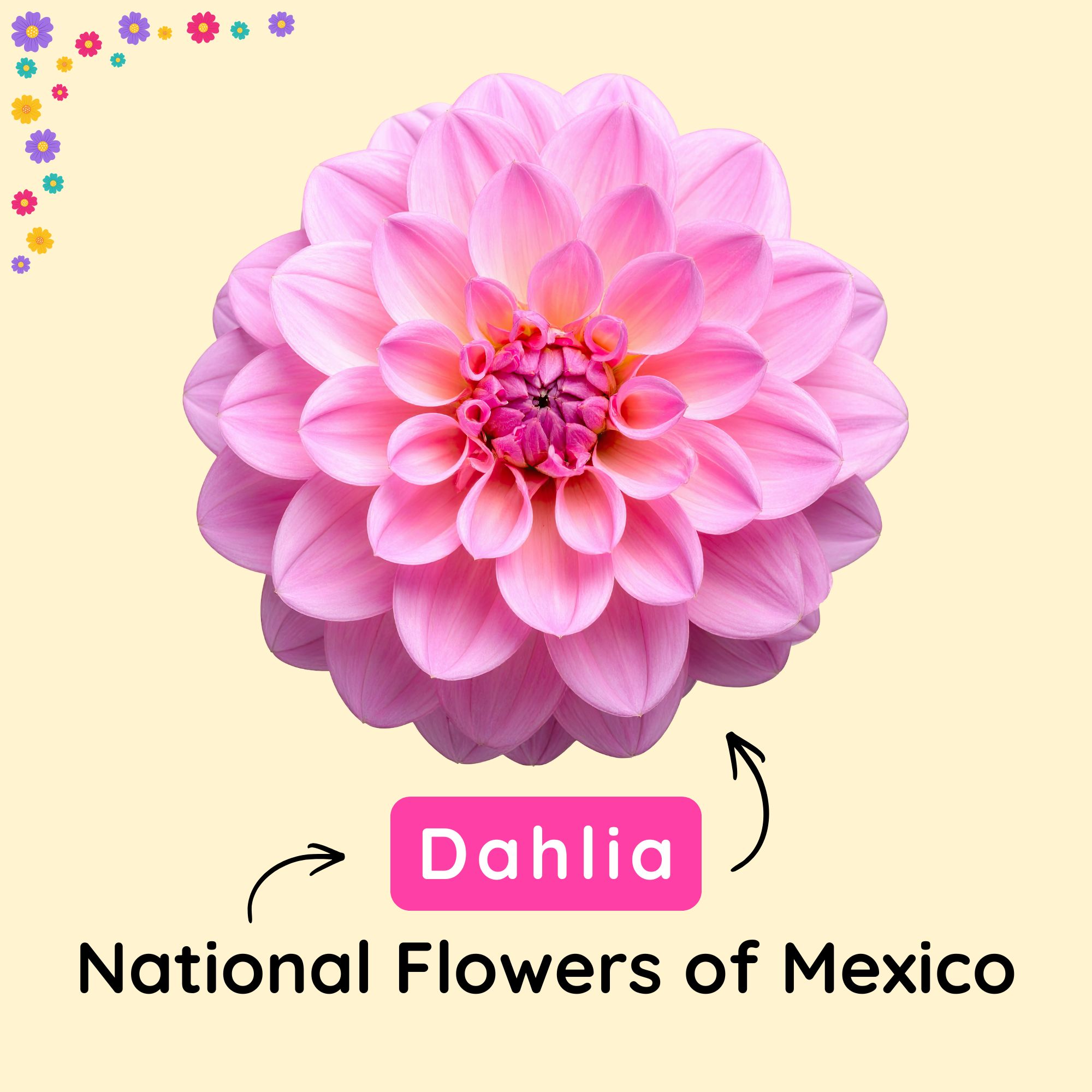
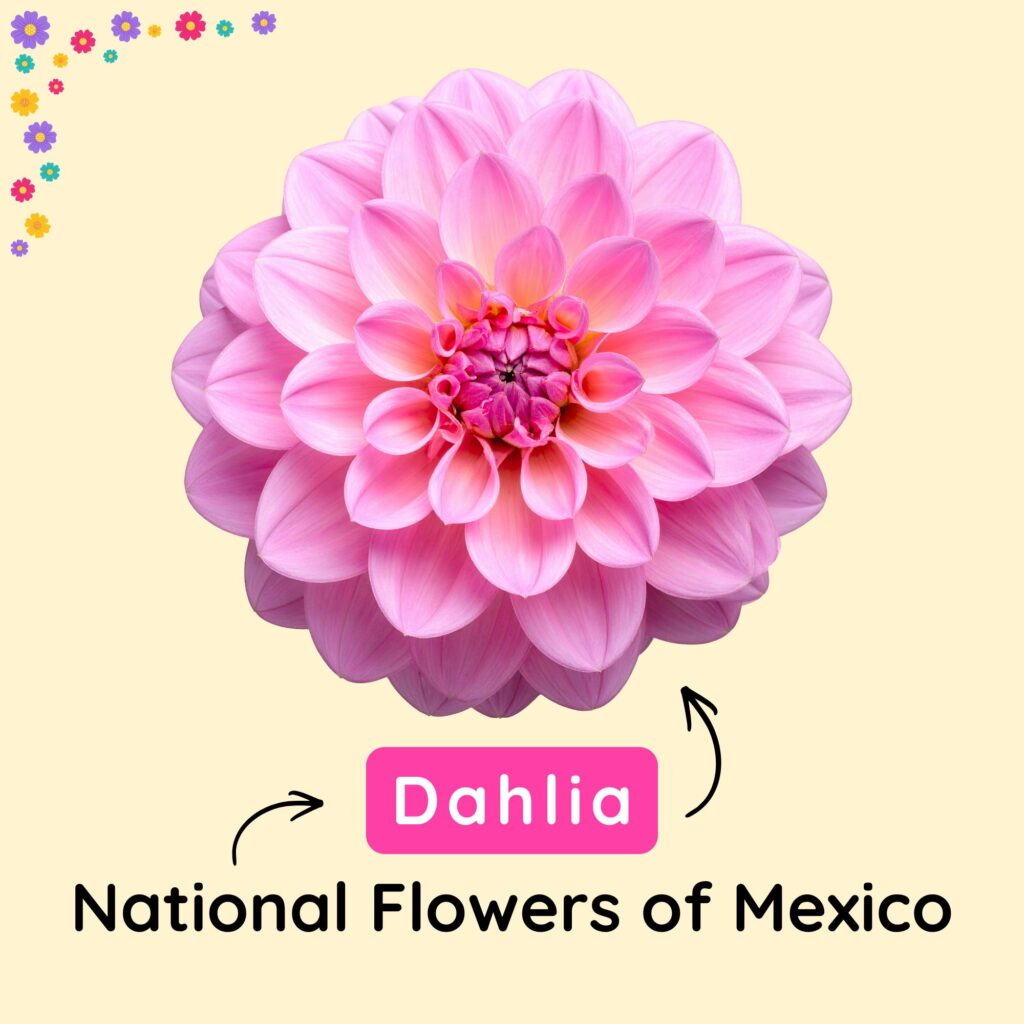
The National Flower of Mexico is the Dahlia. In Spanish, it is called “Dalia.” This beautiful flower is an important symbol of Mexican culture, history, and natural beauty.
The dahlia is known for its bright colors, layered petals, and many different shapes. It grows naturally in Mexico and has been part of the country’s heritage for centuries.
What is the National Flower of Mexico?
The national flower of Mexico is the Dahlia pinnata, commonly known as the dahlia.
Mexico officially declared the dahlia as its national flower in 1963. The decision was made to honor a flower that originally comes from Mexican land and reflects the country’s rich biodiversity.
Origin and History of the Dahlia
The dahlia is native to the mountains and valleys of Mexico. Long before it became popular worldwide, it was grown by the Aztecs.
- The Aztecs used dahlias for decoration and religious ceremonies.
- They also used parts of the plant for traditional medicine.
- In the 18th century, Spanish botanists took the flower to Europe, where it became very popular.
Today, dahlias are grown in gardens across the world, but Mexico remains their original home.
Why Was the Dahlia Chosen?
The dahlia represents:
- 🌸 Beauty and elegance
- 🌿 Strength and resilience
- 🌞 National pride and identity
It grows well in different climates and conditions. This strength makes it a symbol of the Mexican people — strong, colorful, and full of life.
Physical Description of the Dahlia
Dahlias are easy to recognize because of their unique appearance.
- Large, round, or star-shaped flowers
- Many layers of soft petals
- Bright colors such as pink, red, yellow, orange, white, and purple
- Green leafy stems
- Blooming season from summer to autumn
Some dahlia flowers are small and simple, while others are very large and full.
Types of Dahlias
There are thousands of dahlia varieties. They are grouped by flower shape.
Common types include:
- Decorative Dahlias
- Cactus Dahlias (with thin, pointed petals)
- Pompon Dahlias (small and round)
- Single-flowered Dahlias
Each type has a different shape, but all share the same beauty and vibrant colors.
Cultural Importance in Mexico
The dahlia is more than just a flower in Mexico. It is part of the country’s identity.
- Used in festivals and celebrations
- Featured in art and traditional designs
- Grown in home gardens
- Celebrated on Mexico’s National Dahlia Day (August 4)
It represents the natural richness of Mexico and the pride of its people.
Growing Conditions
Dahlias grow best in:
- Warm climates
- Well-drained soil
- Full sunlight
- Moderate watering
Although they are native to Mexico, they can grow successfully in many parts of the world with proper care.
Interesting Facts About the National Flower of Mexico
- Dahlias belong to the sunflower family.
- There are more than 40 natural species of dahlias.
- They were named after Swedish botanist Anders Dahl.
- The flower can grow from tubers planted in the soil.
Symbolism of the Dahlia
The dahlia symbolizes:
- Inner strength
- Creativity
- Positive change
- Dignity
Because of its strong stem and bright bloom, it often represents standing tall during challenges.
Conclusion
The National Flower of Mexico is the beautiful and meaningful dahlia. Native to Mexican land, it reflects the country’s history, culture, and natural beauty.
With its bright colors, rich background, and strong symbolism, the dahlia is more than just a flower — it is a proud national symbol of Mexico.
Learning about national flowers helps us understand different cultures in a simple and enjoyable way. The dahlia shows how nature and history can come together to create a powerful symbol of identity.
Frequently Asked Questions
The National Flower of Mexico is the dahlia. It is a brightly colored flower with layered petals, native to Mexico. It represents the country’s culture, history, and natural beauty, and was officially declared the national flower in 1963.
The dahlia was chosen because it is native to Mexico and symbolizes beauty, strength, and national pride. It has a long history with the Aztecs and grows naturally in Mexican valleys and mountains, making it a strong cultural and historical symbol.
There are many types of dahlias, including decorative, cactus, pompon, and single-flowered varieties. Each type has unique shapes and colors, from small round blooms to large layered flowers. All types reflect the vibrant nature of Mexico’s national flower.
The dahlia grows naturally in Mexico’s mountains, valleys, and highlands. It prefers warm climates, well-drained soil, and full sunlight. While native to Mexico, it can also be grown in gardens worldwide with proper care.
Dahlias, the National Flower of Mexico, appear in bright colors like red, pink, yellow, orange, white, and purple. Their layered petals make them visually striking, symbolizing elegance and cultural richness.
The dahlia is part of festivals, traditional decorations, and art in Mexico. It symbolizes national pride and identity, and it was used historically by the Aztecs for ceremonies and medicine. Its presence in gardens and celebrations reflects Mexican heritage.
The dahlia was officially declared the National Flower of Mexico in 1963. This recognition honors its native origin, historical significance, and role in representing Mexico’s natural beauty and cultural identity.
The National Flower of Mexico, the dahlia, can be identified by its large, layered petals and bright colors. It grows on green leafy stems and blooms from summer to autumn. Its distinct shapes, from round pompons to pointed cactus petals, make it easy to recognize.
Related Articles
National Flower of India – The Beautiful Lotus
The national flower of India is the Lotus. Its scientific name is Nelumbo nucifera….
National Flower of USA: History and Facts
The national flower of USA is the rose. It was officially declared the national…
National Flower of Mexico: History and Facts
The National Flower of Mexico is the Dahlia. In Spanish, it is called “Dalia.”…
Czech National Flower: Symbol of Beauty and Tradition
The Czech Republic, a country known for its rich history and natural beauty, has…
National Flowers of France: History and Facts
France is a country known for its rich culture, history, and natural beauty. Among…
Copyright © 2026 | WordPress Theme by MH Themes
Leave a Reply