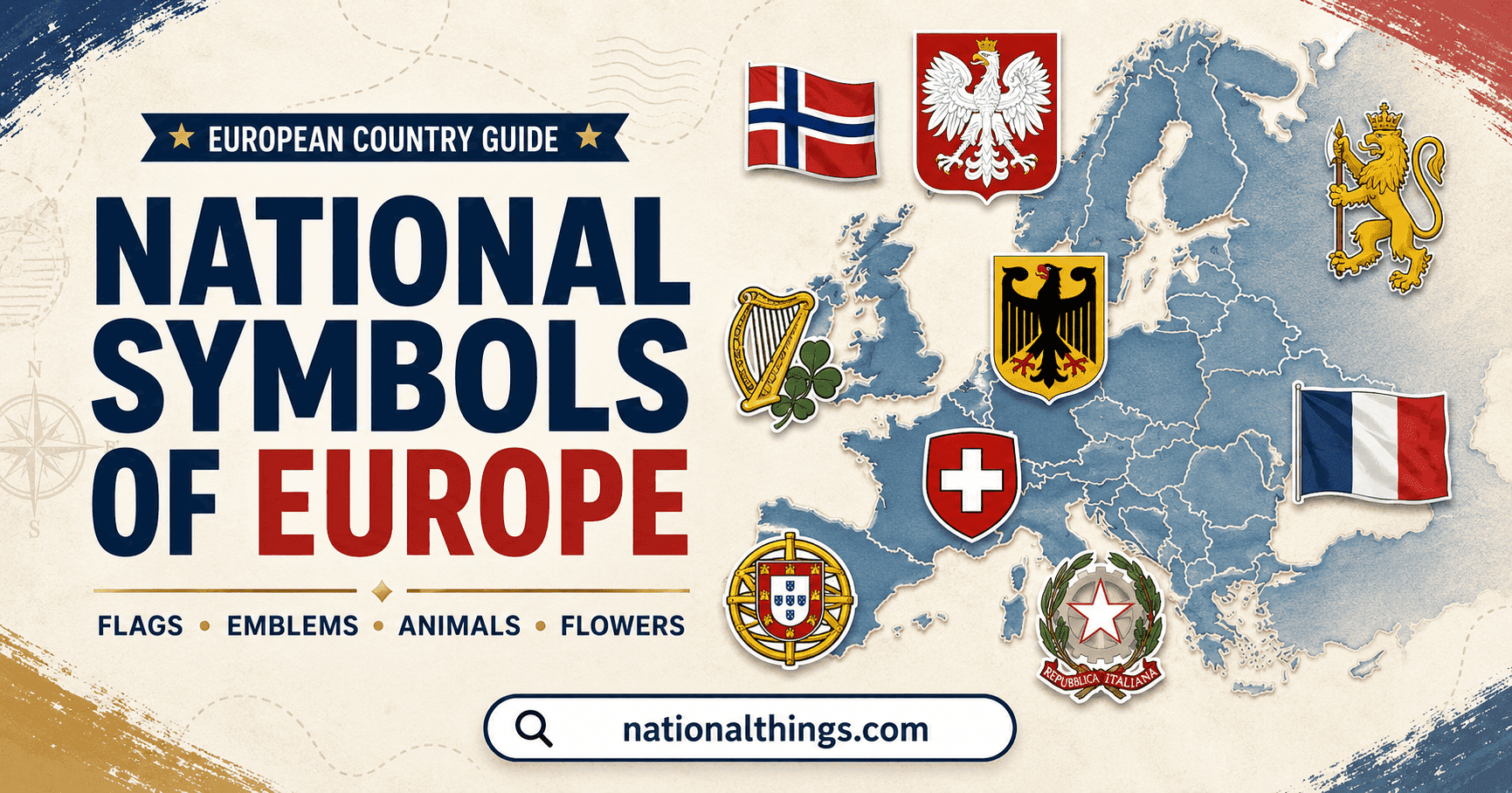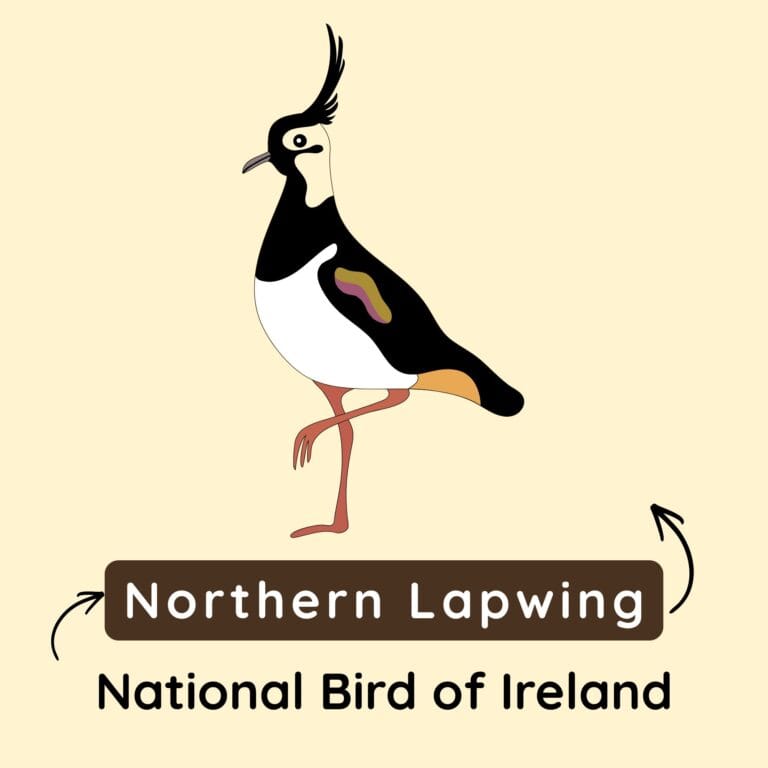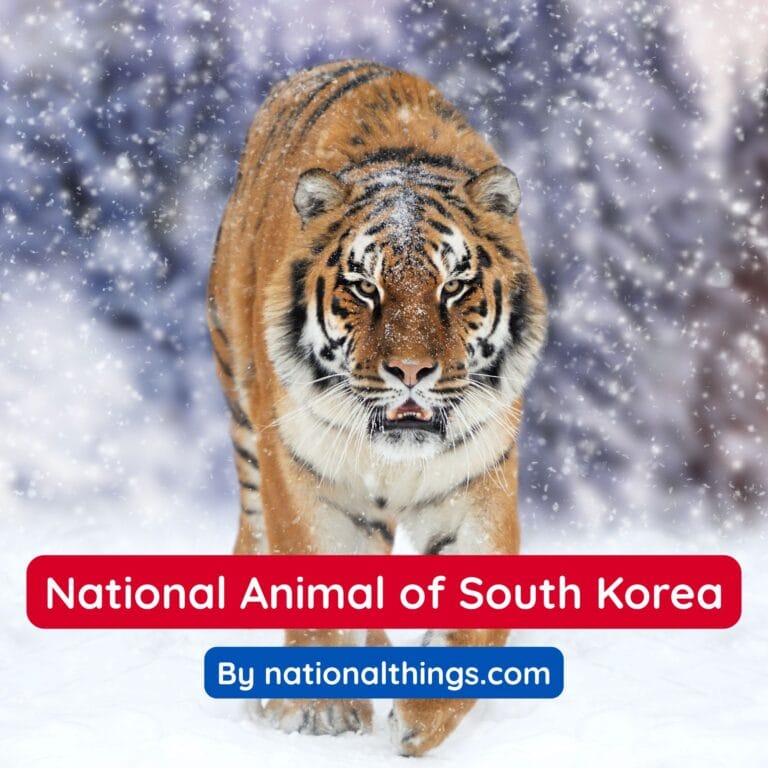
150 Most Important Countries and Their National Animals
Every country in the world has its unique national animal, representing its culture, wildlife, and natural heritage. National animals often…
National Things of South Africa help you understand the country in a simple and meaningful way. This article explains the important national facts in easy words so students, travelers, and general readers can learn without confusion. You will see what each national thing means, why it matters, and how it connects with South Africa’s people, history, and identity.
You can also use the table of content below to explore the exact topic you want to read first. It will help you move quickly to the part that gives you the answer you need.
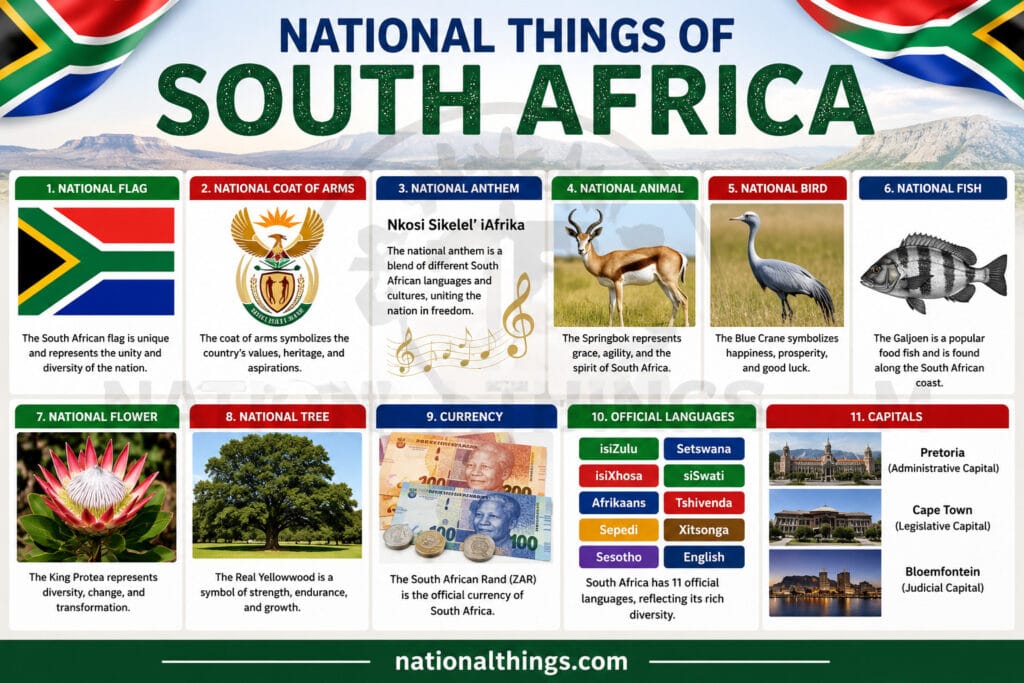
The phrase National Things of South Africa usually means the official items that represent the country. These include the national flag, national anthem, national coat of arms, national animal, national bird, national fish, national flower, and national tree. Some readers also expect related national facts such as the currency, official languages, provinces, and capitals. This article separates the official national symbols from the wider national facts so readers do not mix them up.
South Africa uses national symbols to show identity in schools, government buildings, sports events, public holidays, passports, and international meetings. The symbols are not random. The springbok shows movement and life in open land. The blue crane points to the country’s natural beauty. The coat of arms carries deep ideas about peace, growth, and unity. Each symbol helps explain South African identity in a simple visual way.
Here is a clear list of the main official national things. This quick section helps you know fast about the national symbols of South Africa before reading the full details.
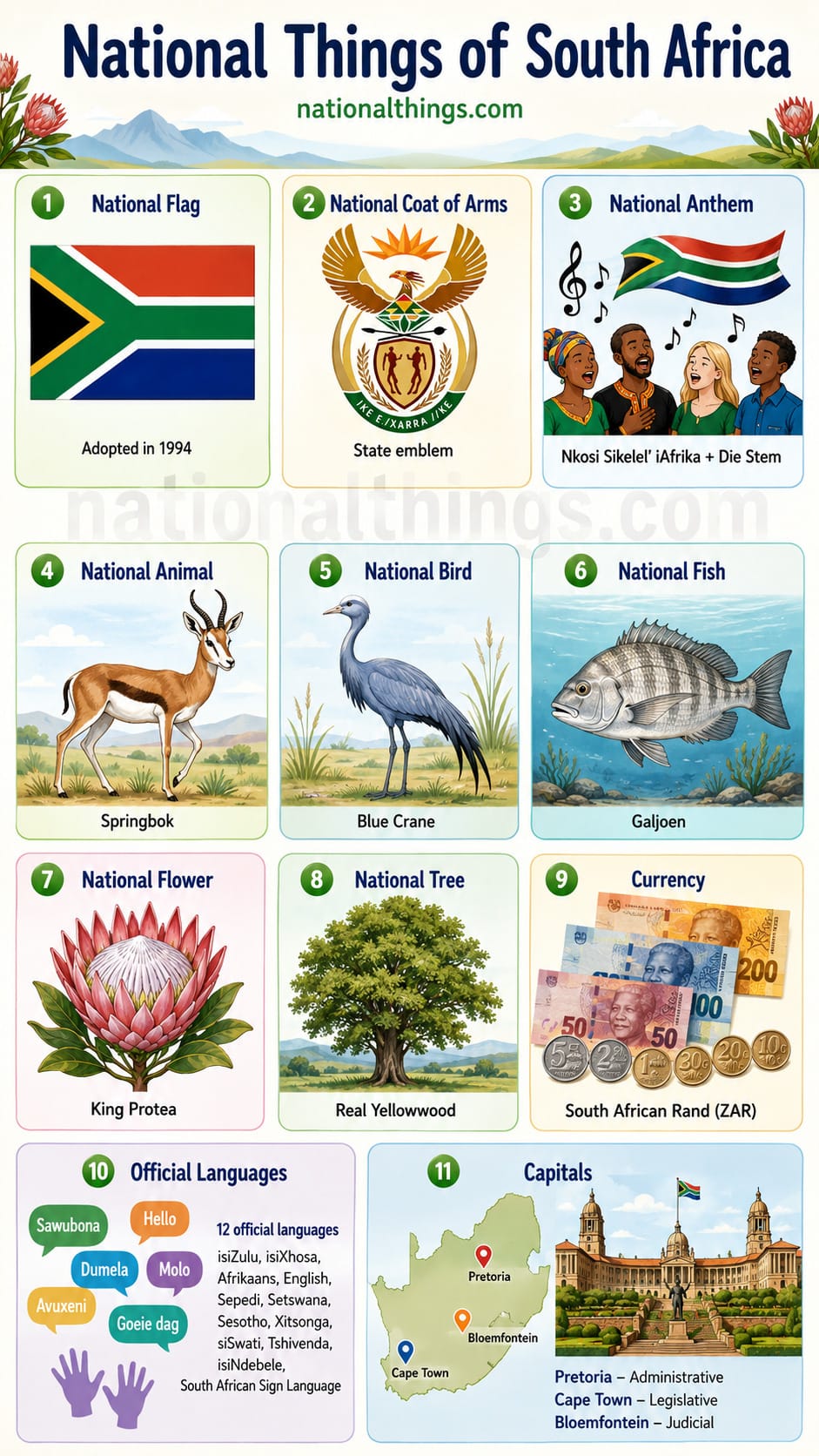
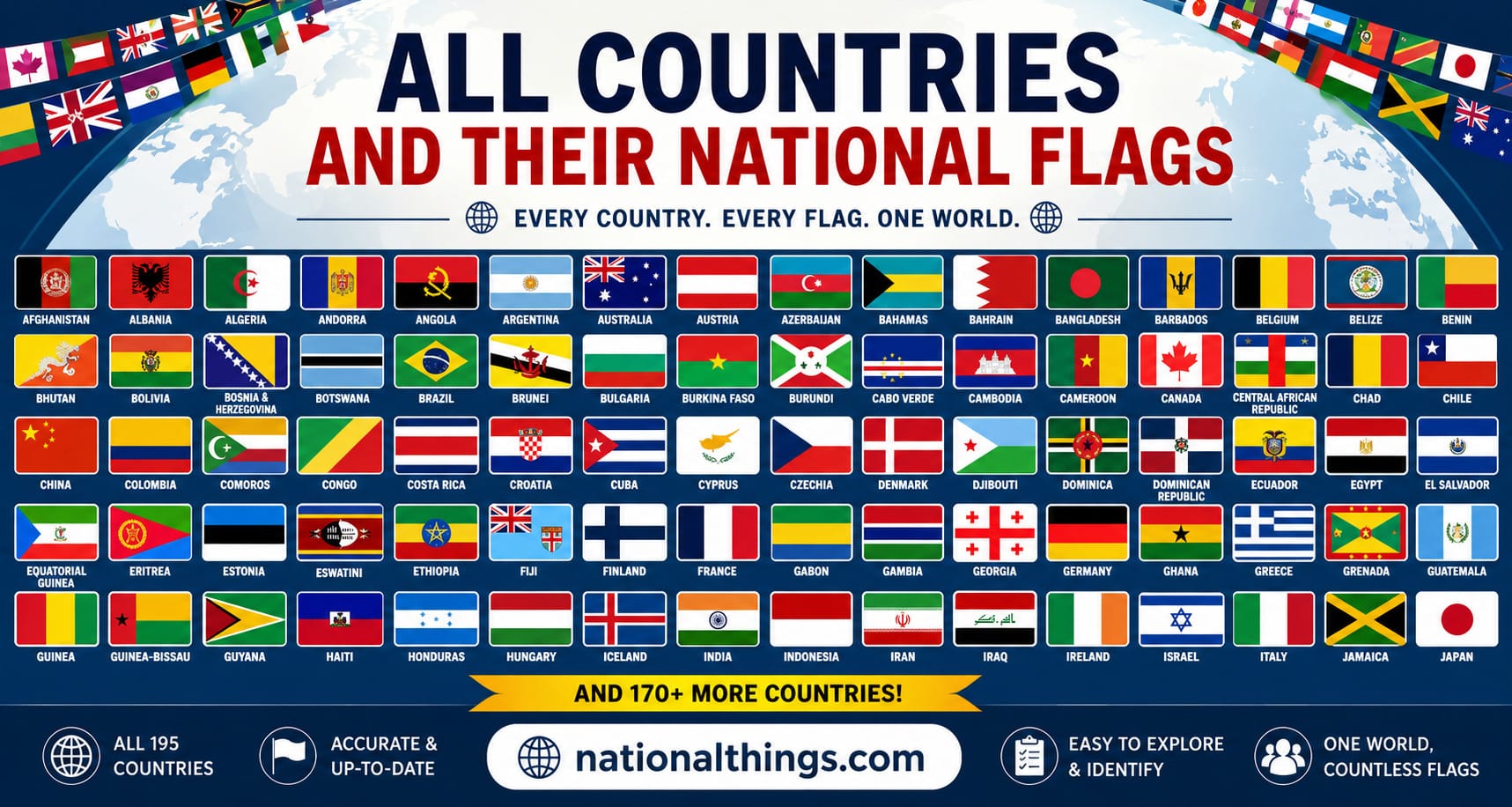
The national flag of South Africa first flew on 27 April 1994, the day of the country’s first democratic election. Fred Brownell designed it. The flag has six colors: black, green, gold, white, red, and blue. Its most famous feature is the central shape that starts as a “V” near the flagpole and moves into one line across the flag. This shape suggests different groups moving forward together.
A common mistake is to give one fixed meaning to each color. The South African Government says no universal meaning should be attached to individual colors. This matters because the flag works as a full design. Its main idea is coming together, not a simple color code. The flag is seen at sports matches, schools, embassies, courts, and public events because it represents the democratic South Africa born in 1994.
Useful flag details:
The national coat of arms is the highest visual symbol of the South African state. It was launched on 27 April 2000, six years after the democratic flag came into use. The coat of arms appears on official state documents and gives authority to important government papers. It is more formal than the flag because it acts as a state emblem.
The motto on the coat of arms is !ke e: /xarra //ke. It comes from the language of the /Xam people and means “diverse people unite.” This motto fits South Africa well because the country has many language groups, cultural histories, and regional identities. It does not say everyone must be the same. It says different people can still share one national home.
The coat of arms includes many symbols with clear meanings:
The coat of arms is one of the richest national things of South Africa because it joins old heritage with modern democracy. It uses local history, natural life, and state authority in one design.
The national anthem of South Africa is special because it joins different songs and languages. In 1994, South Africa had two national anthems: “Nkosi Sikelel’ iAfrika” and “Die Stem van Suid-Afrika”. In 1997, the country adopted a shorter combined version as the national anthem. This choice gave the country a song that reflects more than one history.
“Nkosi Sikelel’ iAfrika” was composed in 1897 by Enoch Sontonga, a Methodist mission school teacher. It became a church hymn and later an important song at political meetings during the apartheid years. “Die Stem van Suid-Afrika” began as a poem written by CJ Langenhoven in 1918, with music by Reverend ML de Villiers in 1921. The final anthem includes parts in isiXhosa, isiZulu, Sesotho, Afrikaans, and English.
Key anthem facts:
The anthem is not only a song. It is a short lesson in South Africa’s past and future. It carries prayer, struggle, memory, and hope in one piece of music.
The national animal of South Africa is the springbok, also called springbuck. Its scientific name is Antidorcas marsupialis. The springbok is famous for a jumping display called pronking. During this movement, it leaps into the air with a stiff body and curved back. This action made the animal easy to recognize across southern Africa.
Springbok live well in dry open areas and grass plains. They are found in places such as the Free State, North West province, the Karoo, and areas toward the west coast. A typical springbok stands about 75 cm high and weighs about 40 kg. It eats grass and leaves. It can survive without drinking water for some time because it gets moisture from juicy leaves.
Important springbok details:
This animal is one of the most widely known national symbols of South Africa because of rugby. During major rugby tournaments, many people first learn the word “springbok” through the national team before learning about the animal itself.
The national bird of South Africa is the blue crane. Its scientific name is Anthropoides paradisia. It stands about one meter high and has a light blue-grey body, long legs, a long neck, and fine wing feathers that sweep down toward the ground. It has a rattling call that can travel far, though the bird is often quiet.
The blue crane is closely linked to South Africa because its natural range is mostly in the country. It lives in open grass fields and Karoo-like plains with low shrubs. It also likes wet areas and often lays eggs on bare ground near water. Its food includes seeds, insects, and small reptiles.
Useful blue crane details:
The blue crane gives the national symbols a graceful side. It does not show force in the same way as a big predator. Instead, it shows balance, open space, and quiet beauty.
The national fish of South Africa is the galjoen. Its scientific name is Coracinus capensis. The galjoen is found only along the South African coast. This makes it a strong choice as a national fish because it links directly to the country’s shoreline. It often lives in shallow water and rough surf close to rocks.
The galjoen can look different depending on where it swims. Near rocks, it can look almost black. In sandy areas, it may appear silver-bronze. It is also called blackfish or black bream in KwaZulu-Natal. The South African government notes that the record size is over 55 cm and 7 kg, although most galjoen are smaller.
Quick galjoen details:
The galjoen adds the ocean to the list of National Things of South Africa. This is important because South Africa has a long coastline and strong fishing traditions in many coastal communities.
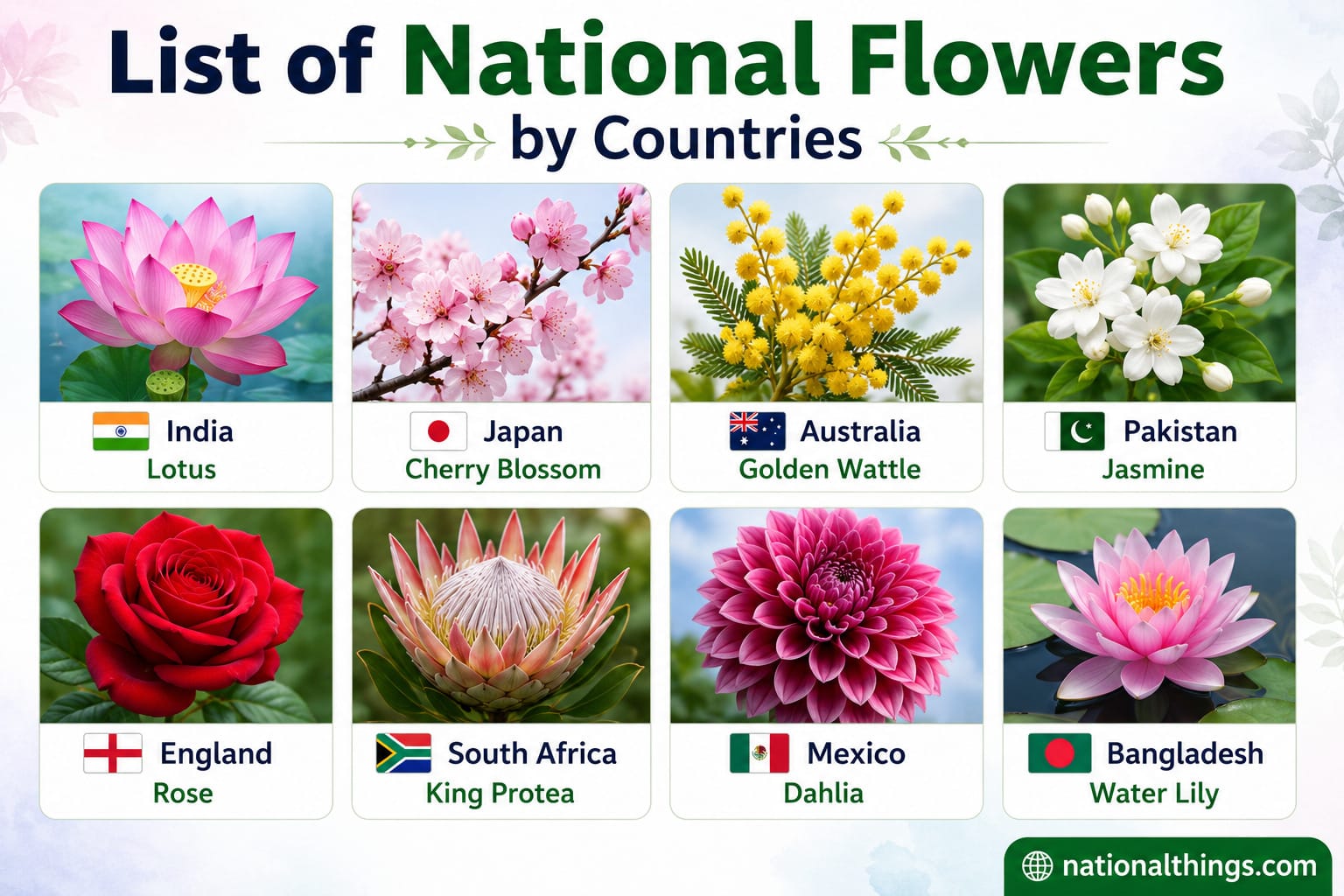
The national flower of South Africa is the giant or king protea. Its scientific name is Protea cynaroides. It grows in the south-western and southern parts of the Western Cape, from the Cedarberg area to just east of Grahamstown. It has large flower heads and a shape that looks a little like an artichoke.
The word “cynaroides” means “like cynara,” which points to the artichoke-like look of the flower head. The king protea is the largest flower in the Protea genus. It can appear in different colors and leaf shapes, but the pink form is especially well known. The flower also appears in South African sport because many national teams use the name Proteas.
King protea facts:
The king protea stands for beauty, growth, and local plant life. It also teaches readers that national symbols can come from nature, not only from politics or history.
The national tree of South Africa is the real yellowwood. Its scientific name is Podocarpus latifolius. The yellowwood family is ancient and has been present in this part of Africa for more than 100 million years. That fact makes the tree more than a national symbol. It becomes a living link to a very old natural past.
Real yellowwood trees grow from Table Mountain along the southern and eastern Cape coast. They also appear in the Drakensberg ravines and reach up toward the Soutpansberg and Blouberg in Limpopo. In forests, they can grow up to 40 meters high, and the base of the trunk can reach about 3 meters wide. In exposed mountain areas, they may grow shorter and more twisted.
Fast real yellowwood facts:
This tree gives South Africa’s symbols a sense of time. The flag tells a modern story from 1994. The real yellowwood tells a much older story from forests, mountains, and deep natural history.
Many readers who search for National Things of South Africa also want national facts that are not part of the official symbol list. These facts help students, travelers, and general readers understand the country better. They include languages, capitals, currency, provinces, population, and time zone.
South Africa has 12 official languages: English, isiZulu, isiXhosa, isiNdebele, Afrikaans, Siswati, Sepedi, Sesotho, Setswana, Tshivenda, Xitsonga, and South African Sign Language. South African Sign Language became the 12th official language after the constitutional change in 2023. This is a major national fact because language sits at the center of identity and public life.
Other key national facts:
One useful data point gives scale to the topic. Statistics South Africa reported that the country’s population was 62 million in 2022, rising from 51.7 million in 2011. This data point comes from Stats SA Census 2022 Population Count Results. It shows why national symbols must speak to a large and highly diverse society.
National symbols matter because they help people understand the country without reading a long history book first. A child can see the flag and learn about unity. A visitor can hear the anthem and notice different languages. A sports fan can see the springbok or protea and connect sport with national identity. Each symbol works like a small public lesson.
The most important insight is that South Africa’s symbols do not tell only one story. They connect nature, democracy, language, and heritage. The flag points to 1994 and the road forward. The coat of arms points to unity and ancient rock art. The anthem joins songs from different political and cultural histories. The animal, bird, fish, flower, and tree show land, coast, plains, forests, and local life.
For readers, this makes National Things of South Africa easy to remember. The symbols are not separate facts. They form a map of the country: open plains for the springbok, coastal surf for the galjoen, Western Cape flowers for the protea, old forests for the yellowwood, wide grasslands for the blue crane, and a national flag for shared citizenship.
Here is a final learner-friendly summary for quick revision. It keeps the key facts short and clear.
The National Things of South Africa help you see the country through facts that are easy to remember. They show a nation shaped by natural beauty, public symbols, many languages, and a strong idea of unity. For students, travelers, bloggers, and general learners, these national things give a simple but useful starting point for understanding South Africa.
National Things of South Africa are the symbols and facts that represent the country, such as its flag, anthem, animal, flower, tree, currency, languages, and capitals.
The national animal of South Africa is the springbok. It is a fast antelope and is also linked with South Africa’s national rugby team.
South Africa’s national flower is the king protea. It is known for its large flower head and strong link with South African nature.
South Africa has 12 official languages. These include English, Afrikaans, isiZulu, isiXhosa, and South African Sign Language.
The national bird of South Africa is the blue crane. It is a tall, graceful bird mostly linked with open grasslands.
South Africa’s national fish is the galjoen. It lives along the South African coast and is also called blackfish in some areas.
South Africa has three capitals. Pretoria is administrative, Cape Town is legislative, and Bloemfontein is judicial.
You May Also Like: