
Middle Eastern National Animals
The Middle East is a region rich in culture, history, and natural beauty. Each country in this region also has…
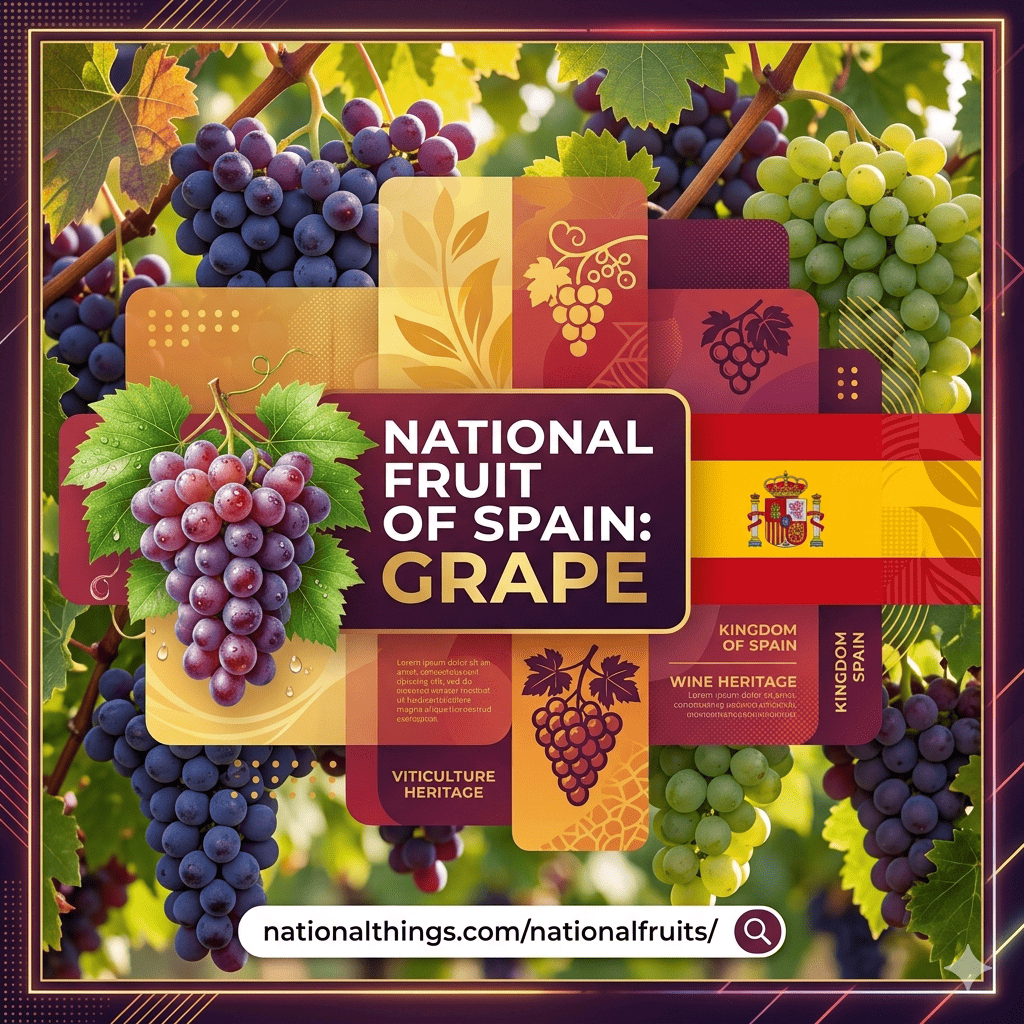
Have you ever wondered why people connect grapes so strongly with Spain even though the country has many famous fruits? The national fruit of Spain is a topic that surprises many readers because Spain never officially declared one national fruit. Still, grapes hold a special place in Spanish culture, history, and daily life. From ancient vineyards to the famous New Year tradition of eating twelve grapes at midnight, these small fruits became a major symbol of Spain’s national fruit identity. Spain is also one of the world’s largest wine producers, which makes grapes even more important in its economy and traditions. In this article, you will discover the real story behind Spain’s fruit symbolism, the most popular grape varieties, and why grapes continue to represent Spanish culture around the world.
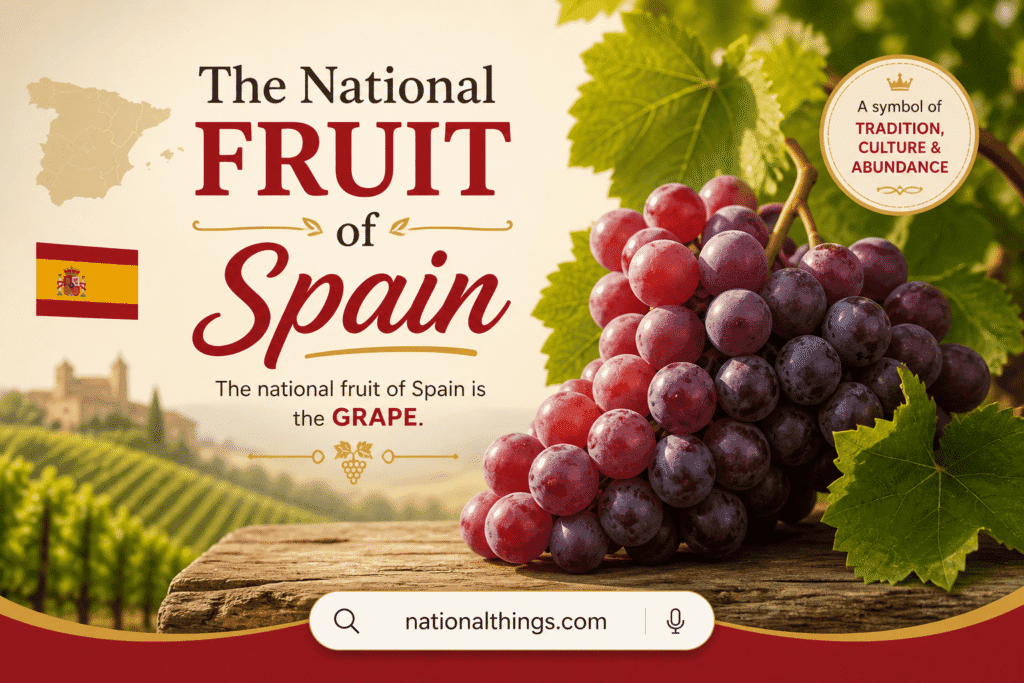
The national fruit of Spain is a topic that creates curiosity because Spain does not officially declare one fruit as its national fruit. Still, many people and cultural sources connect grapes with Spain because of the country’s long wine history, strong farming industry, and famous traditions linked to grapes. Spain grows grapes in almost every region and exports them around the world. For this reason, many people call grapes Spain’s national fruit even without an official government announcement.
Spain ranks among the largest grape producers in the world. Vineyards cover huge areas in regions like La Rioja, Castilla La Mancha, and Catalonia. Grapes are not only important for wine production. Spanish families also eat fresh grapes during celebrations and daily meals.
The link between Spain and grapes becomes stronger during New Year traditions. Millions of Spanish people eat twelve grapes at midnight for luck. This custom has become one of the most recognized food traditions in Europe. Because of this cultural importance, grapes hold a special position in Spanish identity.
The debate exists because Spain has many fruits that represent different parts of the country. Some people believe oranges should be the national fruit because Valencia produces famous oranges known worldwide. Others support olives because olive farming shapes Spanish agriculture and cuisine.
The confusion also happens because Spain never passed an official law naming one fruit as the national symbol. Different travel websites, school projects, and blogs mention different fruits.
Here are the main reasons behind the debate:
Even with these options, grapes remain the strongest cultural symbol because they connect farming, religion, festivals, and family traditions together.
Fruit symbolism in Spain goes back thousands of years. Ancient Romans planted vineyards across the Iberian Peninsula. They improved grape farming and built early wine systems. After them, Muslim rulers introduced advanced irrigation methods that helped fruit farming grow in dry regions.
During the Middle Ages, monasteries played a major role in grape cultivation. Monks produced wine for religious ceremonies and improved vineyard management. Many famous wine regions in modern Spain began during this period.
Spanish explorers later carried grape vines and fruit seeds to the Americas. This helped spread Spanish farming influence worldwide.
Important historical points include:
Today many old vineyards in Spain still produce grapes from vines that come from centuries of farming tradition.
Most cultural experts and tourism sources consider grapes the strongest unofficial national fruit of Spain. The reason comes from their influence on Spanish life, economy, and traditions.
Still other fruits also compete for attention:
| Fruit | Reason for Importance |
|---|---|
| Grapes | Wine culture New Year tradition exports |
| Oranges | Famous Valencia orange industry |
| Olives | Olive oil production and Mediterranean food |
| Pomegranates | Historical symbol linked with Granada |
Grapes stand out because they connect both ancient and modern Spain. Wine remains one of Spain’s most recognized products globally. Spanish grape farming also supports thousands of jobs.
According to the International Organisation of Vine and Wine, Spain has one of the world’s largest vineyard areas with more than 900,000 hectares of vineyards.
Source: https://www.oiv.int/
This global influence helps explain why many people call grapes Spain’s national fruit.
Grapes play a major role in Spanish celebrations, religion, and family traditions. One of the most famous customs happens on New Year’s Eve. People eat twelve grapes at midnight. Each grape represents one month of good luck for the coming year.
This tradition started in the early 1900s when grape farmers had extra harvests. Over time it became a national event shown on television every year.
Grapes also appear in local harvest festivals called vendimias. These events celebrate the grape harvest season with music, dancing, food, and wine tasting.
Important cultural uses include:
In areas like La Rioja, vineyards shape the landscape and local lifestyle. Many families have worked in grape farming for generations.
The grape industry supports a large part of Spain’s agricultural economy. Spain exports wine grapes raisins and grape juice to many countries.
Wine production especially drives economic growth. Spanish wines sell strongly in Europe, the United States, and Asia.
Key economic facts include the following:
Major wine regions include:
Wine tourism also brings millions of visitors each year. Tourists visit vineyards, taste local wines, and learn traditional farming methods.
The grape sector helps protect rural communities where farming remains the main source of income.
Spain grows hundreds of grape varieties. Some are used mainly for wine while others are eaten fresh.
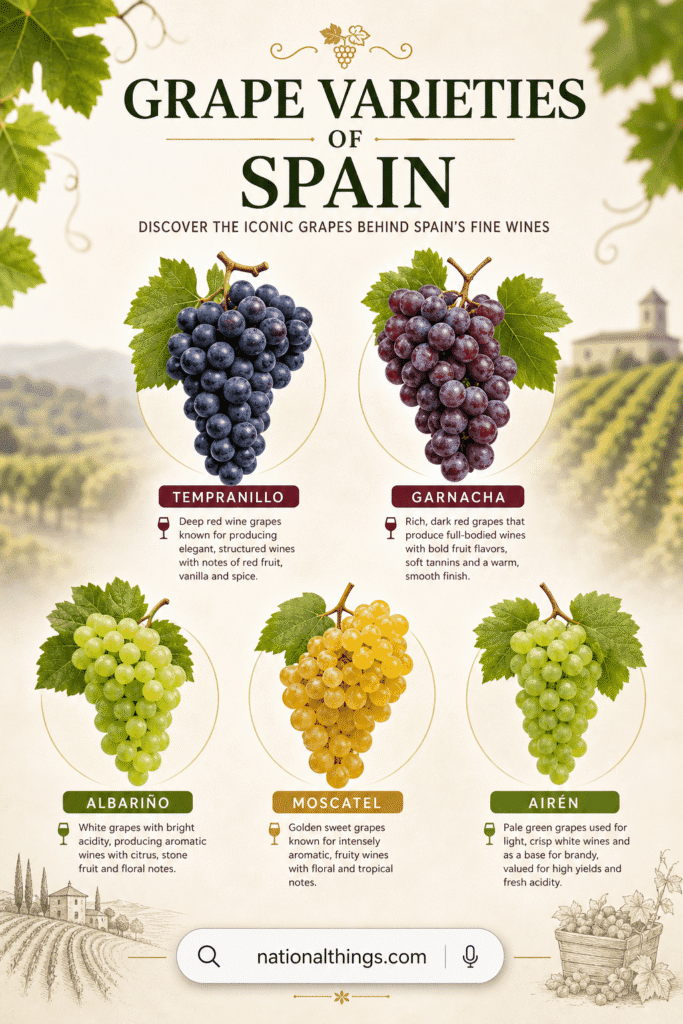
Below are the most important types connected with Spanish agriculture and wine culture.
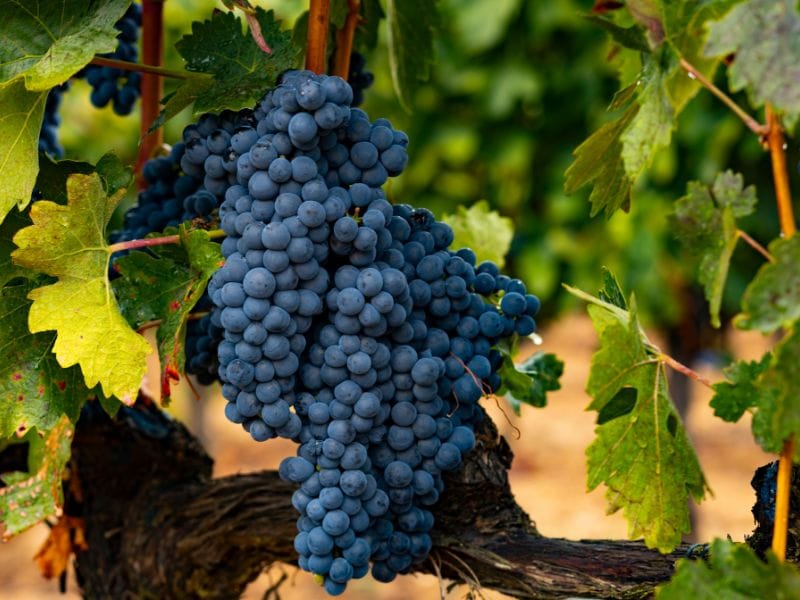
Tempranillo grapes are one of the most famous grapes in Spain. These grapes mainly grow in La Rioja and Ribera del Duero. They are used for making rich red wines.
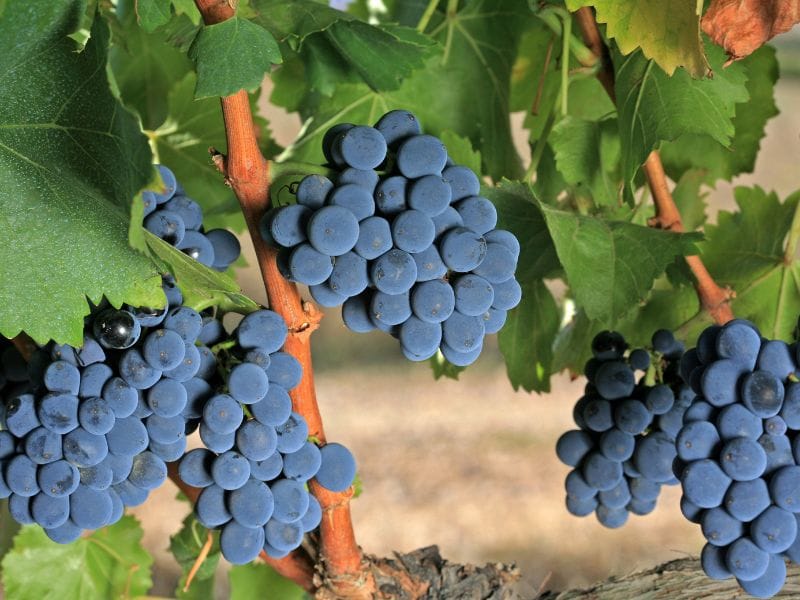
Garnacha grapes are popular in hot regions of Spain like Aragón and Priorat. These grapes are also known as Grenache in other countries.
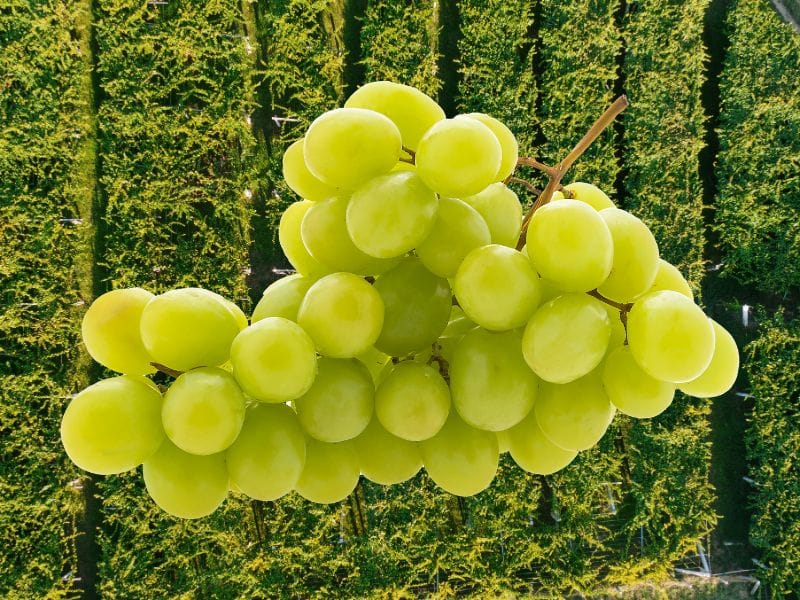
Albariño grapes are famous white grapes from Galicia in northwestern Spain. They are commonly used in fresh white wines.
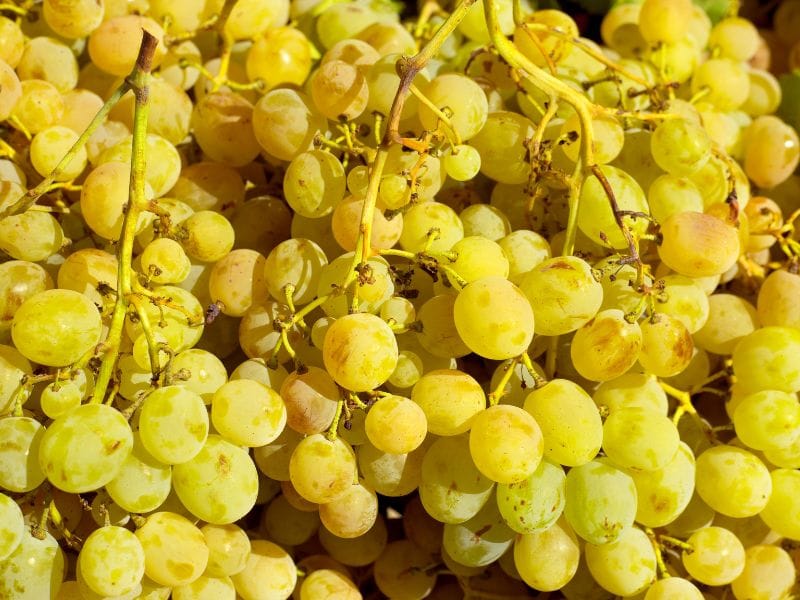
Moscatel grapes are sweet grapes used for desserts, raisins, and sweet wines in Spain.
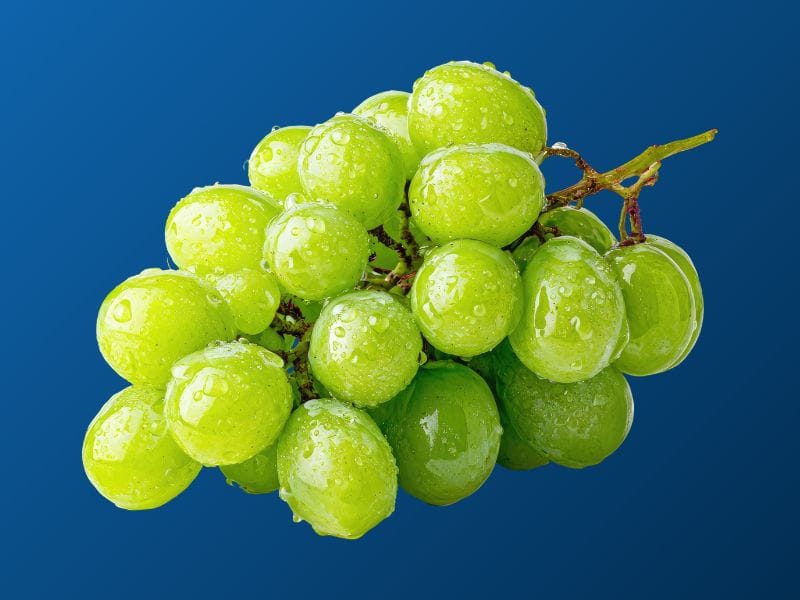
Airén grapes grow mainly in Castilla-La Mancha. These grapes handle hot, dry weather very well.
Although grapes dominate cultural discussions, several other fruits also represent Spain’s farming strength.
Popular Spanish fruits include the following:
Spanish climate diversity allows many fruit crops to grow successfully. Mediterranean coastal areas support citrus farming while inland regions grow grapes and stone fruits.
Oranges especially compete with grapes in tourism marketing because Spain exports large amounts of citrus fruit across Europe.
Spanish cuisine uses grapes in both fresh and cooked forms. People eat grapes as snacks, desserts, and salad ingredients.
Traditional food uses include:
Wine production remains the biggest use of grapes. Spanish winemakers create:
Sherry production in Jerez represents one of Spain’s oldest wine traditions.
Spanish chefs also use grape must, which is fresh grape juice before fermentation, in sauces and sweets.
Grapes provide many nutrients and antioxidants. They support heart health, hydration, and immune function.
Main nutrients found in grapes:
Red grapes contain resveratrol, which researchers connect with heart protection.
Health benefits include the following:
Fresh grapes also contain high water content, which makes them useful during hot summer months.
Different fruits represent different strengths in Spain. Grapes, however, combine cultural, economic, and historical importance better than most other fruits.
| Fruit | Cultural Value | Economic Value | Global Recognition |
|---|---|---|---|
| Grapes | Very High | Very High | Very High |
| Oranges | High | High | High |
| Olives | Very High | Very High | High |
| Pomegranates | Medium | Medium | Medium |
Grapes lead because they influence festival tourism exports and national traditions together.
Olives remain extremely important, but many people view olives more as a food product than a fruit symbol.
Spain has many unique fruit customs linked with local culture.
Interesting facts include:
Some regions even crown festival queens during grape harvest events. Traditional music, dancing, and food remain central parts of these celebrations.
Spain’s fruit traditions also show the connection between farming and community life.
Spain does not officially declare a national fruit. Many people consider grapes the unofficial national fruit because of their cultural and economic importance.
Grapes support Spain’s wine industry, farming economy, tourism, and traditions. They also play a major role during New Year celebrations.
Spanish people eat twelve grapes at midnight on New Year’s Eve. Each grape represents good luck for one month of the coming year.
Castilla La Mancha grows huge amounts of grapes and contains some of the largest vineyard areas in Europe.
Oranges are economically important, especially in Valencia. Still grapes usually hold stronger cultural symbolism because of wine traditions and national customs.
The best-known Spanish grape varieties include:
Tempranillo
Garnacha
Albariño
Moscatel
Airén
Yes. Spain exports large amounts of wine, table grapes, and raisins to many countries worldwide.
People connect grapes with Spain’s identity because vineyard traditions, festivals, and wine production all play major roles in Spanish culture.
You May Also Like: