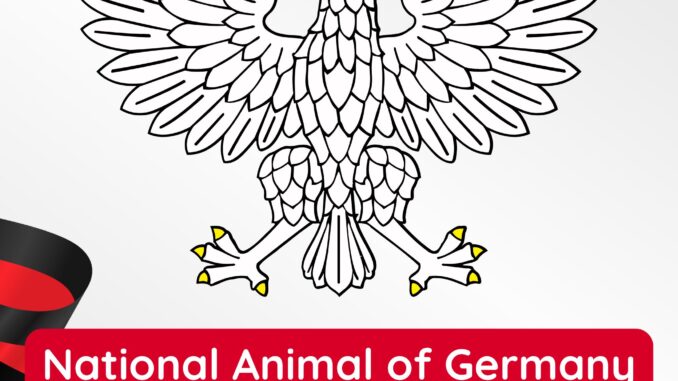
The national animal of Germany is the eagle. In German, it is called the Bundesadler, which means “Federal Eagle.” This powerful bird is one of the oldest national symbols in Europe.
The eagle represents strength, courage, freedom, and sovereignty. It is not chosen because it is common in nature today, but because of its long historical and cultural meaning.
Why the Eagle Represents Germany
The eagle has been used as a symbol in German lands for more than 1,000 years. It was first connected with the Holy Roman Empire. Later, it became a symbol of unity and authority.
Today, the eagle stands for:
- National unity
- Strength and power
- Independence
- Democracy and federal authority
The modern eagle symbol is simple in design, usually black with a red beak and claws on a golden background.
Historical Background of the German Eagle
The eagle symbol was widely used in the Holy Roman Empire. It showed imperial power and leadership.
In the 19th century, after German unification in 1871, the eagle became the official symbol of the new German Empire. After World War II, Germany redesigned the eagle to reflect democratic values.
The modern version is used by the Federal Republic of Germany today.
The Eagle in the German Coat of Arms
The eagle appears on the official Coat of Arms of Germany.
Key features include:
- A black eagle
- Red beak and red claws
- Golden shield background
- Wings spread open
This design is simple but meaningful. It shows protection and strength without aggressive details.
Meaning of the German Eagle Symbol
The eagle is often called the “King of Birds.” In many cultures, it symbolizes power and vision.
In Germany, the eagle represents:
- Authority of the state
- National pride
- Unity of the German people
- Freedom and independence
The open wings show readiness and protection.
Is the Eagle Native to Germany?
Yes, some types of eagles live in Germany. For example, the white-tailed eagle can be found in northern regions. However, the national symbol is not linked to one specific species.
The eagle is mainly a symbolic national animal, chosen for its historical importance rather than biology.
Where You Can See the German Eagle
The eagle symbol is used widely in official and public life. You can see it on:
- German passports
- Government buildings
- Official documents
- Courtrooms
- The German parliament building
It is also displayed inside the Bundestag, which is the national parliament of Germany.
Facts About the National Animal of Germany
- National Animal: Eagle
- German Name: Bundesadler
- Symbol Type: Official federal emblem
- Main Meaning: Strength and unity
- Used Since: Medieval period
Difference Between the German Eagle and Other Eagles
Many countries use the eagle as a national symbol. However, the German eagle has a simple, modern look. It does not wear a crown and does not hold objects like arrows or shields.
Its clean design reflects modern democratic Germany rather than monarchy.
Importance of the National Animal for Learners
Learning about the national animal of Germany helps students understand:
- German history
- National symbols
- Cultural identity
- Important vocabulary related to government and tradition
It improves reading skills and general knowledge about world countries.
Final Thoughts
The national animal of Germany is the eagle. Known as the Bundesadler, it is a strong symbol of unity, authority, and freedom. The eagle has represented German lands for over a thousand years and continues to be an important part of national identity.
Understanding the eagle helps learners connect history, culture, and modern Germany in a clear and simple way.
Frequently Asked Questions
Related Articles
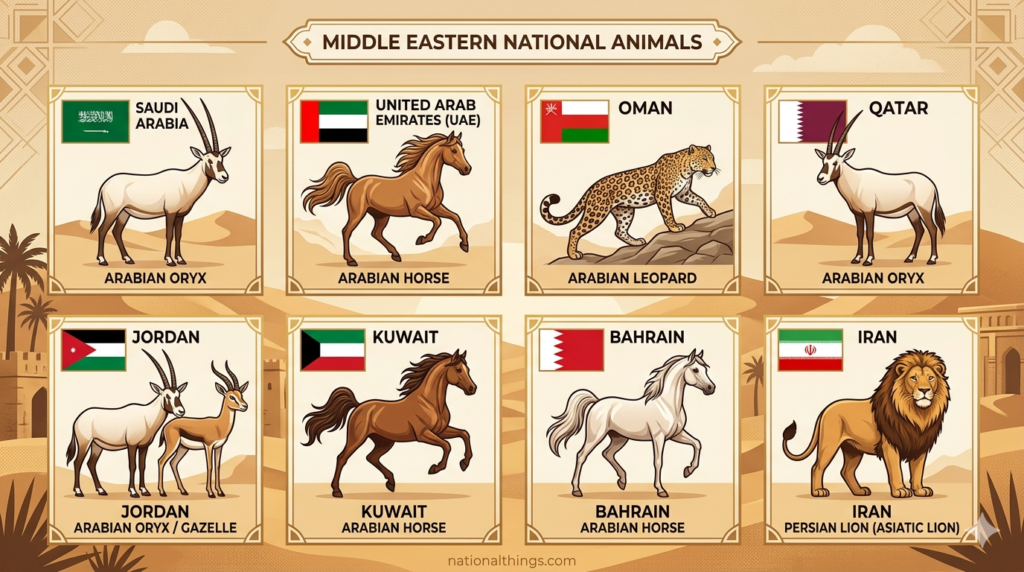
Middle Eastern National Animals
The Middle East is a region rich in culture, history, and natural beauty. Each…
150 Most Important Countries and Their National Animals
Every country in the world has its unique national animal, representing its culture, wildlife,…
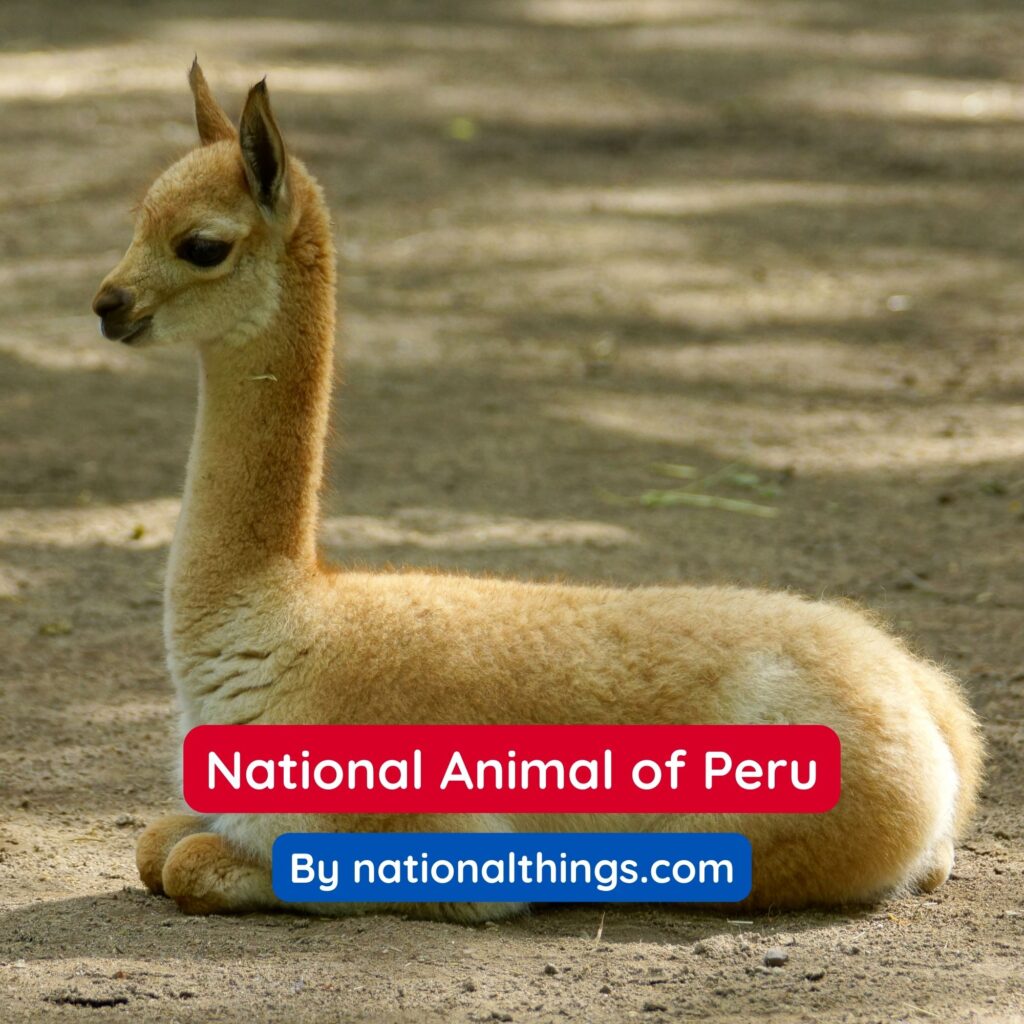
National Animal of Peru: The Vicuña
The national animal of Peru is the beautiful Vicuña. This graceful animal is known…
National Animal of New Zealand: The Kiwi
The national animal of New Zealand is the famous Kiwi. This small, flightless bird…
National Animal of Cuba: The Cuban Hutia
The national animal of Cuba is the Cuban Hutia (Capromys pilorides). This unique mammal…
National Animal of Dominican Republic: The Palmchat
Every country has special symbols that represent its nature, culture, and identity. One of…
National Animal of Brazil: Onça-pintada
Every country has symbols that represent its culture, nature, and identity. For Brazil, one…

National Animal of South Korea
When we think about countries, many of them have symbols that represent their culture,…
Copyright © 2026 | WordPress Theme by MH Themes
Leave a Reply