Introduction:
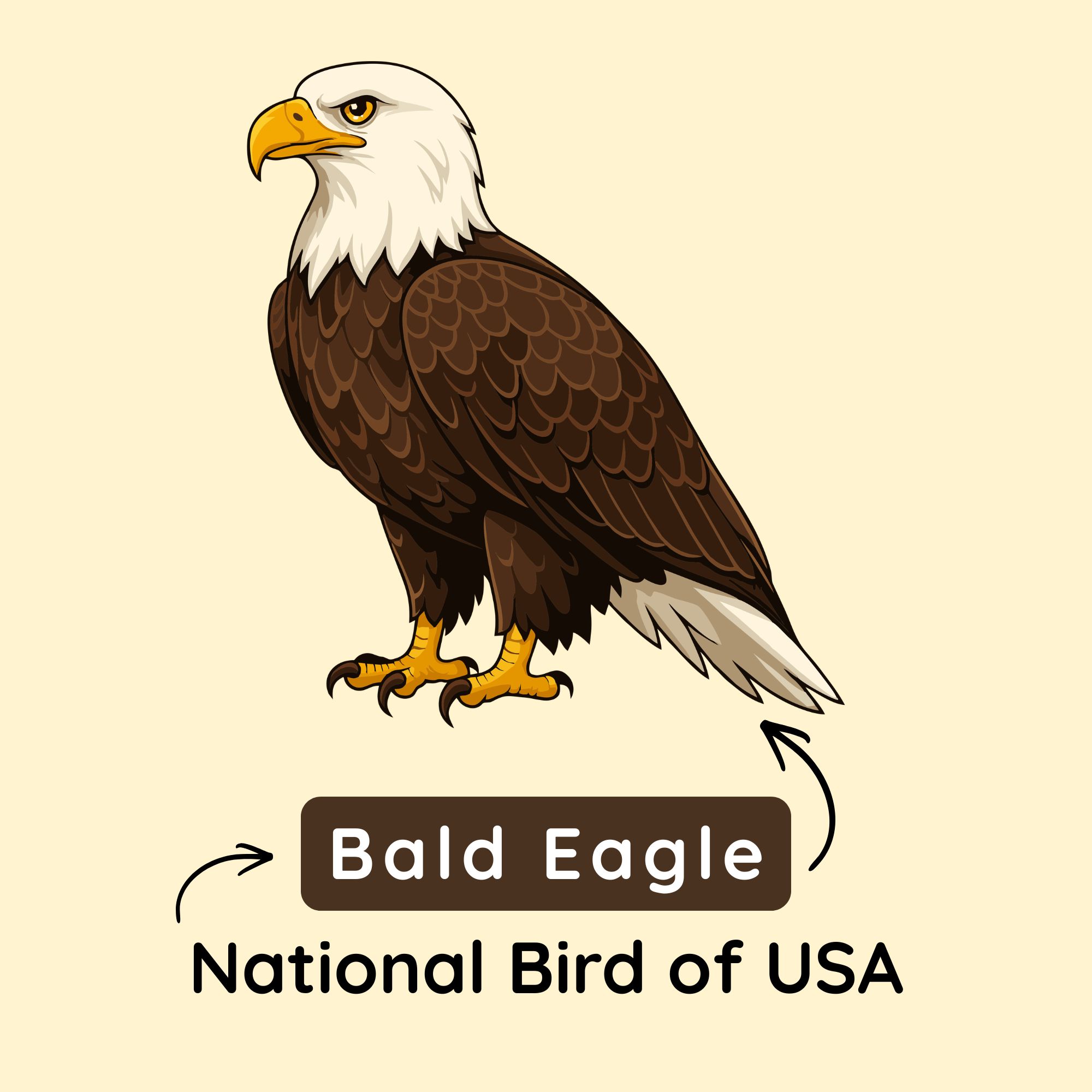
The national bird of USA is the Bald Eagle. Its scientific name is Haliaeetus leucocephalus. This large bird of prey is one of the most powerful national symbols in the world. It represents freedom, strength, and independence.
The Bald Eagle is native to North America and is strongly connected to American history and identity.
Historical Background and Official Declaration
The Bald Eagle became the national bird of the United States on June 20, 1782. On that day, it was placed on the Great Seal of the United States.
When the country gained independence, leaders wanted a strong and unique symbol. The Bald Eagle was chosen because it was seen as brave, long-living, and powerful. Since 1782, it has appeared on official seals, government buildings, passports, military symbols, and national documents.
This makes it one of the oldest national bird symbols in the modern world.
Symbolism and National Importance
The Bald Eagle stands for:
- Freedom
- Independence
- Courage
- National pride
On the Great Seal, the eagle holds:
- An olive branch (symbol of peace)
- Arrows (symbol of strength and defense)
This design shows that the country values peace but is ready to defend itself.
The bird is also respected in many Native American cultures, where it is considered sacred and spiritually important.
Physical Features and Appearance
The Bald Eagle is a large and powerful bird.
Key physical features:
- Wingspan up to 2.3 meters
- Dark brown body
- White head and white tail
- Large yellow beak
- Strong, sharp talons
Young Bald Eagles do not have white heads. They develop their white feathers at around four to five years of age.
In the wild, they usually live between 20 and 30 years.
Habitat and Distribution
The Bald Eagle lives mainly in:
- The United States
- Canada
- Northern Mexico
In the USA, it prefers areas near:
- Lakes
- Rivers
- Wetlands
- Coastal regions
Water is important because fish is its main food source.
Bald Eagles build very large nests in tall trees or on cliffs. They often return to the same nest every year and add more branches, making the nest bigger over time.
Diet and Hunting Behavior
The Bald Eagle is a carnivorous bird, meaning it eats meat.
Its main diet includes:
- Fish
- Small mammals
- Ducks and other birds
- Reptiles
- Occasionally dead animals
It has excellent eyesight and can see fish from high in the sky. It catches prey using its strong talons.
Endangered Status and Recovery
The Bald Eagle was once endangered in the United States.
In the 20th century, its population decreased because of:
- Hunting
- Habitat destruction
- Pollution
- A harmful chemical called DDT
DDT made eagle eggs weak and easy to break. By the 1960s, the number of Bald Eagles had dropped to very low levels.
The US government introduced protection laws, including:
- The Bald Eagle Protection Act (1940)
- A ban on DDT in 1972
- Habitat conservation programs
Because of these efforts, the population increased again. In 2007, the Bald Eagle was removed from the endangered species list. Today, it is not endangered but remains legally protected.
Cultural and Educational Importance
The national bird of USA appears on:
- The Great Seal of the United States
- Official government documents
- Military badges
- Currency designs
Learning about the Bald Eagle helps students understand:
- American history
- National symbols
- Wildlife vocabulary
- Conservation efforts
It connects nature, culture, and national identity in one powerful symbol.
Final Summary
The national bird of USA is the Bald Eagle. It was officially adopted in 1782 and represents freedom, strength, and independence. It lives near water across North America and mainly eats fish. Although it was once endangered, strong conservation efforts helped it recover.
Today, the Bald Eagle remains one of the most respected and powerful national symbols of the United States.
Frequently Asked Questions
Related Articles
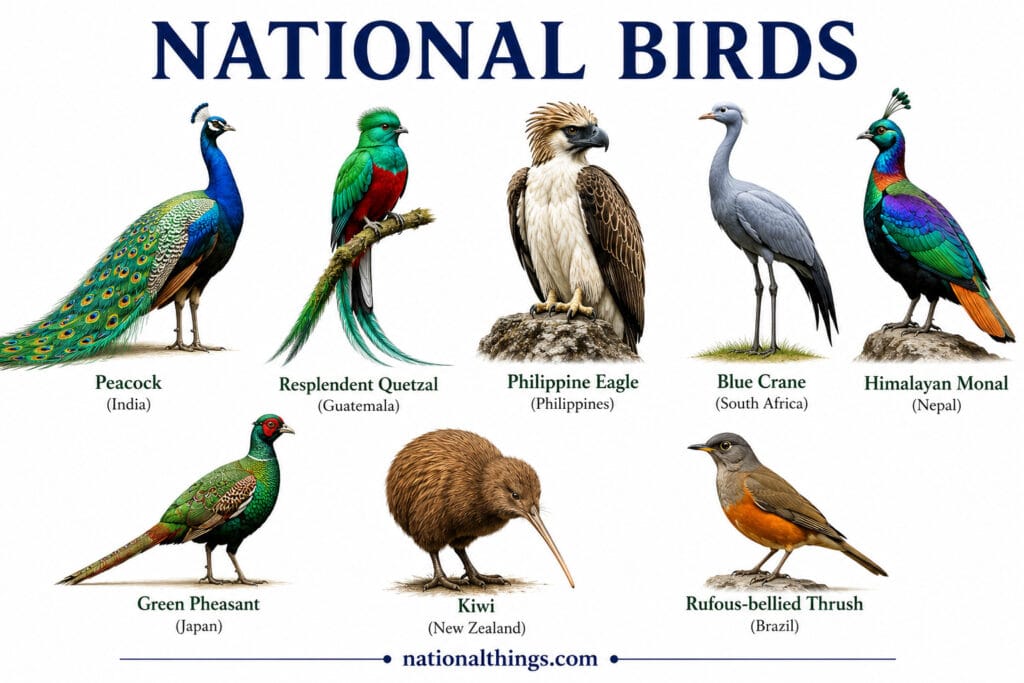
List of National Birds of the Countries
National Birds are more than just official symbols. They show a country’s history, culture,…
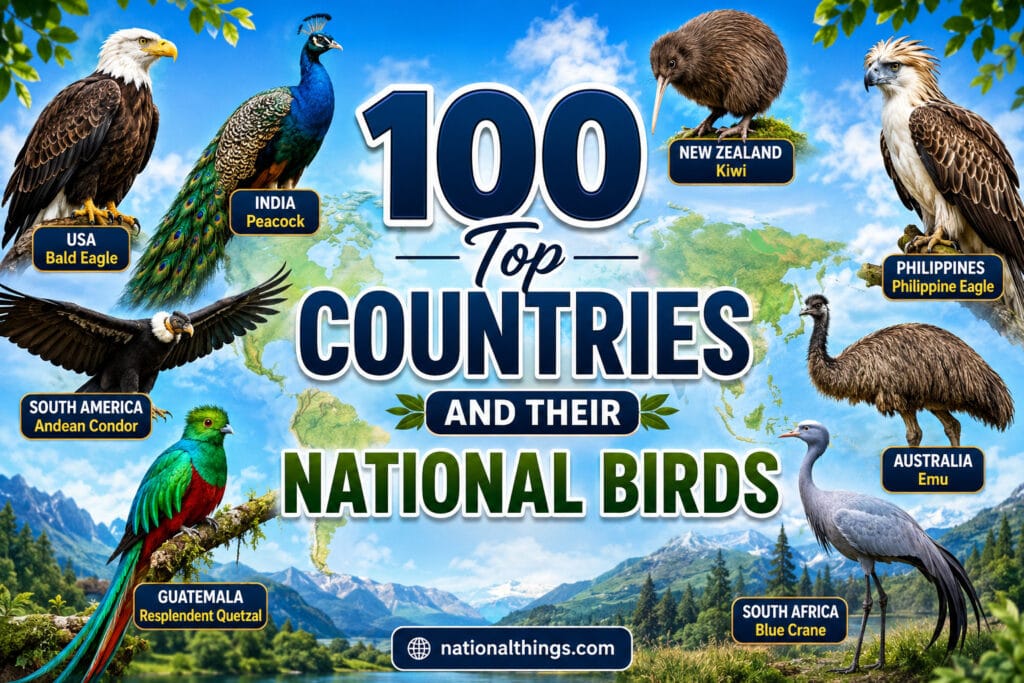
100 Top Countries and Their National Birds Explained
Countries and Their National Birds tell amazing stories about culture, history, wildlife, and national…
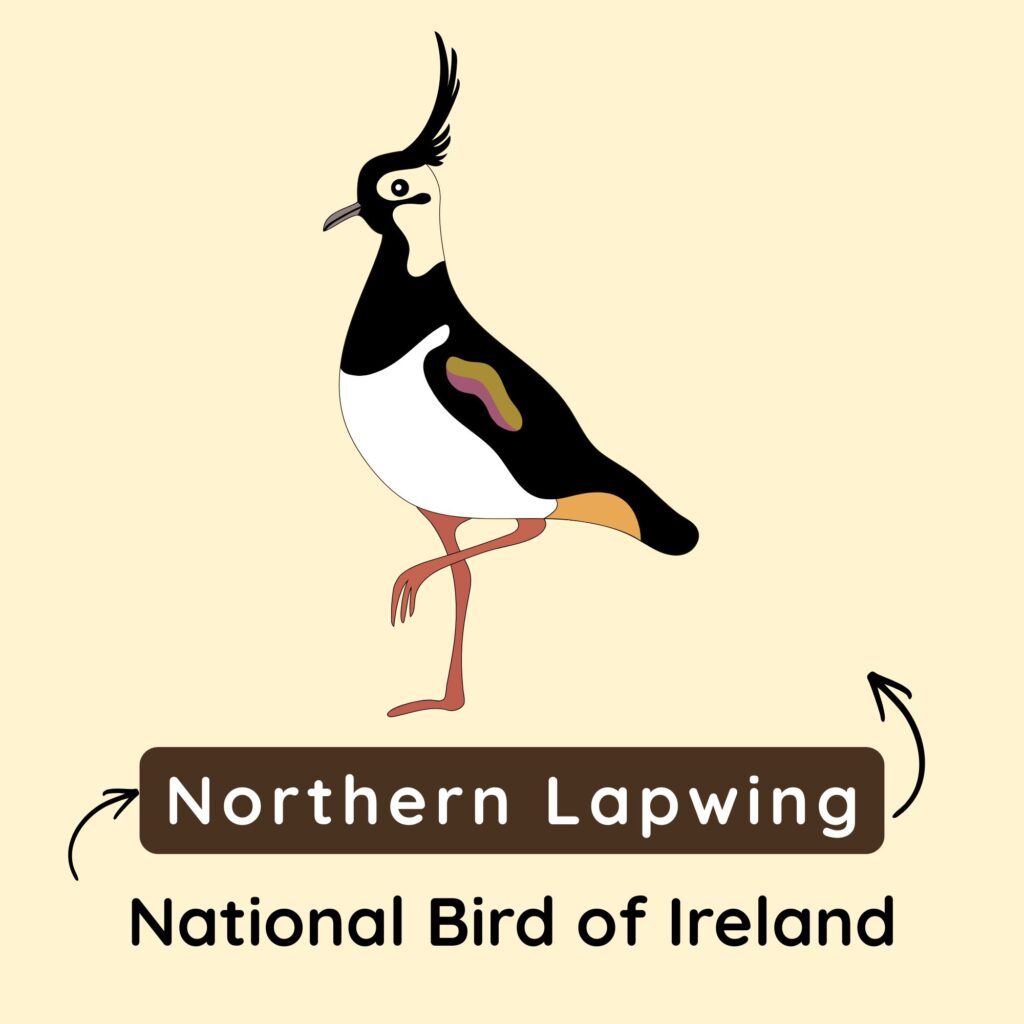
National Bird of Ireland – Interesting Facts and History
The National Bird of Ireland is the Northern Lapwing (Vanellus vanellus), also known as…
National Bird of The UK – History and Facts
The National Bird of the United Kingdom is the European Robin (scientific name: Erithacus…
National Bird of Canada – History and Facts
The National Bird of Canada is the Canada Jay, also widely known as the…
National Birds of Australia – Interesting Facts and History
Australia is famous for its unique wildlife. From kangaroos to koalas, many animals live…