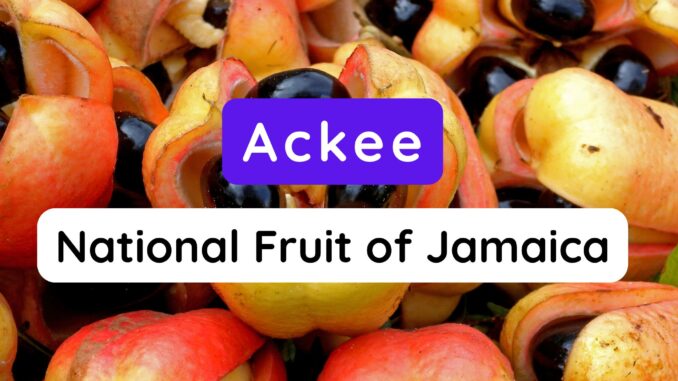
Jamaica is famous for its vibrant culture, delicious cuisine, and tropical fruits. Among its many treasures, the national fruit of Jamaica is the ackee. It is not only a key ingredient in Jamaica’s traditional dishes but also a symbol of the country’s natural heritage.
National Fruit of Jamaica
- The ackee is officially recognized as the national fruit of Jamaica.
- Its scientific name is Blighia sapida.
- Ackee is an essential part of Jamaican cuisine and is highly valued for its flavor and nutritional benefits.
History and Cultural Significance
- Ackee was originally brought to Jamaica from West Africa in the 18th century.
- It became a staple in Jamaican diets and a key ingredient in the famous dish ackee and saltfish, considered the national dish of Jamaica.
- The fruit symbolizes resilience and cultural identity, reflecting Jamaica’s unique heritage.
Why Ackee is Important to Jamaica
- Cultural Value – Ackee is celebrated in Jamaican food and traditions.
- Economic Significance – It is grown widely in Jamaica and exported to other countries.
- Culinary Use – Central to many traditional Jamaican recipes, especially breakfast dishes.
- Unique Appearance – Ackee is recognizable for its bright red pods and yellow edible flesh.
Nutritional Benefits of Ackee
Ackee is not only tasty but also healthy when prepared properly:
- Rich in Vitamins – Contains Vitamin A, Vitamin C, and essential fatty acids.
- High in Protein – A rare fruit that provides plant-based protein.
- Good for Digestion – Contains fiber that supports a healthy digestive system.
- Low in Calories – Helps provide energy without adding excess calories.
How Ackee is Used in Jamaican Cuisine
- Ackee and Saltfish – The most famous traditional dish combining ackee with salted cod.
- Stews and Curries – Ackee is often added to stews for flavor and texture.
- Boiled or Fried – Eaten as a side dish with vegetables or rice.
Fun Facts About Ackee
- Ackee must be fully ripe and properly prepared before eating; unripe ackee is toxic.
- The fruit opens naturally when ripe, revealing yellow flesh and black seeds.
- Ackee is exported to countries with Caribbean communities, such as the UK, US, and Canada.
- It is a central part of Jamaican identity and featured in festivals and cultural events.
Conclusion
The ackee is more than just a fruit in Jamaica; it represents culture, tradition, and culinary heritage. From traditional dishes to global recognition, ackee holds a special place in Jamaica’s history. Its unique taste, nutritional value, and cultural significance make it a worthy national fruit.
Frequently Asked Questions
Related Articles
Middle Eastern National Animals
The Middle East is a region rich in culture, history, and natural beauty. Each…
150 Most Important Countries and Their National Animals
Every country in the world has its unique national animal, representing its culture, wildlife,…
National Animal of Peru: The Vicuña
The national animal of Peru is the beautiful Vicuña. This graceful animal is known…
National Animal of New Zealand: The Kiwi
The national animal of New Zealand is the famous Kiwi. This small, flightless bird…
National Animal of Cuba: The Cuban Hutia
The national animal of Cuba is the Cuban Hutia (Capromys pilorides). This unique mammal…
National Animal of Dominican Republic: The Palmchat
Every country has special symbols that represent its nature, culture, and identity. One of…
National Animal of Brazil: Onça-pintada
Every country has symbols that represent its culture, nature, and identity. For Brazil, one…
National Animal of South Korea
When we think about countries, many of them have symbols that represent their culture,…
National Animal of Russia: Eurasian Brown Bear
The national animal of Russia is the Eurasian brown bear. This powerful animal is…
National Animal of Italy: The Italian Wolf
Italy is a country with a rich history, deep culture, and strong national pride….
Copyright © 2026 | WordPress Theme by MH Themes
Leave a Reply