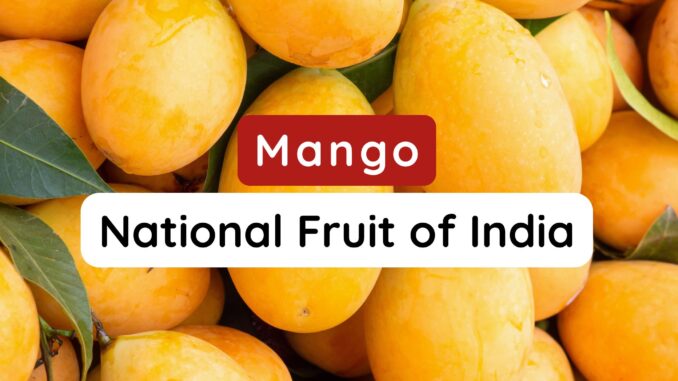
India is a land of rich culture, traditions, and natural diversity. Among its many treasures, fruits hold a special place in the daily life of its people. One fruit stands out not just for its taste but also for its symbolic significance — the national fruit of India: the Mango.
What is the National Fruit of India?
- The mango is officially recognized as the national fruit of India.
- Its scientific name is Mangifera indica.
- It is often called the “King of Fruits” due to its sweet taste, rich aroma, and cultural importance.
History and Cultural Significance
Mango has been cultivated in India for more than 4,000 years. It is deeply connected to Indian culture:
- Ancient Indian texts like the Vedas and Puranas mention mango trees as symbols of love and prosperity.
- Mango motifs are widely used in Indian art, paintings, and architecture.
- During festivals, mango leaves are used for decoration to welcome guests and bring good luck.
Why Mango is the National Fruit
India chose the mango as its national fruit for several reasons:
- Cultural Importance – It is considered sacred and symbolizes prosperity.
- Economic Value – India is the largest producer of mangoes in the world.
- Variety and Taste – Mangoes come in many varieties, each with unique taste and aroma.
- Global Recognition – Mangoes are popular internationally and represent India’s agriculture globally.
Popular Varieties of Indian Mangoes
India produces hundreds of mango varieties, but some are most famous for their taste and quality:
- Alphonso (Hapus) – Known as the king of mangoes for its sweetness and flavor.
- Dasheri – Popular in Northern India, with a fragrant aroma.
- Langra – Loved for its unique taste and soft texture.
- Kesar – Famous for its bright orange pulp and rich taste.
- Banganapalli – Sweet and juicy, commonly grown in South India.
Nutritional Benefits of Mango
Mangoes are not just delicious but also healthy. Here are some key benefits:
- Rich in Vitamins – High in Vitamin C and Vitamin A, which are good for immunity and vision.
- Good for Digestion – Contains dietary fiber to aid digestion.
- Antioxidants – Helps in fighting free radicals and promoting healthy skin.
- Energy Booster – Natural sugars provide quick energy.
How Mango is Used in India
Mangoes are used in various ways, both raw and ripe:
- Ripe Mangoes – Eaten fresh or used in desserts like mango ice cream, mango lassi, and sweets.
- Raw Mangoes – Made into pickles, chutneys, and salads.
- Mango Juice & Smoothies – Popular refreshing drinks during summer.
Fun Facts About Mango
- India grows over 1,000 varieties of mangoes.
- Mango is mentioned in the national emblem and cultural stories.
- The fruit is loved globally and exported to many countries.
- Some mango trees in India are over 300 years old and still produce fruit.
Conclusion
The mango is not just a fruit in India; it is a symbol of culture, tradition, and prosperity. From ancient times to modern kitchens, mangoes have been an integral part of life. Its unique taste, aroma, and nutritional value make it deserving of the title “national fruit of India”.
Whether eaten fresh, made into juice, or used in cooking, the mango remains India’s most celebrated fruit and a symbol that represents the country globally.
Frequently Asked Questions
Related Articles
Middle Eastern National Animals
The Middle East is a region rich in culture, history, and natural beauty. Each…
150 Most Important Countries and Their National Animals
Every country in the world has its unique national animal, representing its culture, wildlife,…
National Animal of Peru: The Vicuña
The national animal of Peru is the beautiful Vicuña. This graceful animal is known…
National Animal of New Zealand: The Kiwi
The national animal of New Zealand is the famous Kiwi. This small, flightless bird…
National Animal of Cuba: The Cuban Hutia
The national animal of Cuba is the Cuban Hutia (Capromys pilorides). This unique mammal…
National Animal of Dominican Republic: The Palmchat
Every country has special symbols that represent its nature, culture, and identity. One of…
National Animal of Brazil: Onça-pintada
Every country has symbols that represent its culture, nature, and identity. For Brazil, one…
National Animal of South Korea
When we think about countries, many of them have symbols that represent their culture,…
National Animal of Russia: Eurasian Brown Bear
The national animal of Russia is the Eurasian brown bear. This powerful animal is…
National Animal of Italy: The Italian Wolf
Italy is a country with a rich history, deep culture, and strong national pride….
Copyright © 2026 | WordPress Theme by MH Themes
Leave a Reply