
When we think about countries, many of them have symbols that represent their culture, nature, or history. South Korea is no different. One of the most important symbols of the country is its national animal. This animal is not just a creature; it is a symbol of strength, courage, and the spirit of the nation.
What is the National Animal of South Korea?
The national animal of South Korea is the Siberian tiger, also called the Korean tiger.
- Scientifically known as Panthera tigris altaica.
- It is the largest tiger species in the world.
- Known for its bravery, strength, and beautiful striped fur.
The Korean tiger holds a very special place in South Korean culture, history, and folklore. It is often seen as a guardian and a symbol of power.
Appearance and Characteristics of the Korean Tiger
The Korean tiger is easy to recognize because of its unique features:
- Fur: Orange with bold black stripes. Each tiger has its own stripe pattern, making it unique.
- Size: Adult males can weigh up to 300 kg (660 lbs), while females are smaller.
- Strength: Tigers are strong hunters and can run very fast, up to 60 km/h (37 mph).
- Lifespan: Usually 10–15 years in the wild.
These traits make the Korean tiger a perfect symbol of courage and protection in South Korea.
Importance of the Tiger in South Korean Culture
The tiger is not only an animal but also a cultural icon. Here’s why it is important:
- Folklore: Many Korean stories and legends feature tigers as wise and powerful creatures.
- Art: Traditional paintings, sculptures, and crafts often show tigers.
- Symbolism: Tigers represent strength, courage, and good fortune.
- National Identity: The tiger is a symbol of pride and a connection to nature and heritage.
Habitat and Conservation
In the past, Korean tigers lived in the forests and mountains of the Korean Peninsula. However, due to hunting and habitat loss, their population has drastically reduced. Today:
- Most Korean tigers live in Russia and China, with very few in South Korea.
- South Korea has started conservation programs to protect and possibly reintroduce tigers into its natural habitat.
- Protected areas and wildlife parks help educate people about the tiger.
Facts About the Korean Tiger
- Tigers are solitary animals, meaning they like to live alone rather than in groups.
- Each tiger’s stripes are like fingerprints – no two are the same.
- In Korean language, the tiger is called “Horangi” (호랑이).
- The tiger is often paired with the magpie, another Korean symbol, in folk paintings to show harmony and protection.
Why the Korean Tiger is Chosen as a National Animal
South Korea chose the tiger as its national animal because it represents:
- Courage and bravery – a symbol of facing challenges.
- Strength and protection – the tiger is a guardian in nature.
- Cultural significance – a part of stories, art, and national history.
The Korean tiger is more than an animal; it is a living symbol of the country’s spirit and pride.
Conclusion
The Korean tiger is a fascinating and powerful animal. It is a symbol of courage, strength, and heritage in South Korea. Even though it is rare in the wild today, its importance in culture and national identity remains strong. Learning about the national animal gives us a better understanding of South Korea’s history, culture, and natural beauty.
Frequently Asked Questions
Related Articles
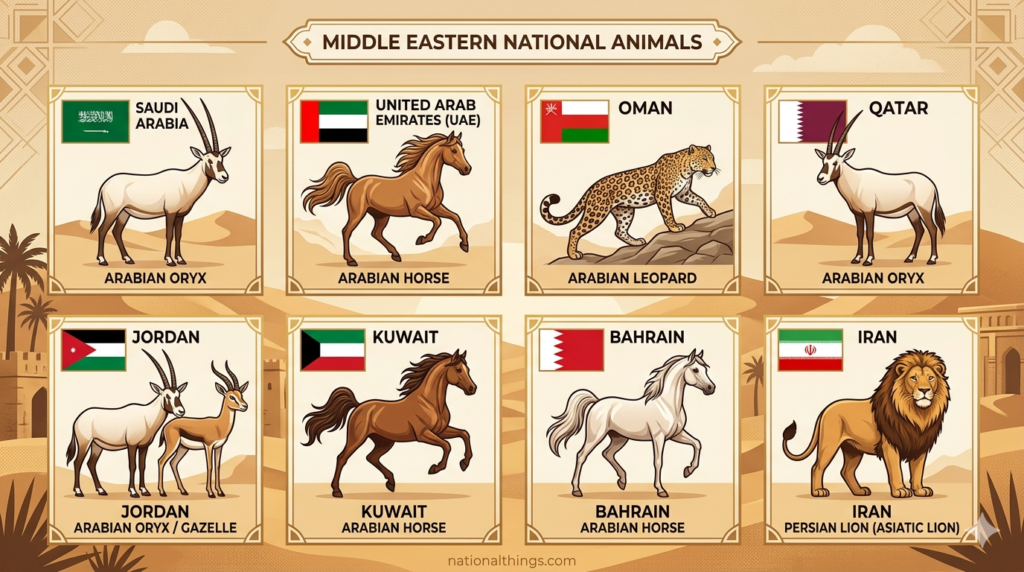
Middle Eastern National Animals
The Middle East is a region rich in culture, history, and natural beauty. Each…
150 Most Important Countries and Their National Animals
Every country in the world has its unique national animal, representing its culture, wildlife,…
National Animal of Peru: The Vicuña
The national animal of Peru is the beautiful Vicuña. This graceful animal is known…
National Animal of New Zealand: The Kiwi
The national animal of New Zealand is the famous Kiwi. This small, flightless bird…

National Animal of Cuba: The Cuban Hutia
The national animal of Cuba is the Cuban Hutia (Capromys pilorides). This unique mammal…
National Animal of Dominican Republic: The Palmchat
Every country has special symbols that represent its nature, culture, and identity. One of…
Copyright © 2026 | WordPress Theme by MH Themes
Leave a Reply